


A coat is a layer of warmth, but it also defines a man’s winter style. The right design can transform even the simplest outfit, making you look effortlessly put-together in any situation.
How to know which is the “right” one? It’s essential to think about style, fit, fabric, color and season before putting a coat on, as each element affects how the coat performs and how it makes you feel. Whether you’re aiming for a sharp, formal silhouette or a relaxed, casual vibe, understanding these factors helps you make a choice that’s both practical and timelessly stylish.

1. Styles
The foundation to make the right decision is knowing all the coat types and how they align with our lifestyles. Once understand that, we can go further into details of materials or coat shapes.
Coat Types
From structured silhouettes to relaxed designs, each coat type brings its own character, purpose and charm. Here are the six coat styles every man should know before investing:
-
Topcoat: Perfect for transitional seasons, the topcoat is sleek and tailored, ideal for layering over a suit or smart-casual outfits. Its lightweight wool construction makes it versatile for cooler weather without being too heavy.
-
Overcoat: A winter staple, the overcoat is designed for warmth, typically made from thick wool and extending below the knee. Its structured silhouette pairs well with formal wear but can also elevate casual layers. Choose a single-breasted overcoat for a minimalist, modern feel or go double-breasted for a more traditional statement.
-
Trench Coat: Known for its iconic belted design, the trench coat is perfect for mild, rainy weather. Traditionally made from water-resistant cotton, it’s a stylish yet functional choice for spring or fall.
-
Pea Coat: With its shorter, double-breasted design, the pea coat is both practical and stylish. Made from thick wool, it offers warmth and flexibility, easily pairing with both casual and semi-formal outfits.
- Duffle Coat: A more casual option, the duffle coat is known for its toggle fastenings and hood. Its relaxed fit and thick wool construction make it a go-to for cold, outdoor days.
- Field Jacket: Originally inspired by military wear, the field jacket blends utility with style. Lightweight and durable, it features multiple pockets and a slightly loose fit for ease of movement. Ideal for casual days or travel, the field jacket transitions seamlessly from countryside to city.

Long vs. Short Coats
The length of your coat affects how it complements your body type and wardrobe.
Long coats, such as overcoats and trench coats, project sophistication and elongate the body. They’re best suited for formal settings and colder weather, as they provide more coverage and a commanding silhouette. Falling below the knee or even to the calf, a long coat emphasizes proportions elegantly for taller men. Additionally, they add a sense of gravitas and sophistication to formal outfits.
Short coats, like the pea coat or field jacket, are ideal for everyday and casual wear. Sitting at the hips or just below, they provide more freedom of movement and are better suited for active lifestyles. Short coats often have a more rugged, practical appeal and work well with casual pieces like jeans or chinos. They’re also a great choice for men of shorter stature, as the cropped length helps balance proportions.

2. Fit & Length
Like any other piece, fit is always important as it enhances your proportions, flatters your frame and makes even the simplest outfit look intentional. Pay attention to these details below to ensure you’ve chosen a perfect fit:
- Shoulders: Ensure the shoulder seam aligns with the edge of your shoulder for a well-structured fit; not drooping over it or sitting too high. When you try it on, cross your arms; if it feels tight, size up slightly. A coat that fits properly in the shoulders will maintain its structure and look sharp, even when worn open.
- Waist: A slight taper at the waist creates a tailored look. For sleek coats like topcoats or overcoats, look for a gentle shape that narrows at the midsection, defining without feeling restrictive. For relaxed pieces like duffle coats or field jackets, a straighter fit allows layering underneath.
- Length: Shorter coats, like the pea coat, should hit just below the hips for ease of movement. Longer coats, such as overcoats, work best when they extend to the knee or slightly below, offering more coverage and elegance.

Fit Tips by Style
Each coat has its own fit philosophy. Here’s how to get it right:
- Overcoat: Choose a structured, tailored fit that comfortably layers over a suit jacket. It should button smoothly without pulling.
- Topcoat: Opt for a slim silhouette to achieve that sharp, modern edge.
- Trench Coat: Keep it fitted through the shoulders and use the belt to define your waist.
- Pea Coat: A close fit around the torso helps retain its naval-inspired structure while maintaining warmth.
- Duffle Coat: Go for a slightly looser fit to accommodate layers.
- Field Jacket: Stay true to its roots with a relaxed yet tidy fit, allowing for easy layering and practicality.

3. Fabrics
Your coat’s fabric determines how warm and how long it will last in your wardrobe. The right material not only keeps you comfortable through the seasons but also adds texture, depth and feelings to your overall style.
- Wool: Wool is the go-to for winter coats like overcoats and pea coats, offering excellent insulation while allowing breathability. It’s durable, water-resistant to a degree and ages beautifully over time.
-
Wool Blends: A smart and practical choice. Wool blended with synthetic fibers enhances durability and wrinkle resistance while keeping costs and maintenance manageable. These blends often make coats lighter and easier to care for.
- Alpaca: Known for its silky texture and high warmth-to-weight ratio, alpaca wool feels luxurious yet practical. It’s softer than regular wool, hypoallergenic and naturally water-repellent, perfect for
- Silk-Wool Blends: A blend of warmth and smooth texture like car coats, this fabric is ideal for coats that balance formality and comfort.
- Angora: Made from the fibers of the Angora rabbit, this fabric offers lightweight warmth and a subtly fuzzy finish. Angora is often blended with wool for added structure, making it a sophisticated choice for men who want their coat to feel plush and distinctive.
- Water-Resistant Twill: Often used for trench coats, this tightly woven fabric, typically cotton twill or gabardine, provides water resistance while maintaining a sleek, structured look. It’s suitable for rainy days and transitional weather.

Pure wool
Soft touch · Melange

Wool
Soft touch · Heavyweight


Alpaca
Soft touch · Heavyweight

Wool Silk Angora
Soft touch · Heavyweight
4. Colors
Color is one of the most powerful tools in defining your coat’s personality. The right shade can make your outfit look balanced, coordinated and season-appropriate. While trends may come and go, neutral tones remain timeless, effortlessly pairing with everything in your wardrobe.
- Navy: A universal favorite that flatters all skin tones. A navy coat works for both formal and casual occasions, making it one of the most versatile colors you can own.
- Camel/Beige: Sophisticated, camel and beige coats add a touch of continental elegance. They pair beautifully with navy, black or earthy tones, creating rich, balanced contrasts. Ideal for men who want a statement piece that still feels classic.
- Black: The ultimate power color, sleek, bold and endlessly adaptable. Perfect for formalwear or minimal monochrome looks. A black coat always looks intentional.
- Grey: A subtle, modern neutral that offers versatility. Mid- to dark-grey coats complement both light and dark outfits, blending seamlessly into business and smart-casual wardrobes.

For formal looks, coordinate your coat color with your suit palette: navy over grey suits or camel over dark blue for a contrast that stands out elegantly. For casual wear, lighter tones like camel or grey pair beautifully with denim and neutral knits.
5. Occasions
Selecting the right coat for the occasion is crucial to make sure you’re not just dressed appropriately but stylishly. Whether it’s a business meeting or a casual weekend, the right coat can elevate your outfit and set the right tone.
Business Formal
When dressing for the office, events or elegant evenings, topcoats and overcoats are your best allies. They are designed to complement suits and structured outfits, offering a clean, professional silhouette.
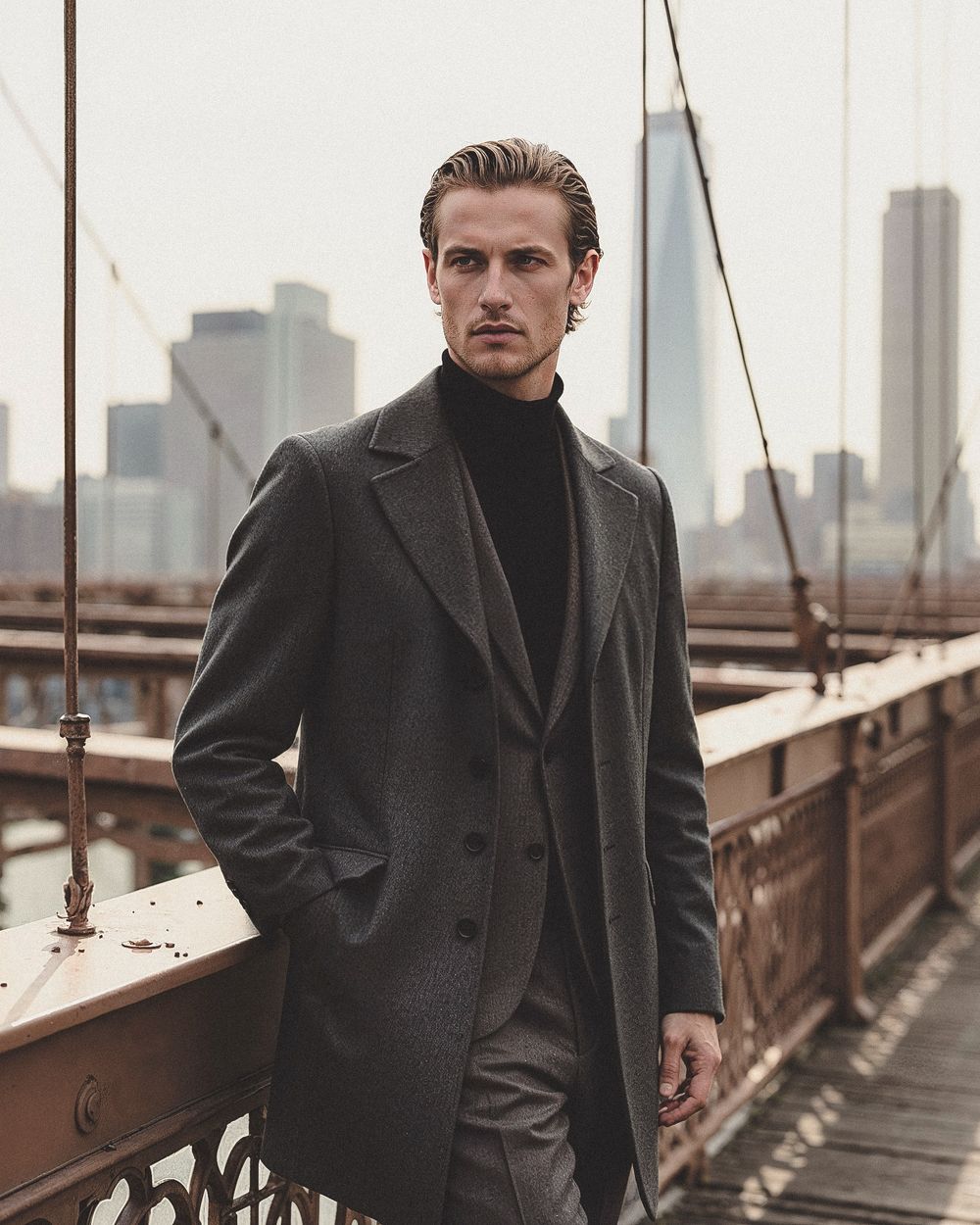
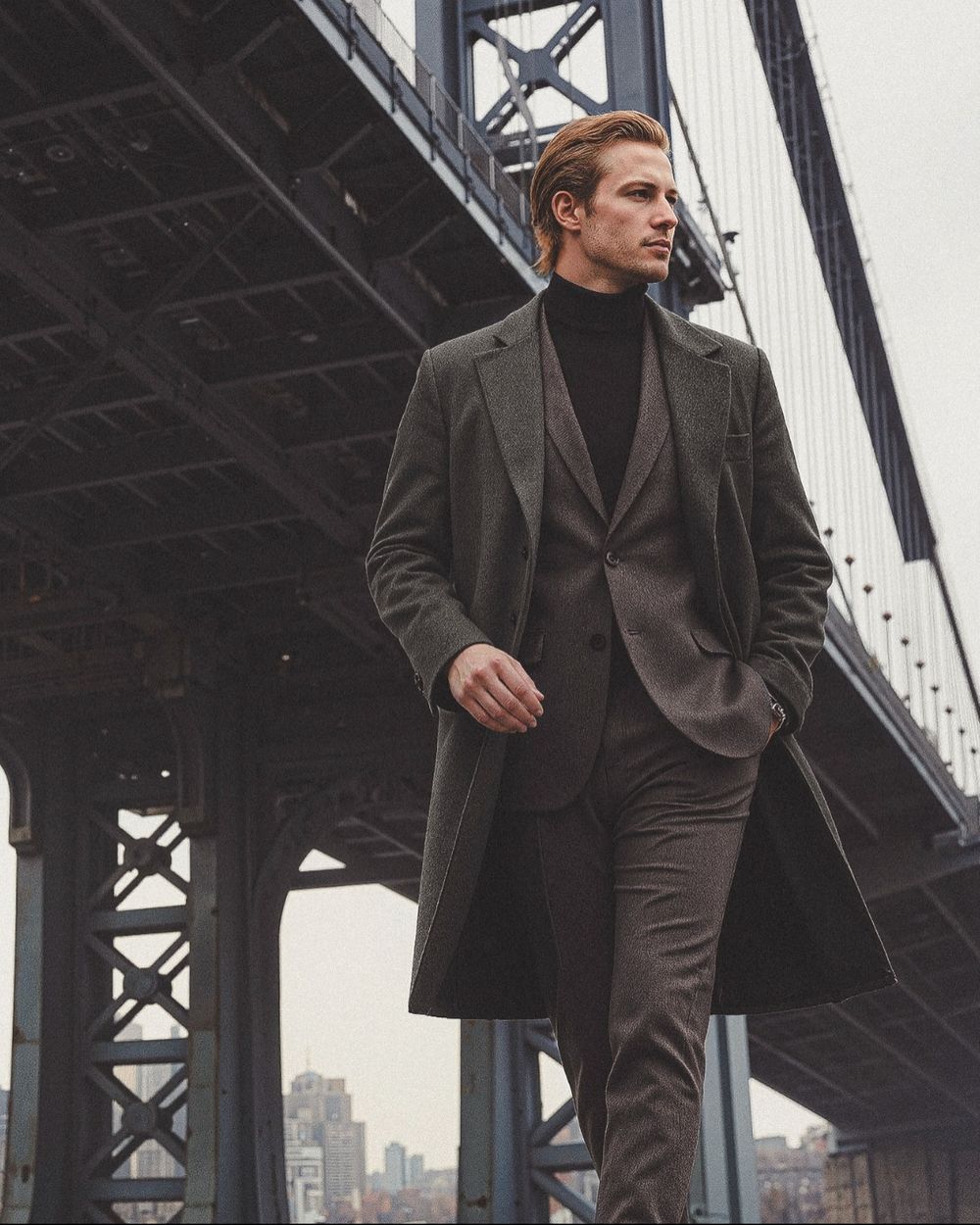
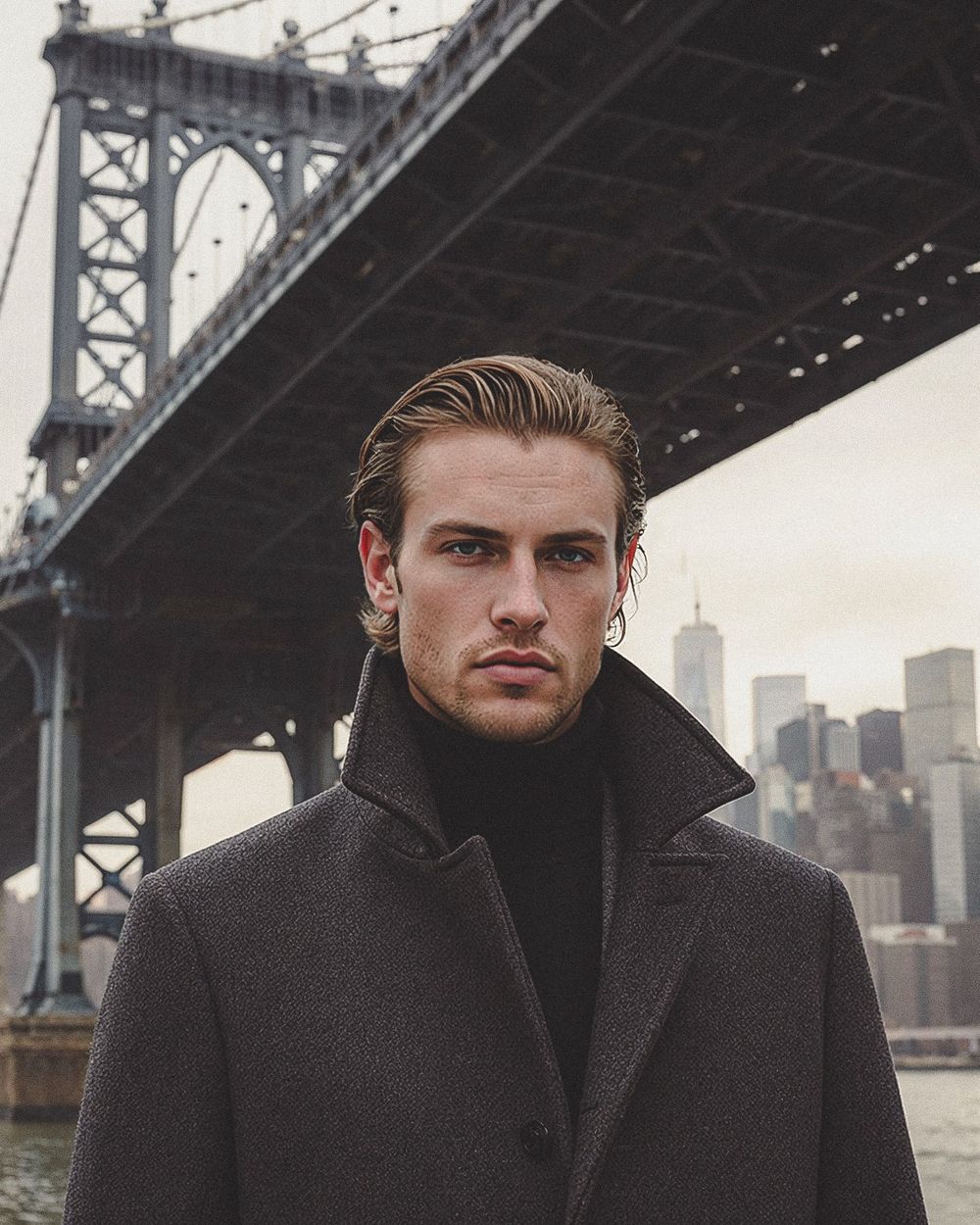
Charcoal Grey Overcoat with Grey Suit and Black Turtleneck
Products in the outfit


Credit: Guy George
A single-breasted wool overcoat in navy, charcoal or black is the safest bet for most business settings, as it’s timeless and sleek. For a more traditional touch, consider a double-breasted version; it adds depth and presence, especially when paired with classic tailoring. Additionally, ensure your coat is long enough to cover your suit jacket completely and button comfortably over it, allowing enough room for movement.
Extra tip: A well-tailored overcoat can also dress up casual wear, throw it over a roll-neck sweater and tailored trousers for dinner or theatre nights.
Casual Everyday
Off-duty style doesn’t mean compromising on sophistication. For daily wear, pea coats, trench coats and field jackets combine comfort, practicality and personality.
The pea coat is your smart-casual essential: short, structured and perfect for layering over sweaters, hoodies, denim jackets or paired with jeans, chinos. It’s ideal for weekends, evening outings or casual Fridays at work.
Lightweight and versatile, a trench coat works with everything from dress shirts to t-shirts. Whether you’re headed to a casual workday or meeting friends, the trench coat’s structured yet relaxed design keeps you looking sharp without being overdressed.
Finally, the field jacket is a versatile choice for men who want understated utility or a relaxed, outdoorsy look. It’s lighter than a wool coat but still protective against the elements, ideal for travel, errands or city life. Pair it with denim, boots and a simple tee for a rugged, ready-for-anything appearance.
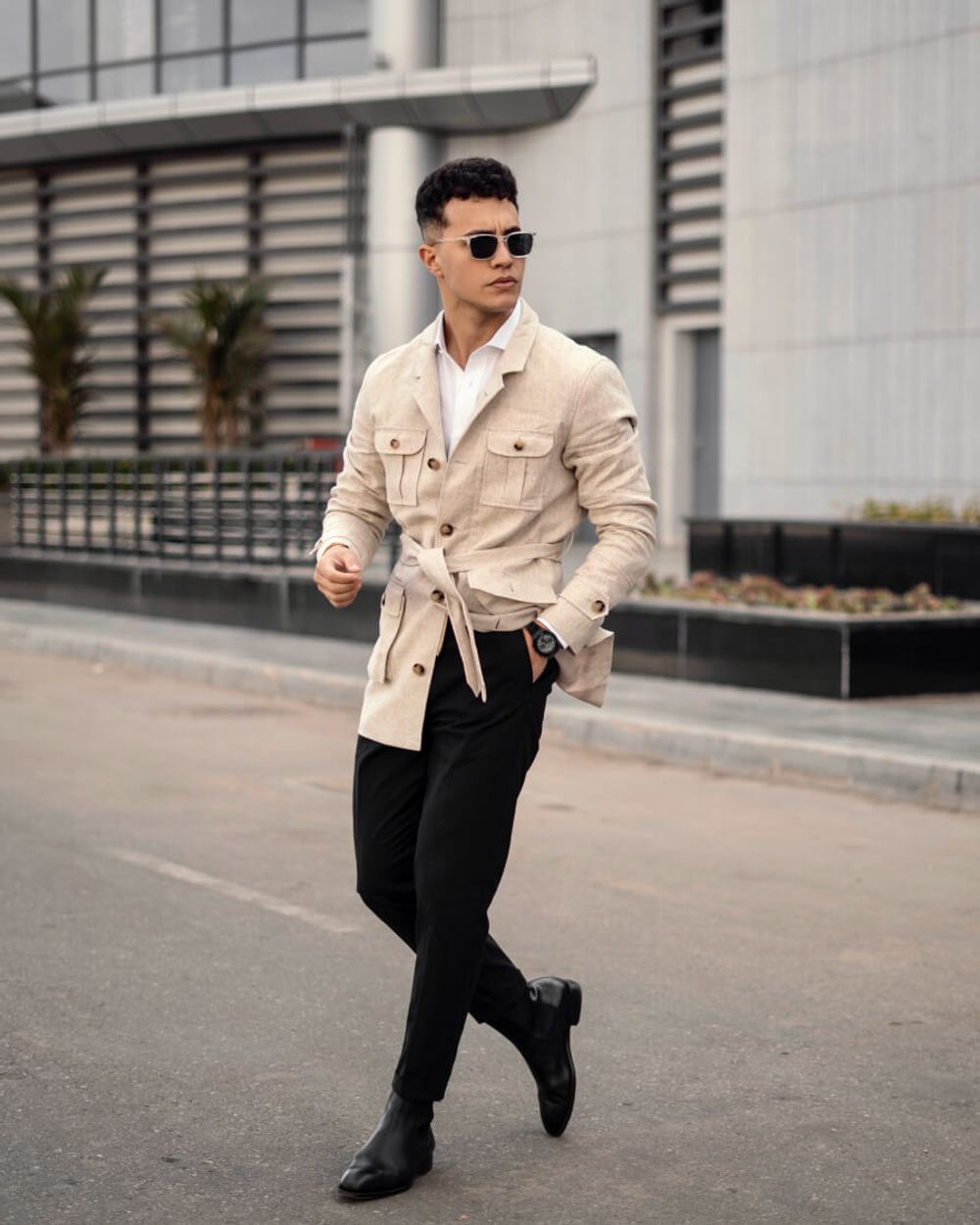
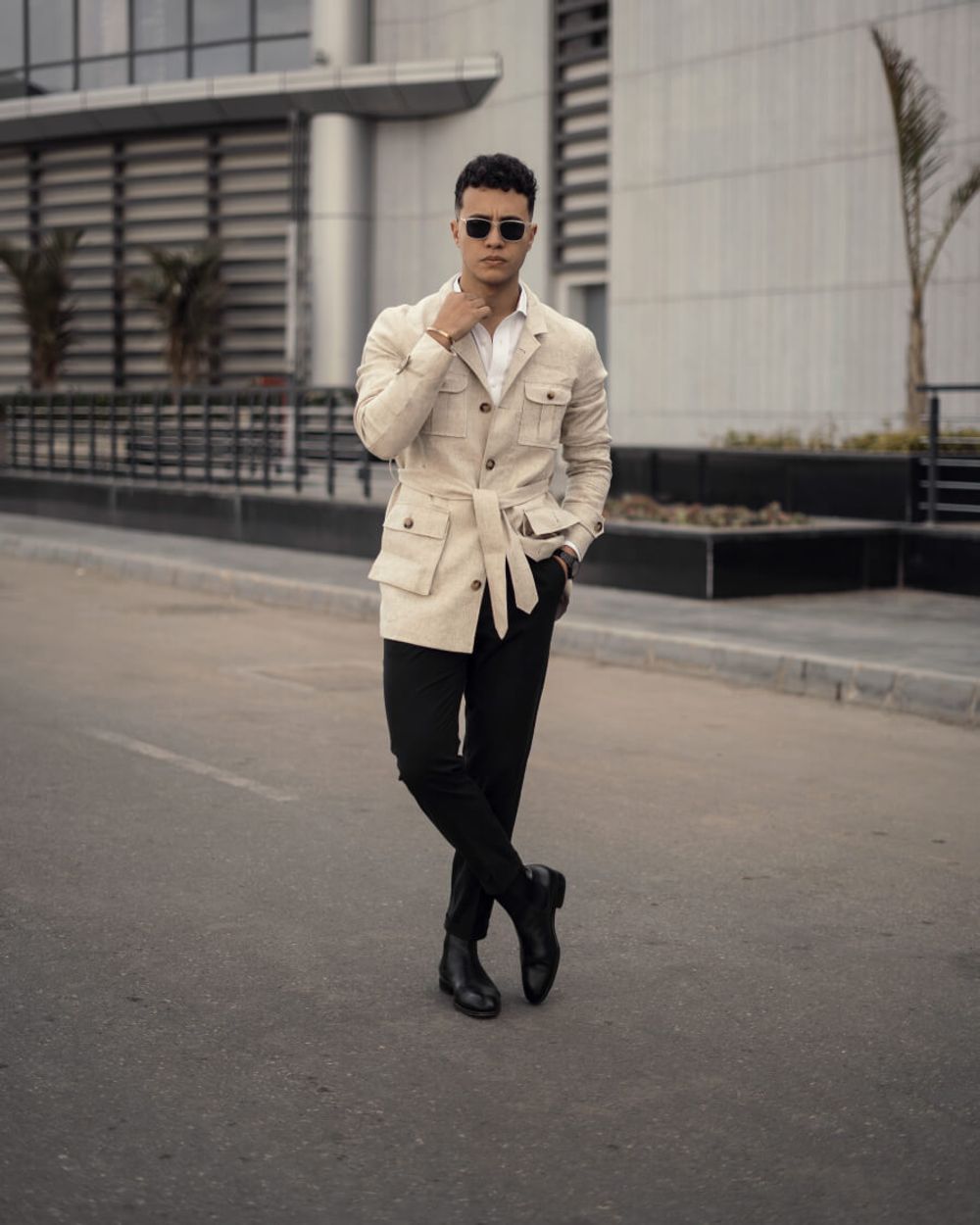
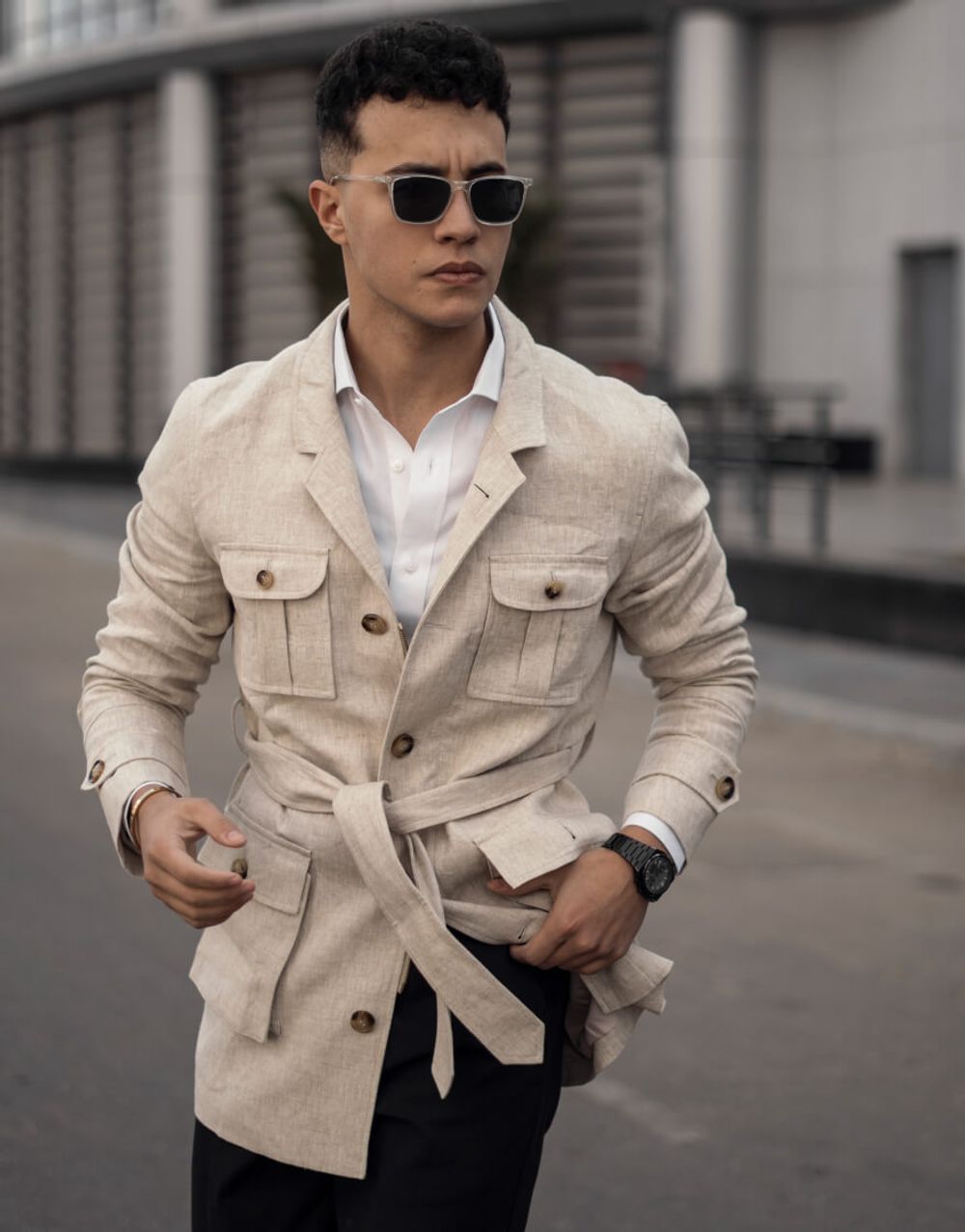
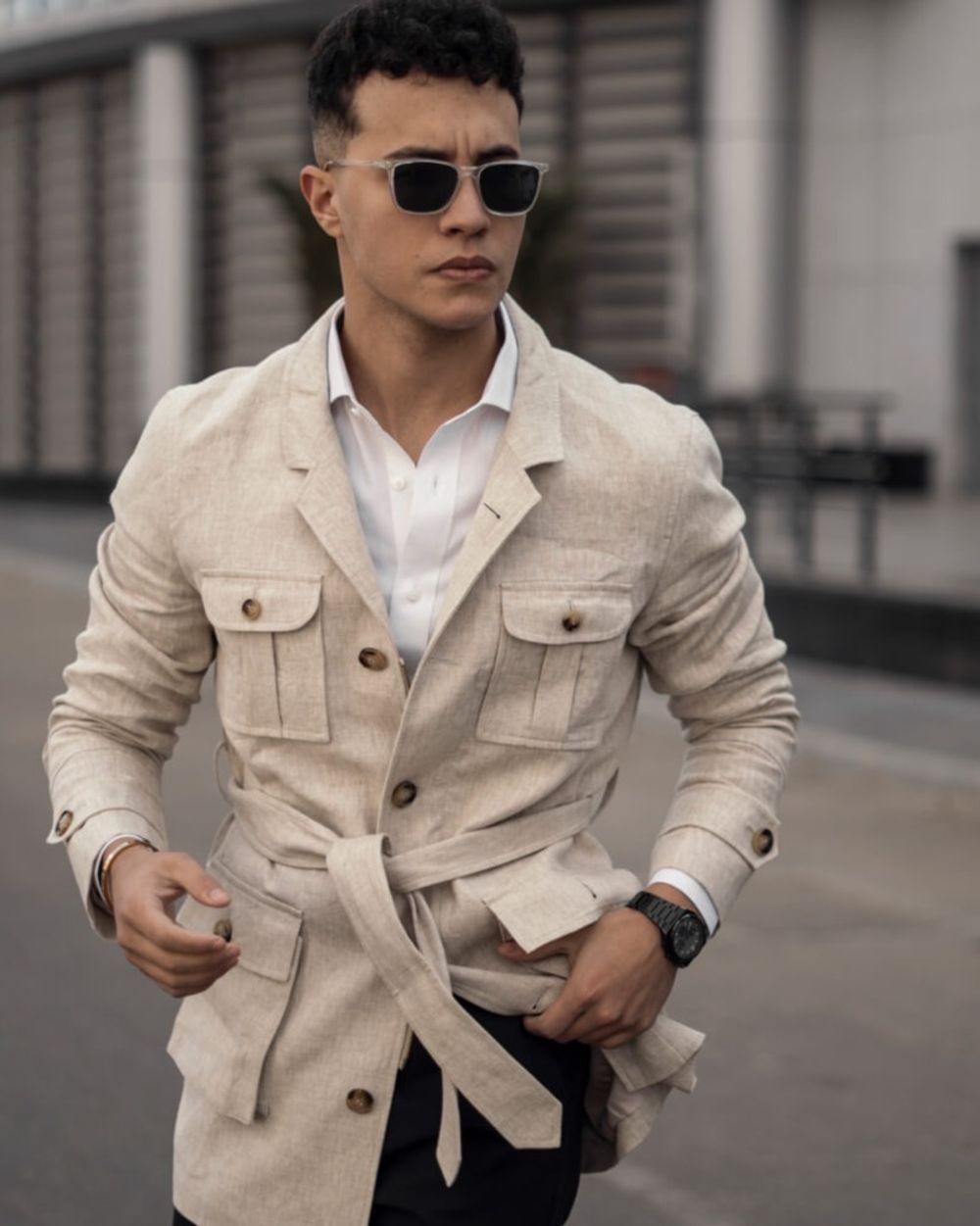
Oatmeal Linen Wrap Jacket
Products in the outfit


Credit: Salah Ahmed

6. Weather & Season
Your coat should not only match the occasion but also the weather. When temperatures drop, the material and construction of your coat make all the difference in keeping you warm while looking stylish.
Cold Winters
When temperatures drop, your coat becomes more than fashion; it’s your first line of defense against the cold. The best winter coats combine insulation, structure and timeless style, helping you face frosty mornings without sacrificing elegance.
Wool overcoats and duffle coats are unbeatable for warmth. Their thick, insulating fabrics trap heat effectively, especially when layered over knitwear or a suit jacket. For extra comfort, choose a coat with a quilted or padded lining, it adds a subtle layer of protection without bulk.
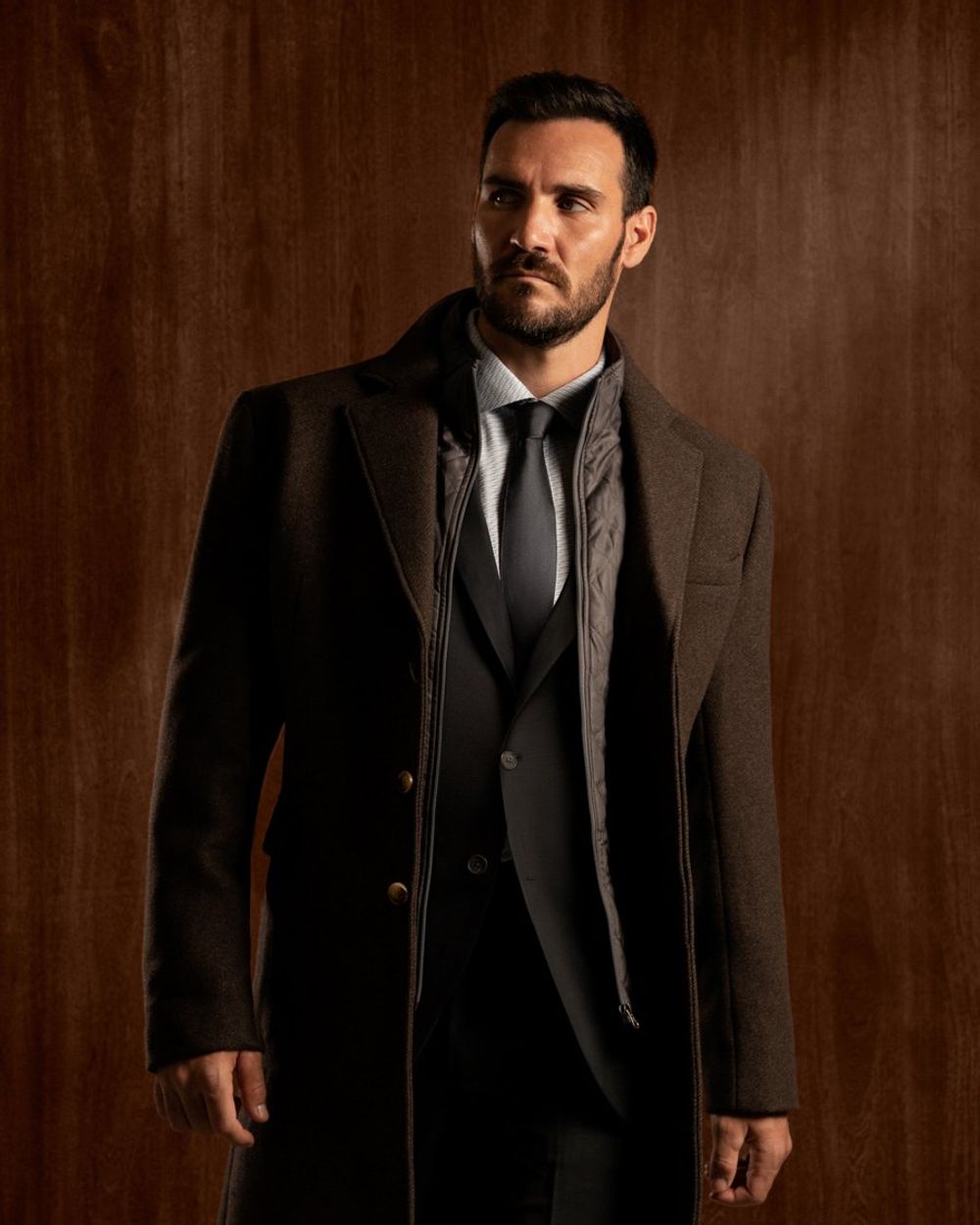
Brown Coat and Suit in dark shades
Products in the outfit

Credit: Saúl Craviotto

Explore Our Extra Warm Coat Collection
Transitional Seasons
Spring and fall bring unpredictable weather: cool in the morning, mild by afternoon. The secret here is layering smartly with lightweight coats designed for versatility and movement.
Topcoats and trench coats are the most ideal when it’s too warm for heavy wool but too chilly for no coat at all. A topcoat, typically made from lighter wool or wool-blend fabric, provides just enough warmth while maintaining a sleek, polished look. Its minimal bulk makes it easy to layer over casual and business outfits alike.

If you're expecting wet weather, the trench coat is the ultimate solution. Lightweight yet durable, it offers protection from wind and rain without weighing you down. A trench with water-resistant fabrics like cotton twill or gabardine is perfect for navigating unpredictable spring showers. For even milder days, opt for unlined coats. These coats allow for more breathability, making them an excellent choice for warmer afternoons in fall or early spring.
If you prefer something casual yet weather-ready, try a field jacket. Its multiple pockets and military-inspired design make it perfect for travel or daily commutes.
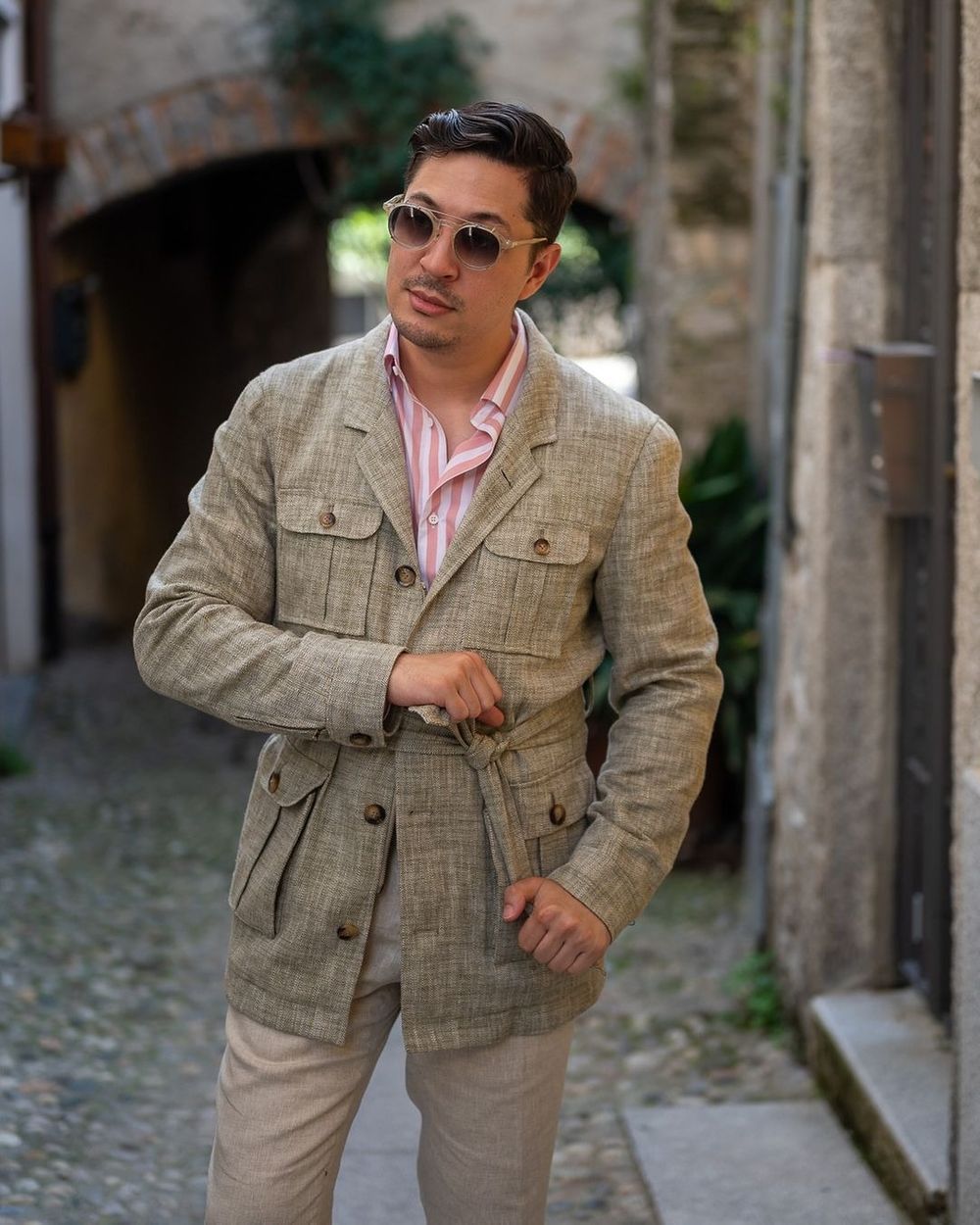
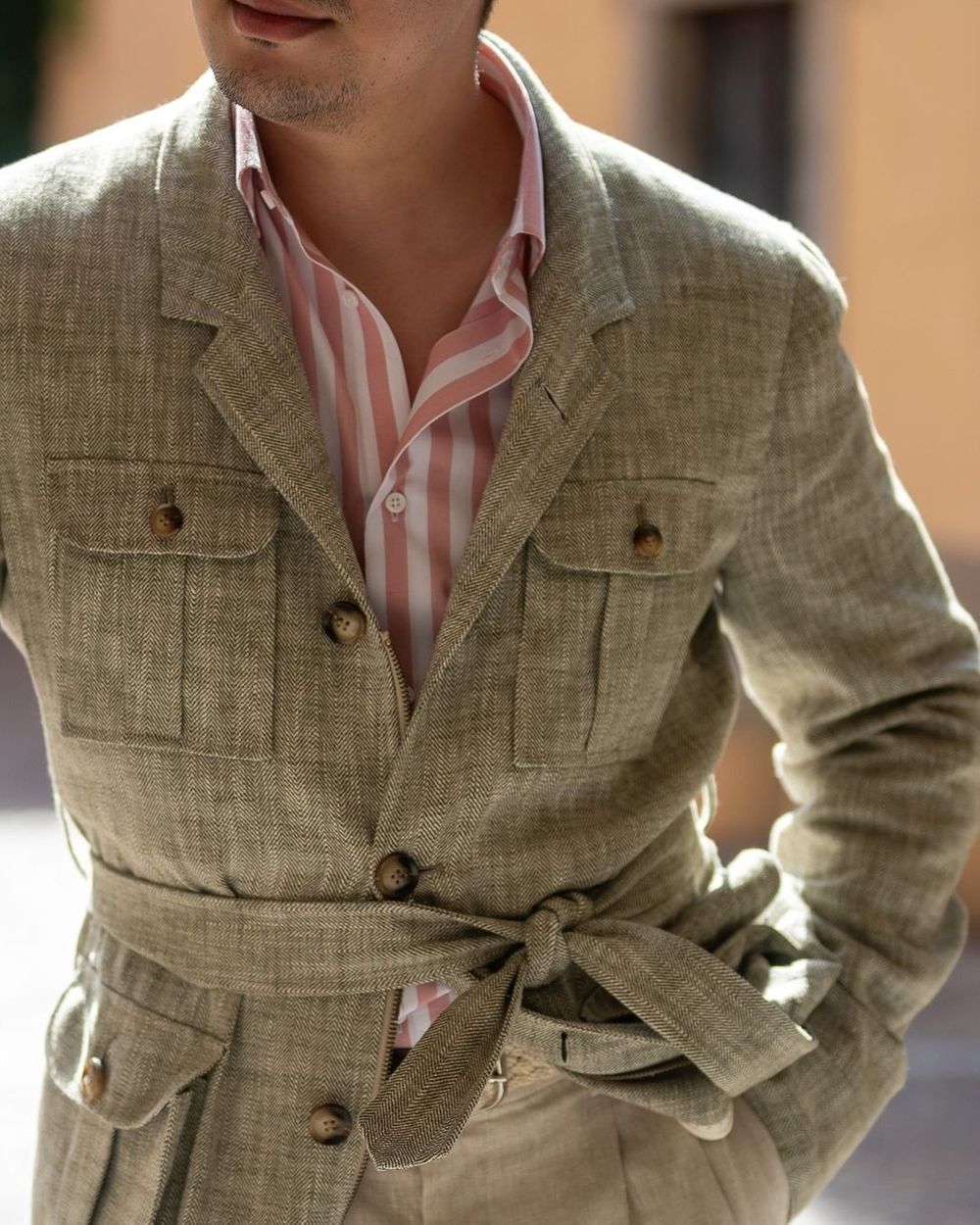
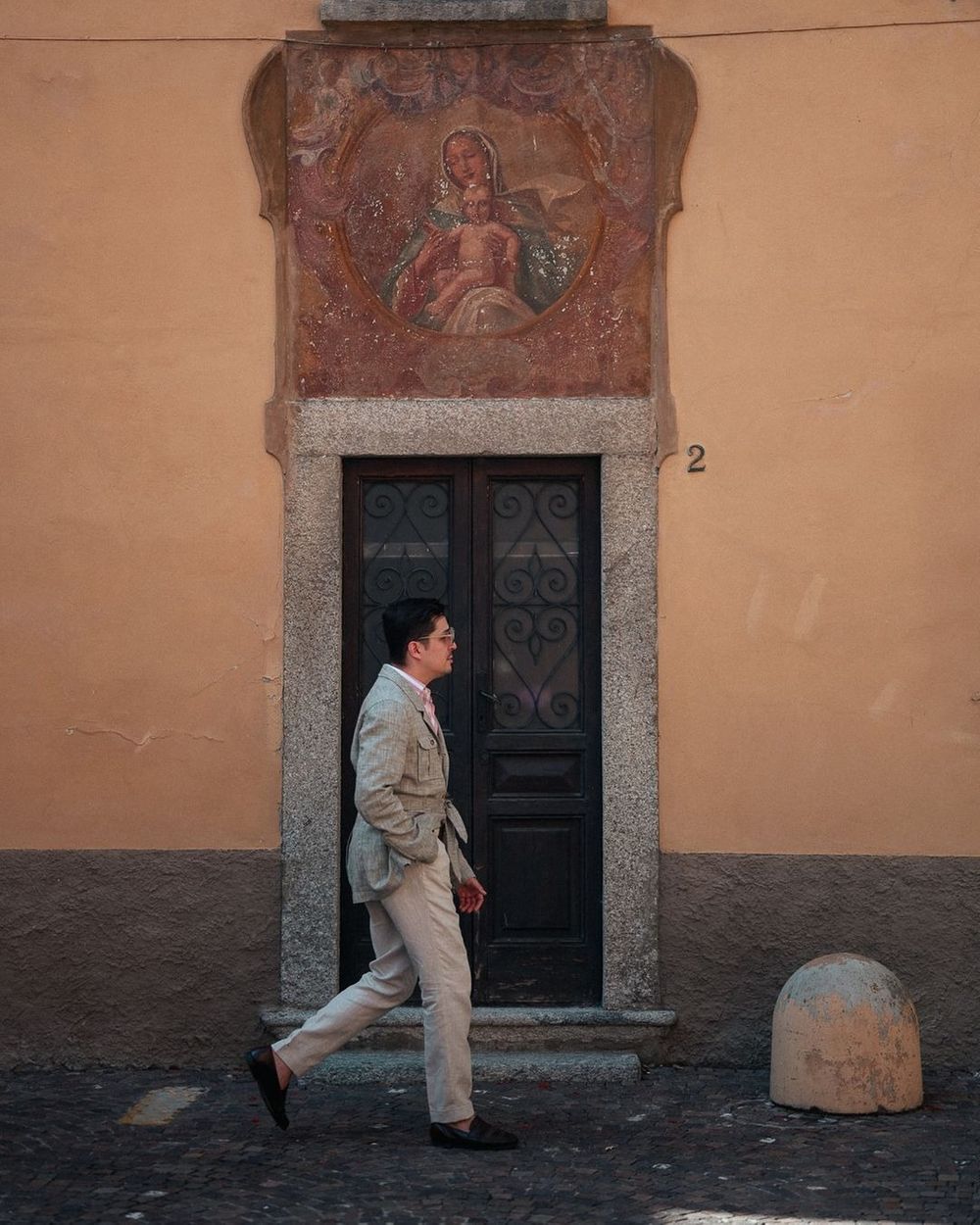
Beige Safari Jacket with Striped Pink Shirt
Products in the outfit


Credit: Carlo van den Broeck
| Coat Type | Best For | Style | Weather | Key Features | Advantages |
|---|---|---|---|---|---|
| Topcoat | Business, smart-casual | Sleek, formal | Mild to cold (fall/winter) | Light wool, knee-length, tailored fit | Versatile across seasons, professional |
| Overcoat | Business formal, evening wear | Classic, formal | Cold (winter) | Heavy wool, long length, single or double-breasted | Provides excellent warmth, timeless style |
| Pea Coat | Casual, semi-formal | Rugged, shorter cut | Cold (winter) | Double-breasted, thick wool, hip-length | Warm yet flexible; great balance between casual and formal |
| Trench Coat | Transitional, rainy days | Functional, stylish | Mild to cool, rainy (spring/fall) | Cotton twill or gabardine, water-resistant, belted | Lightweight, perfect for unpredictable weather |
| Duffle Coat | Casual, outdoor wear | Relaxed, practical | Very cold (winter) | Thick wool, toggle fastenings, hooded | Excellent insulation, ideal for freezing conditions |
| Field Jacket | Casual, outdoor wear | Military-inspired, casual | Mild to cool (fall/spring) | Multiple pockets, shorter length | Practical and rugged with great utility |
Frequently Asked Questions (FAQ)
How to pick a good coat?
A good coat balances style, fit, fabric, color and season. Start with the occasion (business vs casual), then choose the style (overcoat/topcoat for formal, pea coat/duffle/field jacket for casual, trench for rainy days). Check fit at the shoulders (seam sits right at the edge), a light taper at the waist and the right length for your height and use. Prioritize quality fabrics, wool or wool-cashmere for winter; cotton twill/gabardine for trenches in transitional weather. Choose a neutral color (navy, camel, black, grey) for maximum versatility. Bottom line: pick the coat that fits well, suits your climate and matches how you actually dress week to week.
What is the most versatile coat for men?
The overcoat is one of the most versatile pieces a man can own. Whether you're wearing a suit for a formal event or dressing down with jeans and a turtleneck, the overcoat complements both casual and formal attire with ease.
How do I know if my coat fits properly?
A well-fitting coat should sit comfortably on your shoulders, with sleeves that reach your wrists and a length that complements your height. For taller men, longer coats work best, while shorter men may prefer a mid-thigh or hip-length cut to avoid overwhelming their frame.
Is it better to size up or down in coats?
Neither by default, get the shoulders right first. If the shoulders are too wide or narrow, the coat will never sit cleanly. Go true to size if you mostly wear light layers. Size up slightly only if you plan to layer over a suit jacket or chunky knit, ensuring it buttons smoothly without pulling and still shows a defined silhouette. For relaxed styles (duffle, field jacket), a touch more room is normal; for tailored styles (overcoat, topcoat), stay sharper and closer to the body.
What color coat goes with everything for men?
Neutral tones like navy, black, gray and camel are highly versatile and can be worn with almost any outfit. These colors complement both formal and casual wear, making them the perfect choice for a coat that works across different occasions.
What fabrics are best for winter coats?
For warmth and durability, fabrics like wool, cashmere and wool blends are ideal for winter coats. Wool provides excellent insulation, while cashmere offers a softer, more luxurious feel. Blends of wool and synthetic fibers also add strength to the material without compromising warmth.
Is it better to have one warm coat or layer?
Both approaches work, but think about climate and lifestyle. In freezing temperatures, invest in one high-quality wool or wool-cashmere overcoat (optionally with a quilted/padded lining) for reliable warmth, then add light layers as needed. In milder or changeable weather, layering with a topcoat, trench or field jacket is more adaptable; swap knitwear and shirts beneath to regulate temperature.
Smart approach: own one serious winter coat plus one versatile transitional coat for spring/fall.
Can I wear a trench coat in winter?
While trench coats are generally best for transitional seasons like spring and fall due to their lightweight design, some trench coats made from heavier materials or with quilted linings can work for milder winter days.
Should I choose a single-breasted or double-breasted coat?
Single-breasted coats tend to be more versatile and work well for both formal and casual looks. Double-breasted coats are more formal and structured, adding a touch of elegance and typically providing more warmth due to the extra layer of fabric.
What is the difference between a pea coat and an overcoat?
A pea coat is a shorter, double-breasted coat made of thick wool, typically ending around the hip. It has a more casual, rugged look. An overcoat, on the other hand, is longer, usually reaching the knee or below and is often worn over formal wear.
How can I style a coat for a business setting?
For a business look, opt for a classic overcoat or topcoat in neutral colors like navy, black or camel. Pair it with a suit, dress shoes and a crisp shirt. A single-breasted coat with a tailored fit will give you a sleek, professional appearance.
If you’re looking for more detailed information on coat styles, check out our blog post on the different types of men's coats to dive deeper into their unique features and discover the one that’s perfect for you!


