


The wedding suit landscape in 2026 is all about personal expression. Grooms are moving away from the safe navy-and-grey formula and embracing bolder colors, relaxed silhouettes, and meaningful details that tell their story. Whether you’re planning a black-tie ballroom affair or a barefoot beach ceremony, the right suit sets the tone for the entire day.
This guide breaks down the biggest wedding suit trends for 2026 — what’s in, what’s fading, and how to make each trend work for your venue, season, and personal style. Every trend here can be custom-made to your exact measurements, so you’re never limited by off-the-rack sizing.
Article at a Glance
- 10 trends — from bold colors and double-breasted jackets to relaxed linen and morning suits
- Venue pairing table — which trend works for which wedding setting
- Groomsmen coordination — the mix-and-match approach dominating 2026 weddings
- Fabric & season guide — what to wear in summer vs winter ceremonies
- Custom vs off-the-rack — why made-to-measure matters for your wedding day
1. Bold Suit Colors Replace Safe Choices
Navy and charcoal aren’t going anywhere — but in 2026, grooms are reaching for richer, more expressive colors that photograph beautifully and stand out in the wedding party. The shift is clear: color is no longer reserved for guests.
Burgundy and Wine Tones
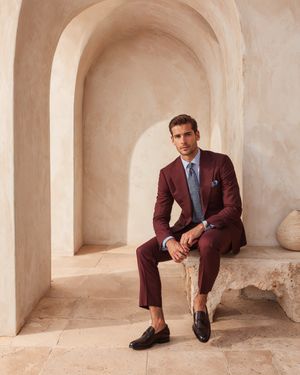
Burgundy has been building momentum for several seasons and in 2026 it’s peaking. It works across seasons, pairs naturally with ivory and champagne bridesmaid dresses, and gives a sense of occasion without feeling costume-like. A burgundy three-piece suit with a contrasting ivory pocket square is one of the strongest looks of the year.
Emerald and Forest Green
Green wedding suits went from niche to mainstream seemingly overnight. Emerald reads luxurious for evening ceremonies, while softer sage and olive tones suit garden and vineyard settings perfectly. Pair with brown leather shoes and a gold or champagne tie for a refined, nature-inspired look.
Terracotta and Warm Earth Tones
For destination and outdoor weddings, earthy tones — terracotta, rust, camel — create a warm, relaxed feel. These shades look particularly strong in linen or cotton-linen blends and pair beautifully with beach and garden settings.

| Suit Color | Best Season | Ideal Venue | Pairs With |
|---|---|---|---|
| Burgundy / Wine | Autumn & Winter | Ballroom, estate, vineyard | Ivory tie, gold accents, black shoes |
| Emerald / Forest Green | All year | Garden, vineyard, barn | Brown shoes, champagne tie, floral pocket square |
| Terracotta / Rust | Spring & Summer | Beach, desert, outdoor | Cream shirt, tan shoes, no tie |
| Powder Blue / Sky | Spring & Summer | Garden, rooftop, seaside | White shirt, brown loafers, navy pocket square |
| Classic Navy | All year | Any setting | Burgundy tie, brown or black shoes, white pocket square |
2. The Three-Piece Suit Renaissance
The three-piece suit is having its strongest moment in decades. Adding a waistcoat instantly elevates any wedding look — it creates visual depth, gives you a polished option for when the jacket comes off during the reception, and photographs exceptionally well.
Matching vs Contrasting Waistcoat
In 2026, the contrasting waistcoat is the move. Think: navy suit with a champagne or ivory waistcoat, charcoal suit with a burgundy waistcoat, or a grey suit with a camel-toned vest. This approach adds personality while keeping the overall look cohesive. A matching three-piece remains the safer, more traditional choice — perfect for formal church ceremonies.

Styling Tip
If you go with a contrasting waistcoat, keep the rest simple. The waistcoat becomes the statement piece — so choose a plain shirt, a subtle tie (or no tie), and let the vest do the talking.
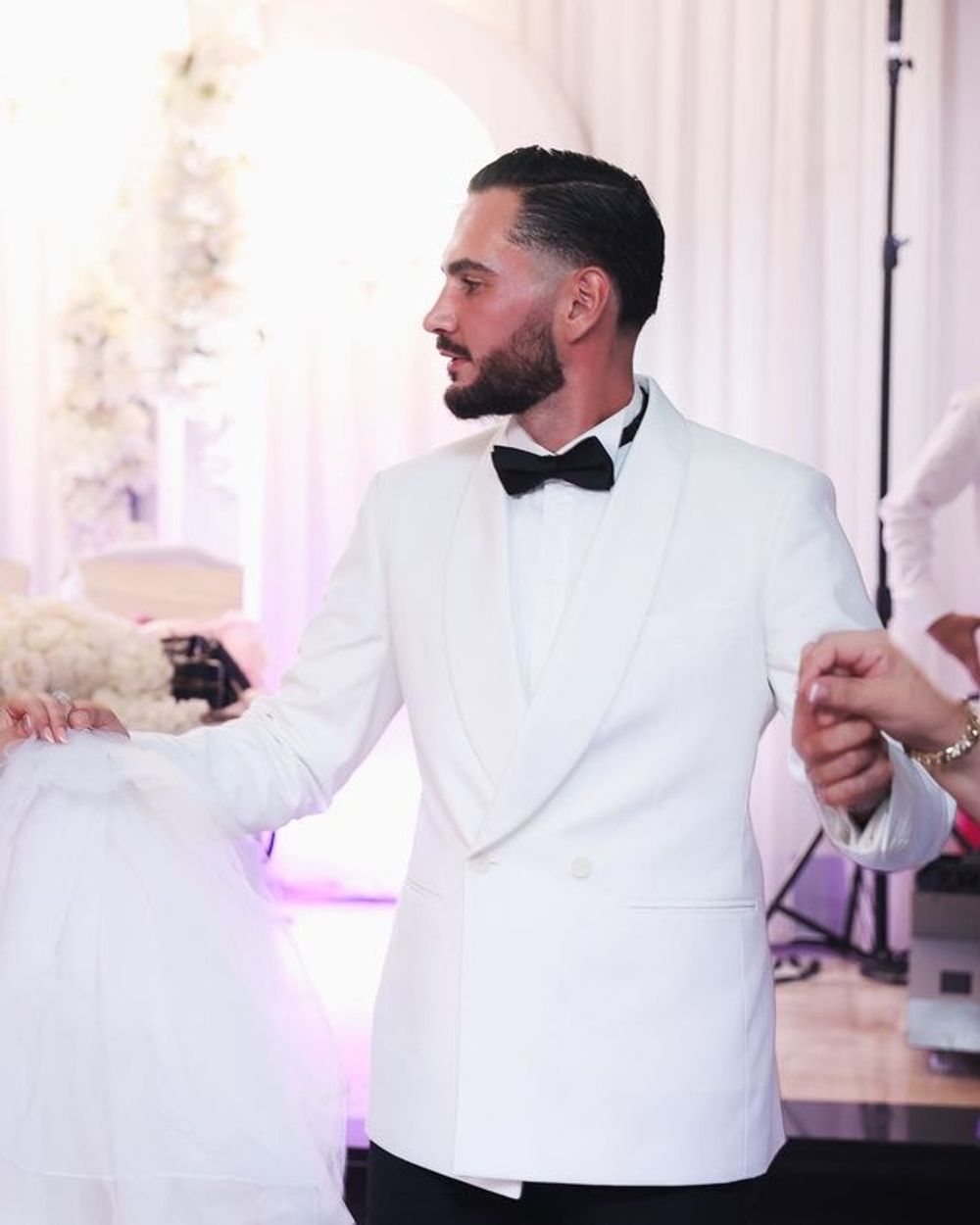
3. Double-Breasted Jackets for Formal Weddings
The double-breasted jacket is back in a big way. Once considered old-fashioned, it’s now the go-to choice for grooms who want a strong, structured silhouette with serious presence. The peak lapels, the six-button front, the clean chest line — it all adds up to a look that commands a room.
Best for: formal and semi-formal venues, autumn and winter weddings, grooms who want to stand out from the groomsmen without wearing a different color.
The modern twist? A slightly slimmer cut than the traditional 1940s silhouette, with a shorter jacket length that works on most body types. In navy or midnight blue, a double-breasted suit rivals a tuxedo in formality while feeling more personal.
4. Relaxed Tailoring and Soft Shoulders
Not every groom wants armor-like structure. One of the defining trends of 2026 is relaxed tailoring — softer shoulder construction, lighter canvasing, and a slightly looser fit that moves naturally. This isn’t sloppy; it’s intentionally comfortable.
Unlined or half-lined jackets in linen, cotton, or lightweight wool blends are the go-to fabrics for this look. They drape rather than sculpt, and they’re ideal for outdoor ceremonies where you’ll be standing, moving, and dancing for hours.
When to Go Relaxed
- Garden, vineyard, or farm weddings
- Destination weddings in warm climates
- Casual or semi-formal dress codes
- When comfort matters as much as style
When to Stay Structured
- Black-tie or white-tie events
- Church ceremonies with formal receptions
- City hotel or ballroom weddings

5. Linen and Summer Fabrics Take Center Stage
With more couples choosing outdoor and destination weddings, linen suits have gone from backup option to main event. In 2026, linen is no longer just for beach weddings — it’s showing up at garden parties, vineyard receptions, and even semi-formal city celebrations.
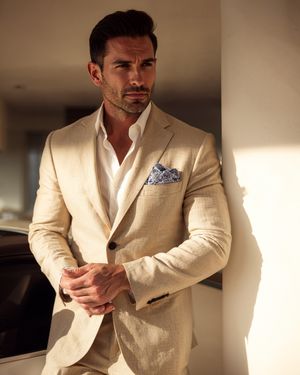
The key is fabric weight and blend. Pure linen wrinkles heavily (which some grooms embrace as part of the charm), while linen-wool and linen-cotton blends offer a cleaner drape with the same breathable comfort. For beach weddings, a light beige or ivory linen suit paired with a linen shirt and no tie creates an effortlessly elegant look.

6. Mix-and-Match Groomsmen: The End of Identical Suits
This might be the biggest shift in wedding party styling in years. Instead of putting every groomsman in the exact same suit, couples in 2026 are embracing a coordinated-but-not-matching approach. The result looks more natural, flatters different body types, and gives each groomsman some individuality.
How to Pull It Off
The key is having one unifying element while varying the rest:
- Same color family, different shades — navy, slate, and steel blue together
- Same suit, different accessories — matching suits but each groomsman picks their own tie or pocket square
- Same fabric, different cuts — single-breasted for some, double-breasted for the best man, waistcoat-only for others
- Groom stands apart — groom in a three-piece, groomsmen in two-piece; groom in a contrasting color
The trick that makes it work? Custom suits. When every suit is made to each groomsman’s measurements, the coordinated look feels intentional rather than random — even when the colors or styles differ slightly.

| Coordination Style | Formality Level | Best For |
|---|---|---|
| Identical suits | Formal | Traditional church, military, black-tie |
| Same suit, different accessories | Semi-formal | Most weddings — easy to execute |
| Same color family, different suits | Smart casual | Outdoor, garden, modern venues |
| Completely different outfits | Casual | Beach, elopement, micro-wedding |
7. Textured Fabrics: Tweed, Herringbone, and Flannel
Smooth worsted wool will always have its place, but in 2026 texture is king. Tweed, herringbone, donegal, and flannel are all trending for wedding suits — particularly for autumn and winter ceremonies where the visual weight of the fabric matches the season.
A tweed three-piece suit with elbow patches and a flat cap might sound countryside-cliché, but the 2026 version is sharper: slim-cut, without the patches, and paired with sleek Chelsea boots. The texture provides visual interest without needing bold colors or patterns.

Best Textured Fabrics for Weddings
- Tweed — rustic, countryside, barn weddings. Works beautifully in brown, grey, and green tones
- Herringbone — subtle pattern that adds depth without being loud. Great for formal settings
- Flannel — soft, warm, perfect for winter ceremonies. Choose charcoal or mid-grey
- Donegal — flecked texture that adds character. Ideal for Irish and Scottish-inspired weddings
8. The Morning Suit: Formal Tradition, Modern Execution
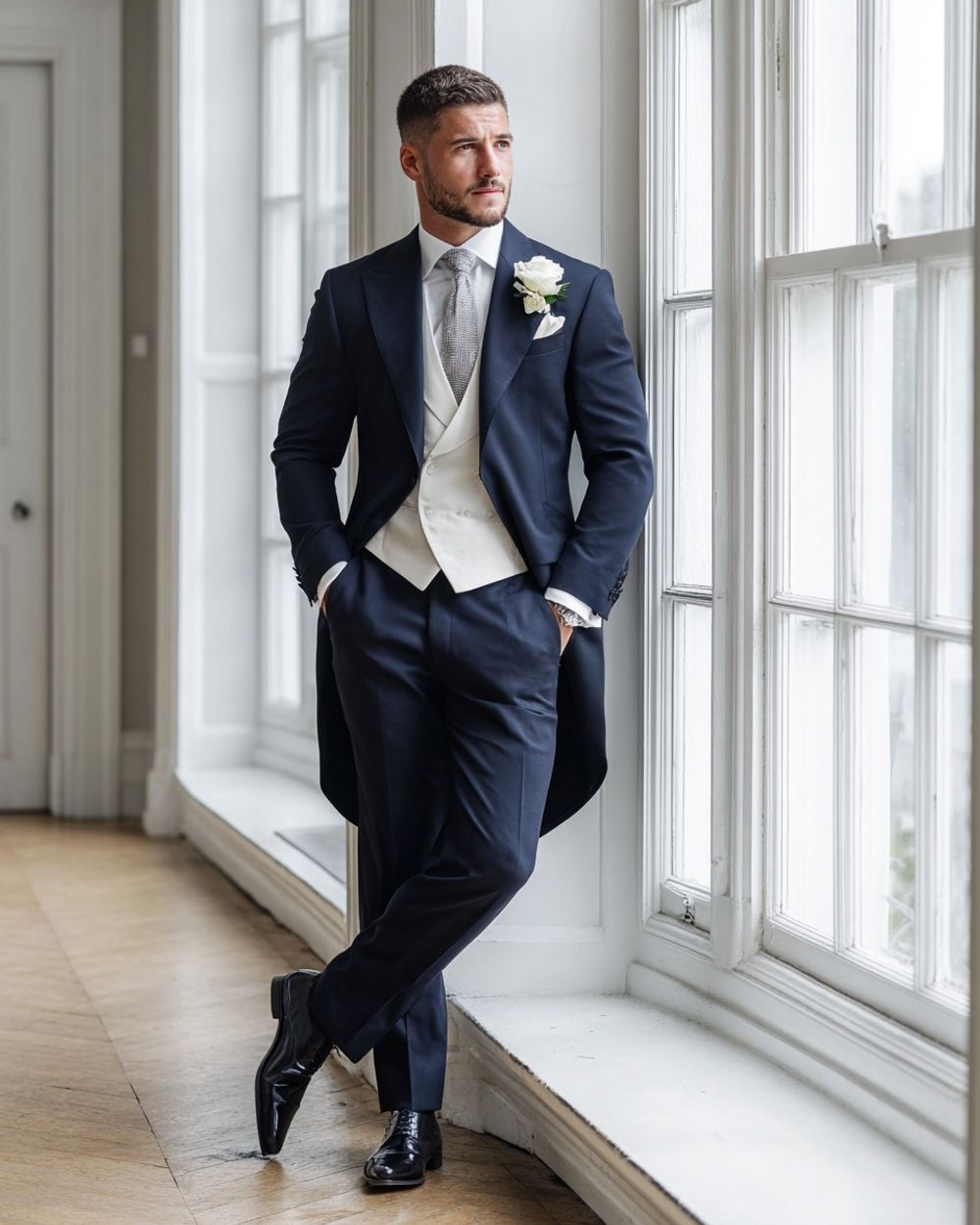
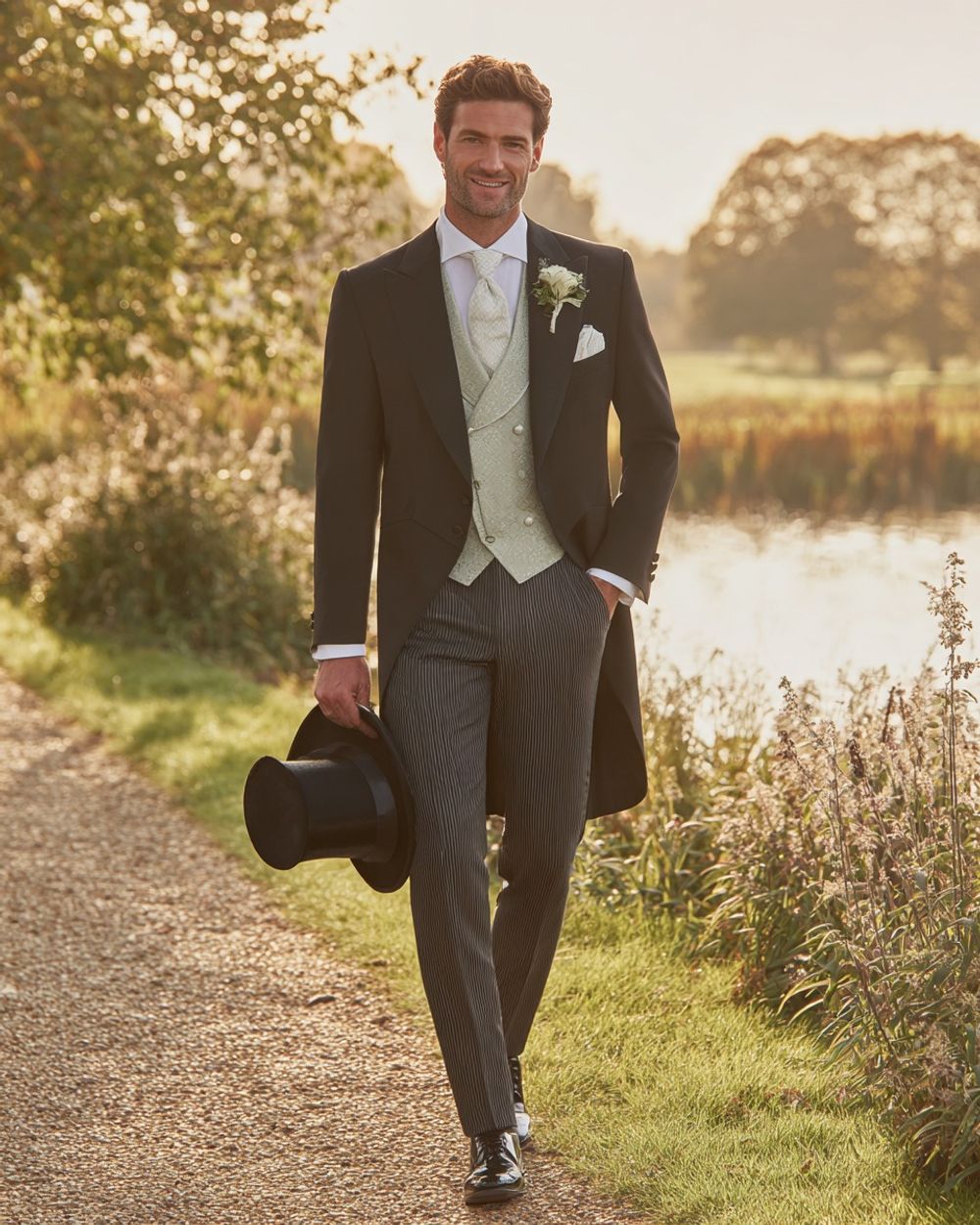
Morning suits remain the pinnacle of formal daytime wedding attire, and 2026 sees a resurgence driven by high-profile celebrity weddings and a general return to occasion-appropriate dressing. The classic combination — a tailcoat, contrasting waistcoat, and striped trousers — remains unchanged because it simply works.
The 2026 Update
What’s changing is the execution. Grooms are choosing slimmer trouser cuts, experimenting with waistcoat colors (sage green, dusty pink, pale gold instead of classic silver or ivory), and occasionally replacing the formal tie with a more relaxed open collar — though purists would argue this defeats the purpose.
9. The Tuxedo Evolved
For evening and black-tie weddings, the tuxedo remains the gold standard. But 2026’s tuxedos are anything but cookie-cutter.
Midnight Blue Over Black
The biggest shift: midnight blue tuxedos have overtaken black as the most popular choice. Under evening light — whether candles, string lights, or ballroom chandeliers — midnight blue reads richer and more dynamic than flat black. It also photographs better.
Velvet and Textured Dinner Jackets
For grooms who want drama, velvet dinner jackets in burgundy, emerald, or classic black create an unforgettable entrance. Pair with classic black trousers and a satin bow tie for the right balance of daring and refined.
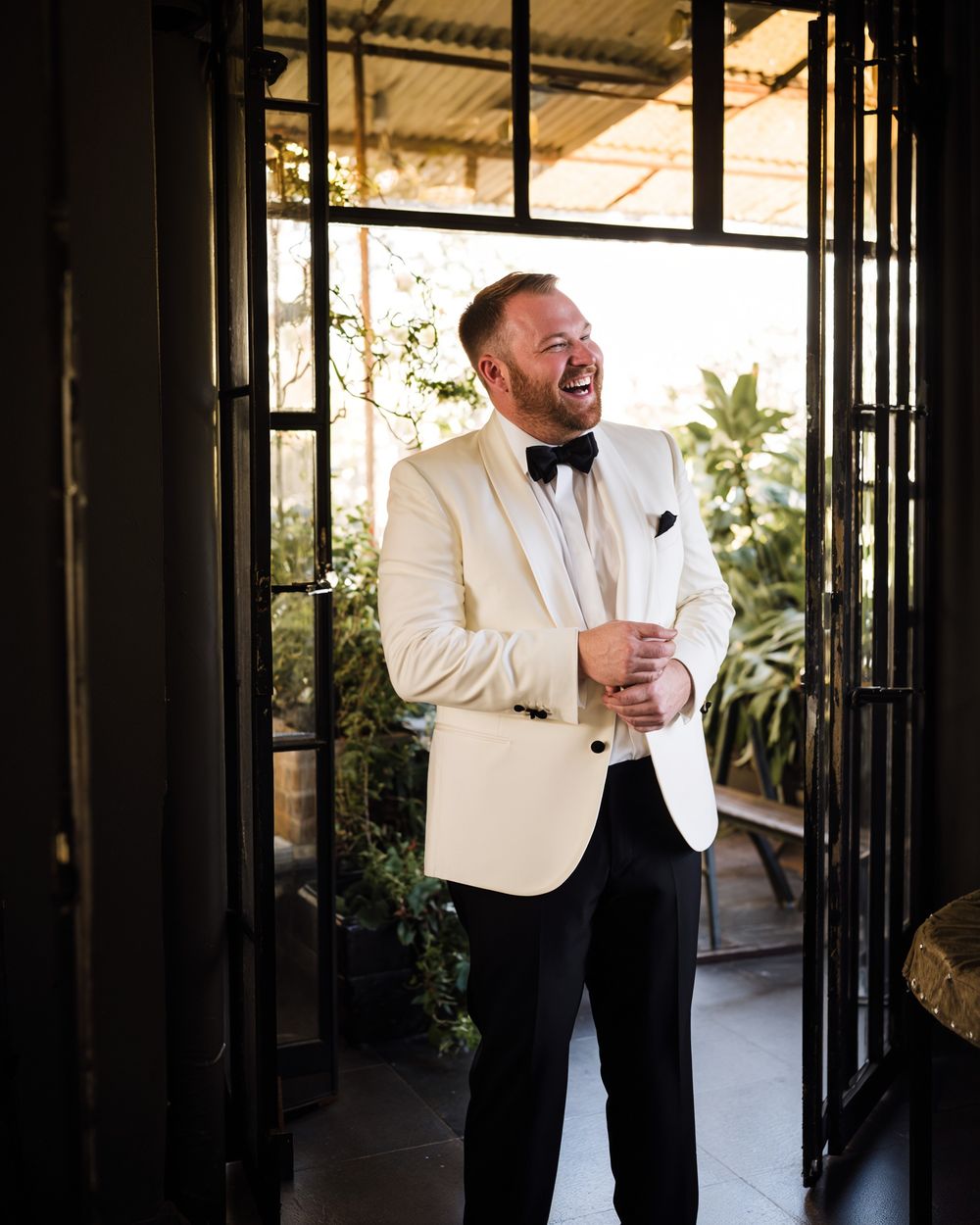
The White or Ivory Dinner Jacket
Inspired by classic Hollywood, the white dinner jacket with black trousers is trending for summer evening weddings and destination celebrations. It’s bold, memorable, and distinctly separates the groom from the rest of the party.
10. Personalized Details That Tell Your Story
This is where custom-made suits truly shine. The 2026 trend toward personalization goes beyond monogramming your initials on the lining (though that’s still popular). Grooms are incorporating meaningful details throughout:
- Custom lining — featuring the wedding date, a meaningful quote, or a pattern that holds personal significance
- Embroidered details — initials on the cuff, the couple’s wedding date inside the jacket
- Unique buttons — mother-of-pearl, horn, or contrast-color buttons as a subtle signature
- Coordinated accessories — matching ties or pocket squares with the wedding color palette
These details don’t show up in every photo, but they make the suit yours. A groom who opens his jacket to reveal a custom-printed lining with the couple’s wedding date creates a moment that lasts beyond the ceremony.

Wedding Suit Inspiration from Instagram
How to Match Your Suit to Your Venue
The venue dictates the suit more than any trend list. Here’s a practical guide for the most common 2026 wedding settings:
| Venue Type | Recommended Suit Style | Fabric | Accessories |
|---|---|---|---|
| Beach | Relaxed two-piece, no tie, open collar | Linen or cotton-linen | Loafers or no shoes, linen pocket square |
| Garden / Vineyard | Three-piece, relaxed shoulders, earthy colors | Lightweight wool or linen blend | Brown shoes, floral tie, boutonniere |
| Church / Cathedral | Morning suit or formal three-piece | Worsted wool | Formal tie, white shirt, cufflinks |
| Ballroom / Hotel | Tuxedo or dark suit, peak or shawl lapels | Fine wool or velvet | Bow tie, patent shoes, silk pocket square |
| Barn / Rustic | Tweed or herringbone three-piece | Tweed, donegal | Knit tie, leather boots, wool pocket square |
| City rooftop | Modern slim suit, bold color or pattern | Lightweight wool | Sleek tie, minimalist pocket square, clean shoes |
Browse Three-Piece Wedding Suits
Seasonal Guide: Summer vs Winter Wedding Suits
Spring & Summer Weddings
Prioritize breathability and lightness. The ceremony might be beautiful, but standing under direct sun in a heavy worsted wool suit will be miserable. Choose:
- Linen or linen-blend suits in beige, light blue, sage, or ivory
- Cotton suits for a slightly more structured alternative
- Lighter colors that reflect heat rather than absorb it
- Unlined or half-lined construction for airflow
- Loafers or suede shoes — skip the heavy Oxford
Autumn & Winter Weddings
This is where texture and depth shine. The colder months give you permission to go darker, heavier, and more layered:
- Flannel, tweed, or heavyweight wool in charcoal, burgundy, forest green, or chocolate
- Three-piece suits with a contrasting waistcoat for warmth and style
- Velvet dinner jackets for evening ceremonies
- Heavier shoes: leather brogues or Chelsea boots
- Richer accessories: silk ties, wool pocket squares, statement cufflinks

Why Custom Suits Win for Weddings
Wedding suits are one of the strongest cases for going made-to-measure. Here’s why:
Off-the-rack limitations:
- Limited color and fabric choices — you get what’s in stock
- Standard sizing rarely fits perfectly — alterations add cost and time
- Groomsmen in different sizes often look mismatched in the same off-the-rack suit
- No personalization options (custom lining, monograms, unique buttons)
Custom suit advantages:
- Choose from 500+ fabrics in any color, weight, and texture
- Every measurement is yours — no compromises on fit
- Coordinate the entire wedding party with matching or complementary fabrics
- Add personalized details: custom lining, embroidered initials, unique buttons
- The suit fits you on the most photographed day of your life
Start Designing Your Wedding Suit


Wedding Suit Shopping Timeline
One of the biggest mistakes grooms make? Leaving the suit too late. Here’s a realistic timeline:
| Timeline | What to Do |
|---|---|
| 6–8 months before | Start researching trends, save inspiration images, decide on formality level and color direction |
| 4–6 months before | Order the groom’s suit. For custom suits, this gives time for production and any adjustments |
| 3–4 months before | Order groomsmen suits. Send them the measurement guide so they can order from home |
| 2–3 months before | Suits arrive. Try everything on. Order accessories: ties, pocket squares, shoes, cufflinks |
| 1 month before | Final fitting. Steam or press the suit. Break in new shoes |
| Day before | Hang the suit. Lay out all accessories. Relax |
Start early, especially if you’re going custom. Rushing a wedding suit leads to compromises — and this is the one outfit you’ll see in photos for the rest of your life.
What’s Fading in 2026
Not every trend from recent years is still holding strong. A few things to reconsider:
- Ultra-slim cuts — extremely tight suits that restrict movement are giving way to more comfortable, slightly relaxed fits
- Shiny fabrics — high-gloss suits that looked trendy in photos but cheap in person are being replaced by matte and textured fabrics
- Matching everything exactly — the days of matching your tie to the bridesmaids’ dresses to the table linens are over. Coordination is in; matchy-matchy is out
- Rented suits — with the cost of renting vs buying converging, more grooms are choosing to own a custom suit they can wear again
- Plain grey suits — not wrong, just uninspired. Grooms are choosing more distinctive options for their wedding day
Frequently Asked Questions
What is the most popular wedding suit color for 2026?
Navy remains the most popular base color, but 2026 is seeing a significant rise in burgundy, emerald green, and earthy tones like terracotta and camel. The choice depends on your venue and season — darker, richer colors for autumn and winter; lighter, warmer tones for spring and summer.
Should the groom wear a suit or a tuxedo?
It depends on the dress code and time of day. Tuxedos are appropriate for formal evening ceremonies (after 6 PM). For daytime or semi-formal weddings, a well-fitted suit is the better choice. If you want maximum formality during the day, consider a morning suit.
Can groomsmen wear different suits?
Yes — and in 2026, it’s actively encouraged. The mix-and-match approach (same color family, different shades or styles) looks more modern and flatters different body types. The key is having one unifying element, whether that’s color, fabric, or accessories.
How far in advance should I order a custom wedding suit?
Ideally 4–6 months before the wedding. This gives enough time for production, shipping, and any adjustments. Groomsmen should order 3–4 months out.
Is it worth getting a custom suit for a wedding?
It’s one of the best cases for going custom. A wedding suit is worn on your most photographed day, in front of everyone who matters to you. Perfect fit, your choice of fabric and color, personalized details — and you own a suit you can wear to future events rather than returning a rental.
What shoes should a groom wear?
Match the formality: patent leather Oxfords for black-tie, leather Oxfords or Derbys for formal, loafers for semi-formal, and suede or minimalist shoes for casual and beach weddings. Check our wedding shoe guide for detailed recommendations.
Ready to Design Your 2026 Wedding Suit?
Choose from 500+ fabrics, customize every detail, and get a suit made to your exact measurements.


Dark Gray
Pure wool
Celebration
Vitale Barberis Canonico dark grey houndstooth stretch Pure wool Suit


Melange
Wool Blends
Twill
Charcoal super 100s three buttons Suit


Wool Blends
Tweed
Donegal
Light brown super 100s donegal tweed Suit


Wool Blends
Tweed
Donegal


