


Today, modern weddings allow greater creativity and that freedom extends to clothing. A wedding suit color is no longer limited to traditional black or grey; it can now reflect personality while still respecting the setting. But among numerous tones and shades, which suit color would fit your style, the season and overall atmosphere of the wedding? Not a tricky problem at all - If you follow our guide below, selecting the ideal color will become clear and straightforward.
Dress Code and Formality
The first and most important factor when choosing a wedding suit color is the dress code. Formality sets the boundaries for acceptable shades, fabrics and combinations. Before considering personal preference, always determine whether the event is black tie, formal, semi-formal or casual.
Black Tie and Formal
Black tie weddings traditionally require a tuxedo, not a standard suit. The expectation is high formality: black jacket with satin lapels, black trousers, white dress shirt and black bow tie. In this context, color flexibility is minimal.
For formal (but not strictly black tie) weddings, dark and refined colors are most appropriate. These shades communicate elegance and respect for the ceremony.
- Black
- Midnight navy
- Charcoal grey

Semi-Formal
Semi-formal weddings allow more flexibility while maintaining structure. This is where many grooms and guests begin exploring broader color options for wedding suits. Appropriate choices include:
- Navy
- Medium grey
- Deep blue
- Dark brown

These colors remain polished but feel less rigid than black. Semi-formal attire works well for garden venues or contemporary celebrations. Texture and fabric weight also become more noticeable at this level of formality.
Casual
Casual weddings offer the widest range of suit colors. While the tailoring should still appear intentional, lighter and softer tones are often welcome. Examples include:
- Beige or tan
- Light grey
- Soft blue
- Muted green

Casual does not mean careless. The suit color should still harmonize with the venue and overall theme. Even in relaxed settings, cohesion matters more than bold experimentation.
Seasonality and Time of Day
Season plays a significant role in determining what wedding suit color feels natural and visually balanced. Light interacts differently with fabric throughout the year and certain shades align better with seasonal environments.
Spring
Spring weddings favor fresh and mid-tone colors - vibrant but not overpowering. As natural light increases and floral surroundings dominate, medium blues, light greys and soft earth tones work well:
- Navy
- Medium grey
- Soft blue
- Light olive/Sage

Summer
Summer weddings often call for lighter and more breathable colors. High temperatures and bright daylight make dark, heavy shades appear visually dense. Strong summer options include:
- White
- Light grey
- Sand
- Pastel tones

On hot and sunny days, lightweight materials like linen and seersucker are recommended to enhance comfort
Autumn
Autumn introduces richer, deeper tones. The natural environment shifts toward warmer hues, which makes earth-inspired suit colors particularly effective. Consider:
- Brown
- Burgundy
- Forest green
- Dark navy

These shades harmonize with seasonal foliage. Autumn wedding suit colors often feel more textured and grounded.
Winter
Winter weddings support darker and more saturated tones. Evening ceremonies are common and indoor venues dominate. Ideal winter choices:
- Charcoal
- Black
- Midnight blue
- Deep green

Darker colors enhance the formality and elegance associated with winter celebrations. They also pair naturally with heavier fabrics such as wool and tweed, reinforcing seasonal appropriateness.
Daytime vs Evening
Daytime weddings, especially those held before late afternoon, generally call for lighter or mid-tone suit colors. Natural daylight highlights texture and color variation, making navy, medium grey, beige or soft blue particularly suitable. These shades feel balanced under sunlight and complement outdoor settings.
Evening weddings, on the other hand, favor darker and more saturated tones. Lower light conditions enhance depth, making charcoal, midnight blue, black or deep green more appropriate. Darker colors also signal a higher level of formality, especially when paired with polished leather shoes and refined accessories.

Wedding Venue
The venue shapes the atmosphere of the wedding and the wedding suit color should reflect that environment.
Church
Church ceremonies are typically traditional and formal. Structured tailoring and classic colors are most appropriate:
- Navy
- Charcoal
- Black

Garden
Garden weddings offer a softer and more romantic atmosphere. Natural greenery and light allow for more flexibility in color selection, especially mid-tones:
- Medium grey
- Blue tones
- Olive
- Light brown

Beach
Beach weddings are typically relaxed and bright. Heavy dark suits often appear out of place in this setting, so breathable fabrics and effortless light shades will align more with the informal atmosphere:
- White
- Sand/Beige
- Light grey
- Baby blue
- Soft pink

City Hall
City hall weddings range from minimal and modern to semi-formal. Clean lines and solid, confident colors work best in urban environments. Good choices include:
- Navy
- Charcoal
- Deep blue
- Brown
- Burgundy


Destination Weddings
Destination weddings are usually held at a popular travel spot or even in another country, so color decisions vary widely depending on location. The key is to adapt to the climate and cultural tone.
If that is a warm, tropical destination, you could go for beige and pastels. For a wedding ceremony in a historic or European city, people usually opt for navy, grey or dark green.

Design Your Three-piece Wedding Suit
Groom, Groomsman and Guest
Obviously, guests can’t wear the same outfit as the groomsmen or the groom, so make sure you also consider your role when attending the wedding to decide the suit color.
- Groom: The groom’s suit should feel slightly more distinctive than the rest of the party. This can be achieved through a deeper shade, richer texture or subtle contrast. The difference does not need to be dramatic, but it should be intentional.
- Groomsmen: Groomsmen typically wear coordinated suits that align with the wedding palette. Their colors should support the groom rather than compete with him. Consistency in tone creates cohesion in photographs.
- Guest: Guests should respect the dress code without overshadowing the wedding party. Classic colors such as navy, grey or brown are reliable choices. Avoid overly bold shades or white tones that could distract from the couple.

Cultural Considerations
Suit color reflects cultural traditions and symbolic meanings of weddings. In many Western weddings, darker tones such as navy, charcoal or black signal formality and elegance. However, in other cultures, color carries deeper significance.
For example, in some Asian traditions, red symbolizes prosperity and celebration, making burgundy or deep red tones more meaningful than black. In Mediterranean or Latin settings, lighter colors such as beige or soft blue may feel more aligned with the climate and festive atmosphere. Meanwhile, in highly traditional ceremonies, conservative colors remain a sign of respect.

If the wedding blends cultural backgrounds, coordination becomes even more important. The suit color should complement ceremonial garments, traditional fabrics or symbolic palettes without competing with them. Remember that respect and cohesion always outweigh novelty.
How to Coordinate Wedding Suit Color
The overall impact depends on how well your suit is coordinated with the shirt, shoes and accessories. These elements must work together to create a balanced, intentional appearance.
- Shirt: White remains the most formal and versatile option, while light blue or soft ivory can add warmth without reducing formality. The shirt should create a clean contrast with the suit color, especially in photographs. Avoid overly bold shirt colors that compete with the suit tone.
- Dress Shoes: The wedding shoe color should harmonize with the suit’s depth; the darker the suit, the darker the shoe. Black shoes pair best with black, charcoal and deep navy suits. Brown shoes complement navy, grey, burgundy and green suits.
- Accessories: Your tie, pocket square and belt should either echo the suit color or introduce controlled contrast. For instance, belts should match the shoe color for visual consistency. Textures such as silk or grenadine can elevate darker suits for evening weddings.
Wedding Suit Outfits
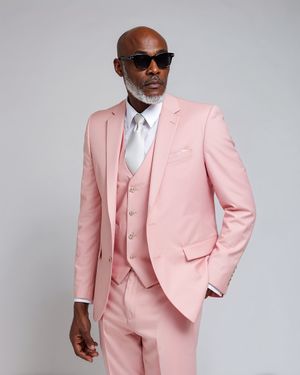
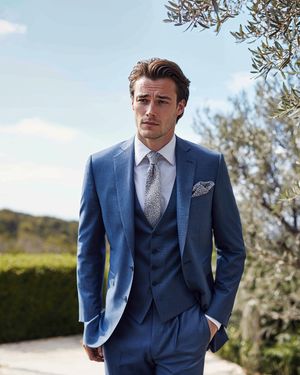
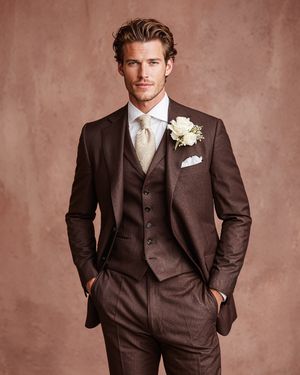

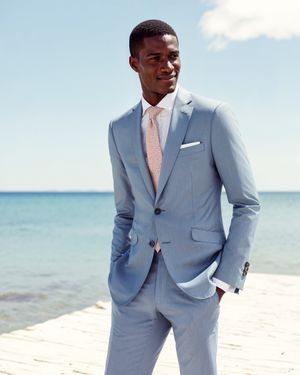
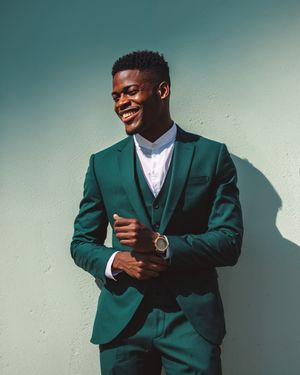
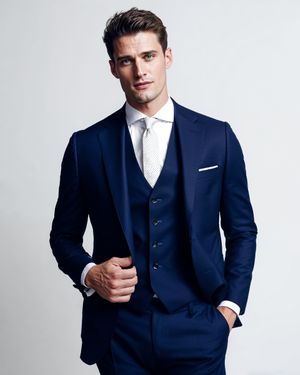
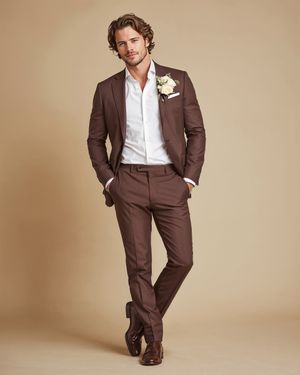
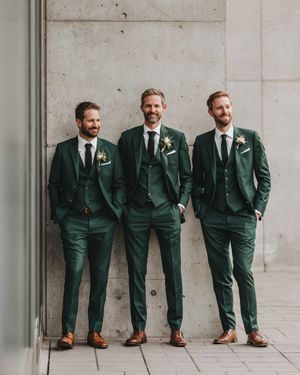
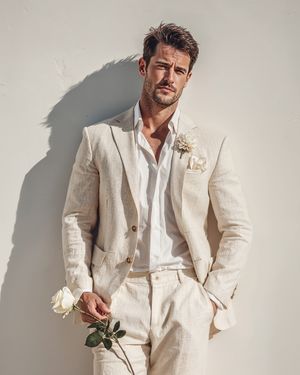
Classic Wedding Suit Color Combinations
Classic wedding suit colors remain popular because they are timeless, versatile and photograph well across different lighting conditions. These combinations are reliable for grooms, groomsmen and guests who want elegance without unnecessary risk.
| Suit Color | Shirt | Shoes | Accessories |
|---|---|---|---|
| Navy | White, light blue | Dark brown, black | Burgundy, navy, silver tie; White pocket square |
| Charcoal | White | Black, dark brown | Black, deep burgundy, dark grey tie White pocket square |
| Grey (Medium/Light) | White, pale blue | Brown, black | Navy, burgundy, patterned silk tie |
| Black Suit | White | Black | Black bow tie (formal) or black silk tie Minimal accessories |
| Brown (Dark) | White, cream | Dark brown | Olive, burgundy tie Textured pocket square |
Modern Wedding Suit Combinations
Modern weddings allow more personality in suit color, especially for outdoor, destination or semi-formal celebrations. These shades remain elegant but introduce warmth, depth or softness.
| Suit Color | Shirt | Shoes | Accessories |
|---|---|---|---|
| Green (Forest/Olive) | White, soft ivory | Dark brown | Burgundy, brown, muted gold tie |
| Burgundy | White, light grey | Dark brown, black | Navy, charcoal tie Subtle patterned pocket square |
| Beige | White, light blue | Brown, tan | Soft blue, sage patterned tie |
| Pastel (Dusty Blue, Soft Pink, Light Sage) | White, ivory | Brown, tan | Neutral tie and pocket square |
Common Mistakes When Choosing Wedding Suit Colors
Even with many options available, certain mistakes consistently reduce visual harmony. Avoid the following:
- Ignoring the dress code & setting: Wearing a burnt orange suit to a formal evening church wedding creates an imbalance and shows no respect to the ceremony. Always align color with the event’s level of formality and venue atmosphere.
- Overpowering the bride’s outfit: The groom should look distinguished, but not visually compete with the bride. Extremely bold or flashy colors can disrupt the visual hierarchy of the ceremony.
- Poor contrast with skin tone: A suit color that is too close to your skin tone can appear washed out, while overly harsh contrast can dominate your complexion. Balanced contrast enhances both tailoring and overall appearance.


