


Can you wear a suit without a tie? — Most people would immediately answer “Yes.” But the real question is not whether you can, it’s when and how you should. A suit without a tie can look modern, confident and effortless or it can appear unfinished and careless. This guide will explain the details in which contexts and styles allow you to skip the tie and how to do it in a polished way.
Why Men Choose to Wear a Suit Without a Tie
Wearing a suit without a tie isn’t a fashion mistake. In many settings, it has become a deliberate style choice. Below are the main reasons men choose this approach:
- A more relaxed and modern appearance: Skipping the tie instantly softens the formality of a suit. It creates a contemporary silhouette that feels approachable while still maintaining structure.
- Greater comfort and practicality: A tie adds both visual weight and physical restriction around the neck. Removing it improves airflow, especially in warmer seasons or long working hours.
- Versatility across business dress codes: Many business environments now fall somewhere between formal and smart casual. A suit without a tie fits perfectly into this middle ground, polished yet still relaxed enough for contemporary professionalism.

When You Can Wear a Suit Without a Tie
While skipping the tie is widely accepted today, it is not universal. For that reason, understanding context is essential before dressing your suit:
- Business casual and creative work environments: In industries such as design, tech, marketing or media, a suit without a tie is often standard. It communicates professionalism without excessive formality. However, tailoring and grooming must still be sharp.
- Social events and smart casual occasions: Dinner parties, networking events, date nights and informal gatherings are ideal opportunities to leave the tie at home and appear stylishly with an open collar.
- Weddings (Non-Black-Tie): For semi-formal or outdoor weddings, especially in spring and summer, wearing a suit without a tie can look elegant and seasonally appropriate.
- Evening events with relaxed dress codes: Cocktail events or private celebrations often allow flexibility. In these cases, skipping the tie can create a sleek look, provided the suit fits well and the shirt collar holds its shape.

How to Wear a Suit Without a Tie
Skipping the tie removes a strong visual anchor from your outfit. That means other elements must work harder to maintain structure. A suit without a tie only looks sharp when the details are intentional.
Pay Attention to the Shirt Collar
The collar becomes the focal point when no tie is present. A weak or poorly structured collar can instantly make the outfit look unfinished.
- Spread/Cutaway collars: Work best because they hold their shape and frame the face properly.
- Button-down collar: A smart option for business casual, as the buttons keep the collar stable.
- Club collar: Rounded edges create a softer, vintage-inspired aesthetic that works well open.
- Cuban collar: Naturally designed to be worn open without a tie.
- Band collar (Mandarin collar): Eliminates the fold entirely, creating a clean, minimalist look.


Mind the Top Button Rule
One of the most common mistakes when wearing a suit without a tie is mishandling the top buttons. In most cases, it’s ideal to leave the top button undone, but the level is slightly different depending on the occasion.

In professional settings, never unbutton more than one button at a time. For evening or relaxed social events, you may open a second button if the context allows it. On a casual day out, there are no rules for buttoning, but note that too many open buttons can quickly shift the look from refined to careless.
Choose the Right Tops
Obviously, classic dress shirts in cotton or lightweight poplin remain the most versatile option, but they’re not the only choice. Polos can work well with suits in smart casual settings. Opt for structured knit polos with firm collars rather than sporty versions. T-shirts or turtlenecks create a minimalist, fashion-forward look when paired with tailored suits; choose high-quality, well-fitted pieces in neutral tones.

Design Your Double-Breasted Suit
If you wear these tops, ensure the suit is sharply tailored. The contrast between formal tailoring and casual topwear is what makes the look modern rather than sloppy. Fit becomes even more important when simplifying the layers.
Learn How to Wear Suits with T-shirts
Consider Suit Fabric and Color
When you don’t wear a tie, the suit becomes the main visual focal point. In general, lighter fabrics and softer colors make your outfit look sophisticated even when skipping the tie.
Wool suits (especially lightweight or tropical wool) maintain structure while allowing breathability, while linen and cotton suits naturally read as more relaxed, making them ideal for summer events and casual weddings.
In terms of colors, navy and charcoal remain the most versatile. Grey, beige and soft pink enhance a seasonal, laid-back feel. Be careful when dressing very dark suits (especially black) as they tend to demand higher formality and often look more complete with a tie.
Balance with Accessories
When you remove the tie, you remove a central styling element. That means accessories must subtly fill that gap. A pocket square is one of the simplest ways to elevate a suit without increasing formality. It adds dimension near the chest, where a tie would normally sit and prevents the outfit from looking visually empty. A belt should remain understated and always match the shoes in color to reinforce cohesion. As for jewelry, a classic watch, perhaps a simple ring, is enough - Minimalism enhances sophistication.

For footwear, loafers are an excellent choice, particularly penny or tassel loafers, as they exude a relaxed yet tailored silhouette. For a more formal edge, opt for clean derby shoes or sleek oxford shoes. In smart casual settings, minimalist leather sneakers can also work.
If you prefer a slightly more expressive approach, consider the alternatives of necktie below. These additions can reintroduce visual interest while maintaining personality:
- A lightweight scarf for transitional seasons.
- A bolo tie for Western-inspired or creative styling.
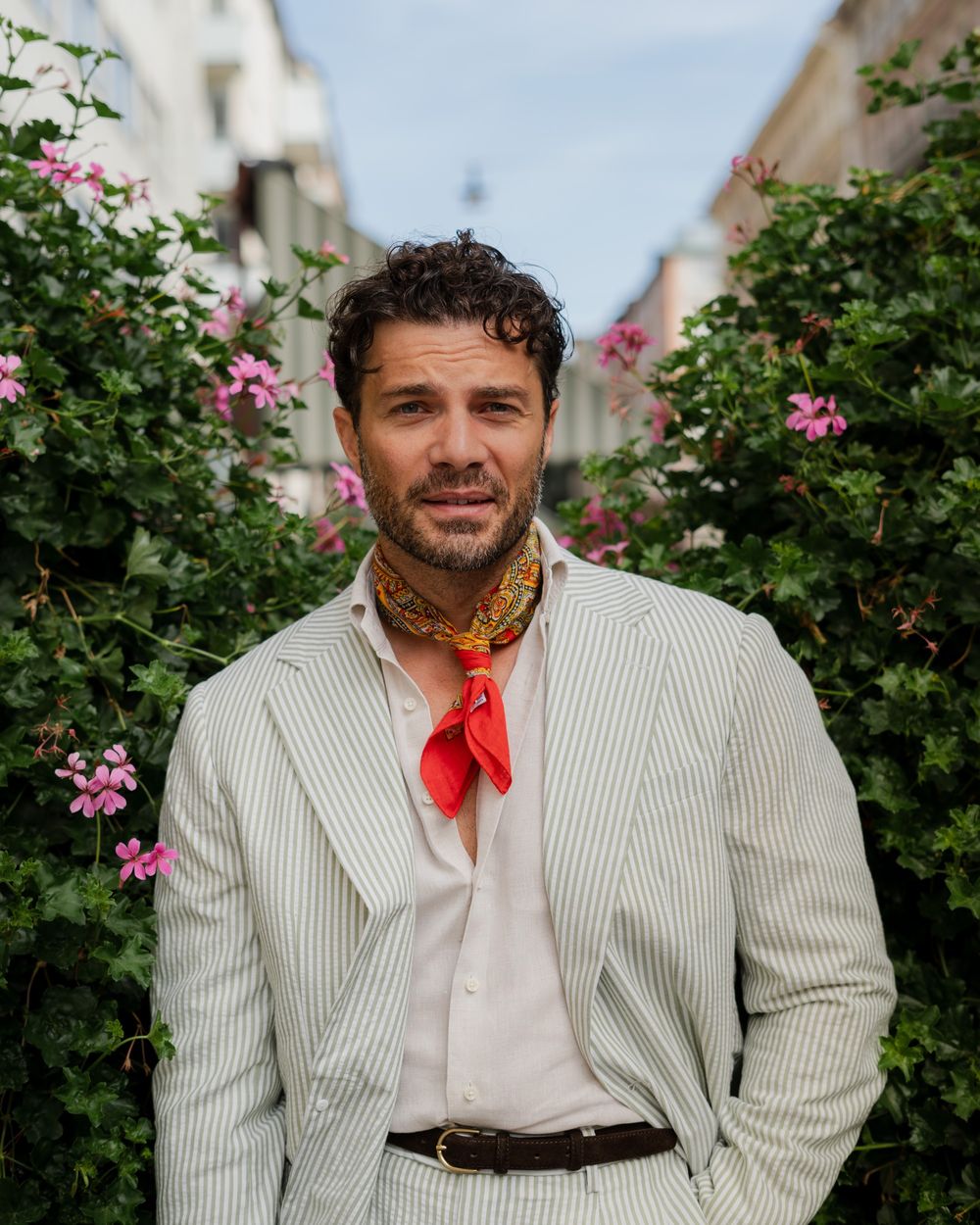
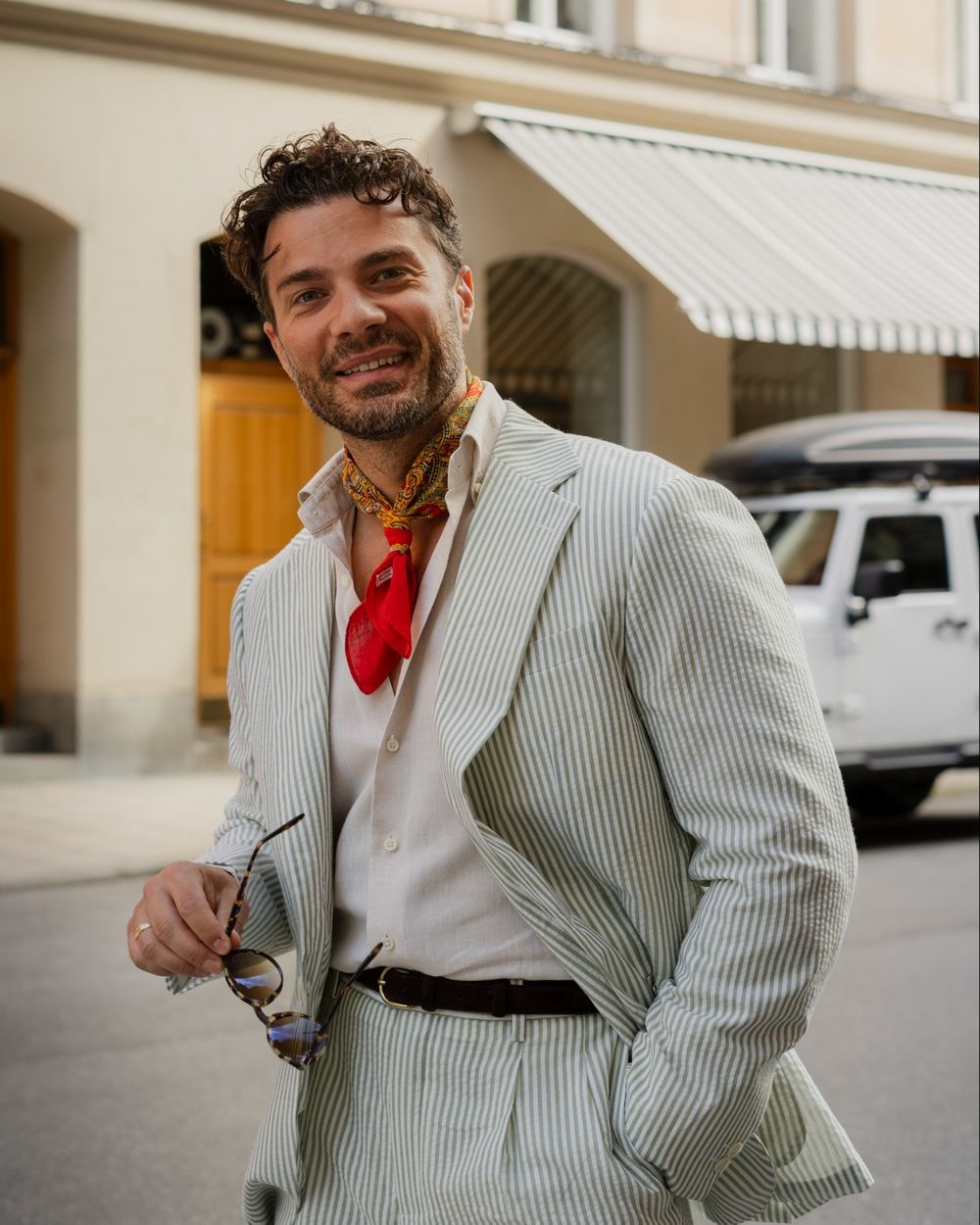
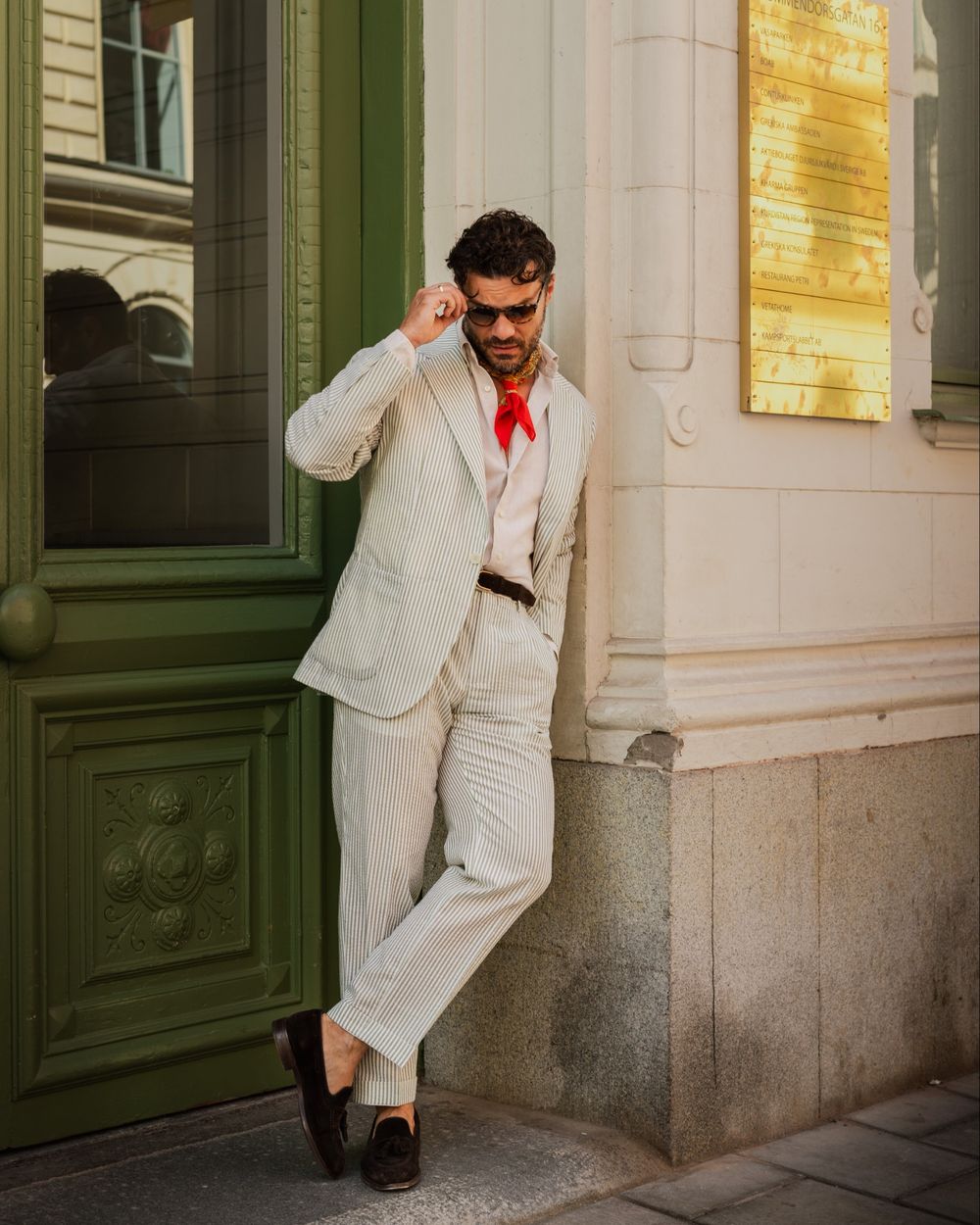
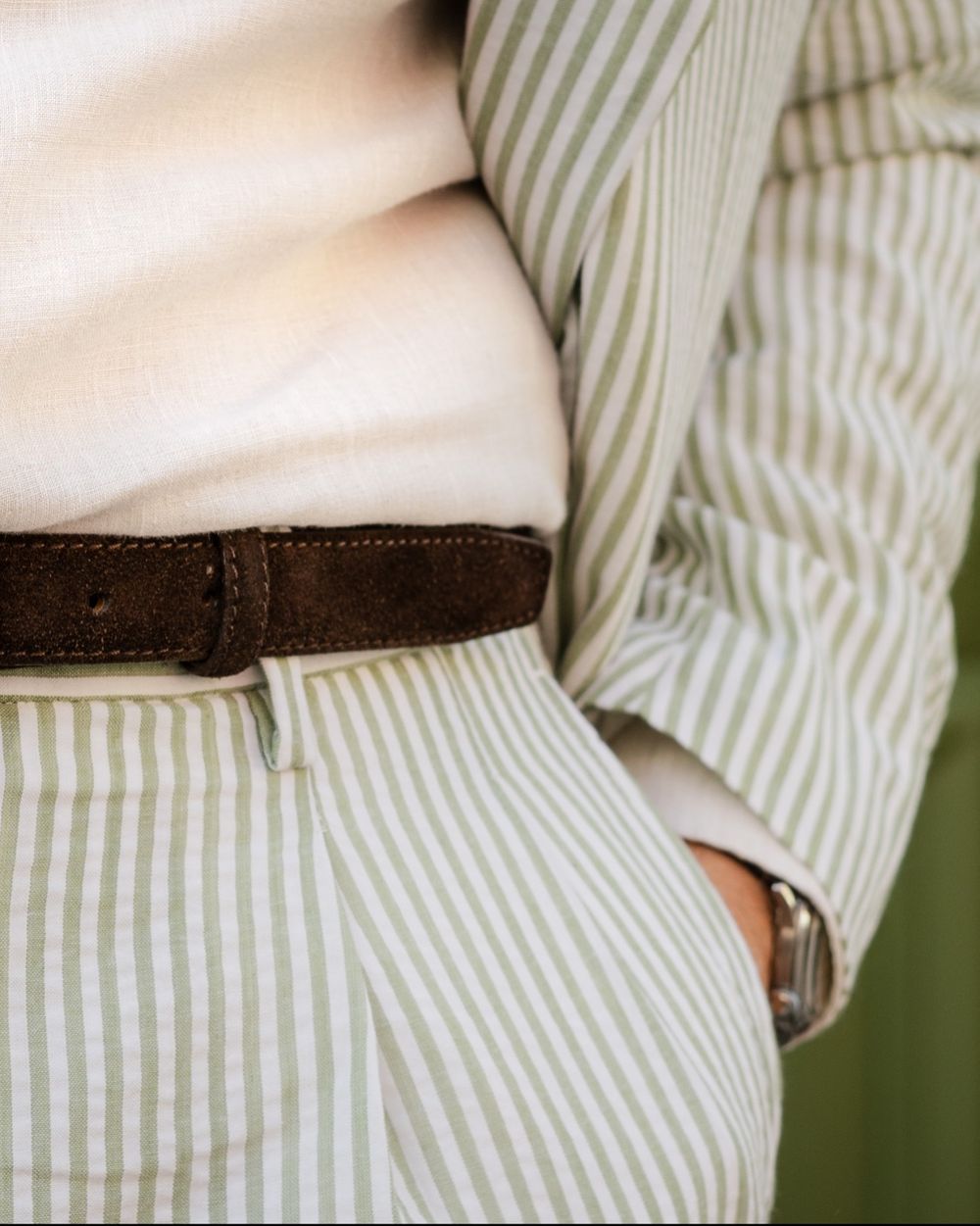
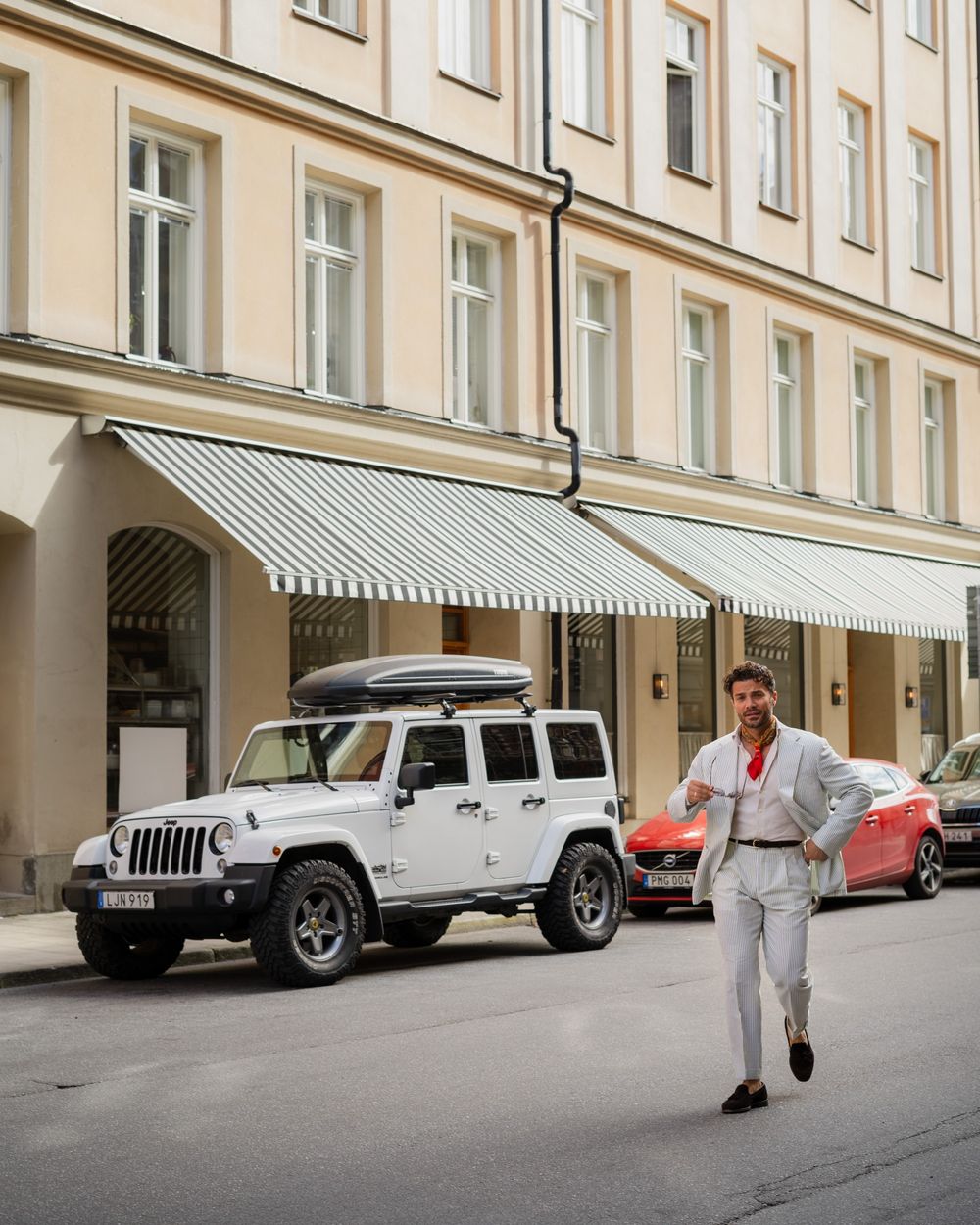
Green Striped Linen Suit with Cream Shirt
Products in the outfit


Credit: Michal Gronowski

When You Should Not Skip the Tie
While modern dress codes have relaxed, there are still situations where wearing a tie is not optional. In these contexts, skipping the tie can appear underdressed or even disrespectful..
- Black tie and formal dress codes: Black tie events require a tuxedo and bow tie. Formal business attire may also expect a necktie as part of the traditional structure. In these cases, the tie is not decoration; it is a component of the dress code.
- Conservative corporate environments: Certain industries, such as finance, law, government and high-level corporate settings, maintain traditional expectations. In client-facing meetings, presentations or formal negotiations, a tie reinforces authority and professionalism.
- Ceremonial or highly traditional events: Religious ceremonies, official state functions, memorial services and formal celebrations often require complete attire. Wearing a tie signals respect for the occasion and its significance.

Suit Without Tie vs Suit With Tie
Now you know how we can wear a suit without a tie. Before the article ends, let’s look back to see how “with” and “without” communicate different levels of formality and intention.
| Suit Without Tie | Suit With Tie | |
|---|---|---|
| Formality Level | Smart casual to semi-formal | Formal to highly formal |
| Visual Structure | Open collar, softer neckline | Defined vertical line through the tie |
| Style | Modern, relaxed, approachable | Traditional, classic, authoritative |
| Best For | Business casual, social events, relaxed weddings | Corporate meetings, formal events, ceremonies |
Ultimately, neither option is “better.” A suit with a tie emphasizes formality and structure; A suit without a tie emphasizes modern confidence and versatility. The right choice depends on context, personal style and the message you want to send.
Explore Styling Tips for Shirts and Neckties
Frequently Asked Questions (FAQs)
Is it OK to wear a suit without a tie?
Yes, it is absolutely OK to wear a suit without a tie, as long as the setting allows it. In business casual environments, social events, relaxed weddings and creative industries, a suit without a tie can look modern, confident and intentional. The key is ensuring the suit fits well, the shirt collar holds its structure and the overall look feels polished rather than unfinished.
Is a suit with no tie smart casual?
A suit without a tie typically falls between smart casual and semi-formal, depending on how it is styled. If paired with a structured dress shirt, loafers and minimal accessories, it leans toward smart business attire. When worn with a polo or T-shirt and softer fabrics like linen or cotton, it moves closer to smart casual. Context, fabric and footwear ultimately determine the level of formality.
What type of suit is best without a tie?
The best suits to wear without a tie are those in lighter fabrics and versatile colors. Navy, mid-grey, light grey, beige and soft blue suits work particularly well. Fabrics such as lightweight wool, tropical wool, linen and cotton create a relaxed yet refined look. Avoid very formal black suits, as they often appear more complete and balanced with a tie.
Can I wear a suit with no tie to a wedding?
Yes, you can wear a suit without a tie to a wedding, if it is not a black-tie or strictly formal event. Outdoor, summer, beach and semi-formal weddings often allow this styling. Choose a well-tailored suit, a structured shirt collar, polished shoes and consider adding a pocket square to maintain elegance. For black-tie weddings, however, a tie or bow tie remains essential.
Should I unbutton the top button when not wearing a tie?
Yes, when wearing a suit without a tie, it is standard to leave the top button undone. This creates a relaxed but intentional neckline. Avoid unbuttoning more than one button in formal or business settings, as that can appear too casual.
Can you wear a black suit without a tie?
You can, but it requires care. Black suits are inherently formal and often look more balanced with a tie. If worn without one, keep the styling sharp. A crisp white shirt, clean shoes and minimal accessories are essential to prevent the outfit from appearing incomplete.


