


Choosing the right suit color is one of the most consequential style decisions a man can make. The cut, the fabric, and the fit all matter — but it is the color that people register first. It sets the tone of an outfit before anyone notices the lapel width or the button stance. A well-chosen suit color communicates authority in a boardroom, ease at a summer wedding, and confidence at a job interview. A poorly chosen one can make you look washed out, overdressed, or simply forgettable.
Whether you are buying your very first suit or rounding out a wardrobe of five, this guide will walk you through every major suit color — from timeless staples to bold statement shades — and help you match them to your skin tone, the occasion, and the season. We will also cover the shirt and tie pairings that bring each color to life, and flag the mistakes that trip up even experienced dressers.

1. Why Suit Color Matters More Than You Think
Color psychology is not an abstract theory — it has measurable effects on perception. Darker colors like navy and charcoal project competence and trustworthiness, while lighter tones signal approachability and openness. In practical terms, the color of your suit shapes how colleagues, clients, and strangers read you in the first three seconds of an encounter.
Beyond first impressions, suit color determines versatility. A navy suit can rotate through business meetings, weddings, date nights, and weekend events with nothing more than a change of shirt and tie. A pale lavender suit, however striking, is limited to a narrow set of occasions. When you are investing in quality tailoring — especially a tailored suit — picking the right color means getting maximum value from every piece in your wardrobe.
Color also interacts with lighting. Black can look flat under fluorescent office lights but dramatic under evening spotlights. Charcoal holds its depth in almost any setting. Navy reads differently in natural daylight than under warm restaurant lighting. Understanding these dynamics helps you choose suits that look their best wherever you wear them.
2. The Essential Suit Colors Every Man Should Own
If you are building a suit wardrobe from the ground up, three colors form the foundation. These are the shades that cover ninety percent of occasions and pair with virtually every shirt, tie, and shoe combination you can think of. Get these right, and everything else is a bonus.
Navy
Navy is the single most important suit color a man can own. It sits at the precise intersection of authority and approachability — formal enough for a board meeting, relaxed enough for a daytime wedding. Unlike black, navy works under both natural and artificial light without looking harsh or flat. It flatters every skin tone, from the fairest to the deepest, and it accommodates both black and brown leather footwear. If you own only one suit, make it navy.

It is the suit you will reach for most often — for client presentations, christenings, anniversary dinners, and everything in between. Pair it with a crisp white shirt for boardroom authority, or with a light blue shirt and no tie for smart-casual versatility.
For inspiration, browse our full collection of navy suits


Charcoal
Charcoal is the quiet workhorse of a suit wardrobe. It delivers nearly all the formality of black without the severity, making it appropriate for everything from funerals to finance. A well-cut charcoal suit projects seriousness, competence, and understated sophistication. It is the color that senior executives, lawyers, and diplomats have relied on for decades — and for good reason.

What sets charcoal apart is its neutrality. It does not compete with your shirt, tie, or pocket square. Instead, it provides a clean, dark canvas that lets your accessories do the talking. Charcoal pairs effortlessly with white, light blue, pink, and lavender shirts, and it works with ties in virtually any color family.
Discover the full range of charcoal suits to find the shade that suits you best


Black
Black is the most formal suit color and, paradoxically, the one most often misused. A black suit is essential for black-tie events, funerals, and certain evening occasions — but it is not the everyday workhorse many men assume it to be. In a daytime office setting, black can look overly stark, especially under fluorescent lighting. It also limits your shoe options to black leather, since brown shoes with a black suit is a combination that rarely works.

That said, every man should own a well-fitting black suit for the occasions that demand one. When the dress code calls for black, nothing else will do. Choose a fine wool with a subtle sheen for evening events, or a matte finish for more solemn occasions.
Explore our black suits for options that move between formal and modern with ease


| Suit Color | Formality Level | Best For | Shoe Colors |
|---|---|---|---|
| Navy | High to Medium | Business, weddings, interviews, daily wear | Black, brown, burgundy, tan |
| Charcoal | High | Business, funerals, formal events, interviews | Black, dark brown, oxblood |
| Black | Very High | Black-tie events, evening occasions, funerals | Black only |
3. Versatile Suit Colors for Your Second and Third Suit
Once you have the Big Three locked in, it is time to expand. The next tier of suit colors adds range and personality to your wardrobe without sacrificing versatility. These shades work across multiple settings and pair well with accessories you likely already own.
Light Grey
A light grey suit is the natural complement to your charcoal. Where charcoal leans formal and authoritative, light grey reads as fresh, modern, and relaxed. It is an outstanding choice for spring and summer weddings, daytime business events, and any occasion where you want to look polished without appearing severe. Light grey also photographs beautifully, making it a popular choice for wedding parties and outdoor events.
The key to wearing light grey well is fit. Because lighter colors expand the visual silhouette, a light grey suit must be precisely tailored — no excess fabric in the chest or waist. Pair it with a white or pale blue shirt and brown shoes for a timeless warm-weather look.

Brown and Tan
Brown suits have experienced a significant resurgence in recent years, and for good reason. A well-chosen brown — from deep chocolate to warm tobacco — brings an earthy sophistication that stands apart from the blues and greys most men default to. Brown suits work particularly well in autumn and winter, especially in heavier fabrics like flannel or tweed.

Tan and camel suits, on the other hand, are quintessential warm-weather options. A tan linen suit or cotton suit is the perfect suit for a Mediterranean summer, a garden party, or a relaxed Friday at the office. Pair tan with navy accessories — a navy knit tie, navy pocket square — for a color combination that never misses. For shoe ideas, our guide on blue suits with brown shoes covers the classic pairing in detail.


| Second-Tier Color | Best Seasons | Ideal Occasions | Best Shirt Pairing |
|---|---|---|---|
| Light Grey | Spring, Summer | Daytime weddings, business casual, outdoor events | White, pale blue, soft pink |
| Brown / Chocolate | Autumn, Winter | Smart-casual, creative offices, weekend events | White, cream, light blue |
| Tan / Camel | Spring, Summer | Garden parties, casual weddings, summer travel | White, light blue, ecru |
4. Bold Suit Colors That Make a Statement
Once your wardrobe covers the essentials, bold suit colors let you express your personality and stand out from the crowd. These are not everyday suits — they are occasion pieces that reward confidence and careful styling. The key is to let the suit color be the star and keep everything else relatively restrained.
Burgundy
A burgundy suit is the most accessible bold color for most men. It carries the richness of red without the flashiness, landing in a zone that feels sophisticated rather than loud. Burgundy works remarkably well for autumn weddings, holiday parties, and evening events where you want to make an impression without resorting to a tuxedo. Pair it with a white shirt and a dark tie — or go monochromatic with a lighter pink shirt for a tonal look.

Browse our collection of burgundy suits for options in this distinguished shade


Green
Green is having a moment — and it is not just a passing trend. From deep forest green to muted olive, green suits bring an earthiness and originality that stand out in a sea of navy and grey. Forest green, in particular, has emerged as a strong alternative for men who want something different without going too far. It works well with brown shoes, cream shirts, and burgundy accessories. Olive green, meanwhile, leans more casual and pairs beautifully with knitwear and unstructured blazers.


Royal Blue and Teal
Royal blue is bolder and brighter than navy, making it a suit that demands attention. It is a popular choice for weddings, cocktail parties, and fashion-forward office environments. The key is to keep the rest of the outfit quiet — a white shirt, a simple tie, and minimal accessories let the color speak for itself. Teal, sitting between blue and green, offers a similar impact with a slightly more unusual character. Both work best in slim, modern cuts that match their contemporary feel.

Beige and Off-White
For summer events, a beige or off-white suit exudes relaxed Mediterranean elegance. These lightest-of-light suit colors work best in unstructured cuts and natural fabrics like linen or cotton. They are ideal for beach weddings, resort dinners, and warm-climate travel. Just be mindful that light colors show stains more easily, so save these for occasions rather than daily rotation.


5. How to Choose Suit Color by Occasion
Knowing which colors exist is one thing. Knowing which to wear when is what separates a well-dressed man from a merely well-outfitted one. Here is a breakdown of the most common occasions and the suit colors that work best for each.
Business and Corporate Settings
In traditional corporate environments — finance, law, consulting — navy and charcoal remain the gold standard. These colors communicate professionalism, reliability, and seriousness without requiring explanation. For business-casual offices or creative industries, you can expand to light grey, brown, or even a muted green. The rule of thumb: if the meeting has consequences, stick to navy or charcoal.
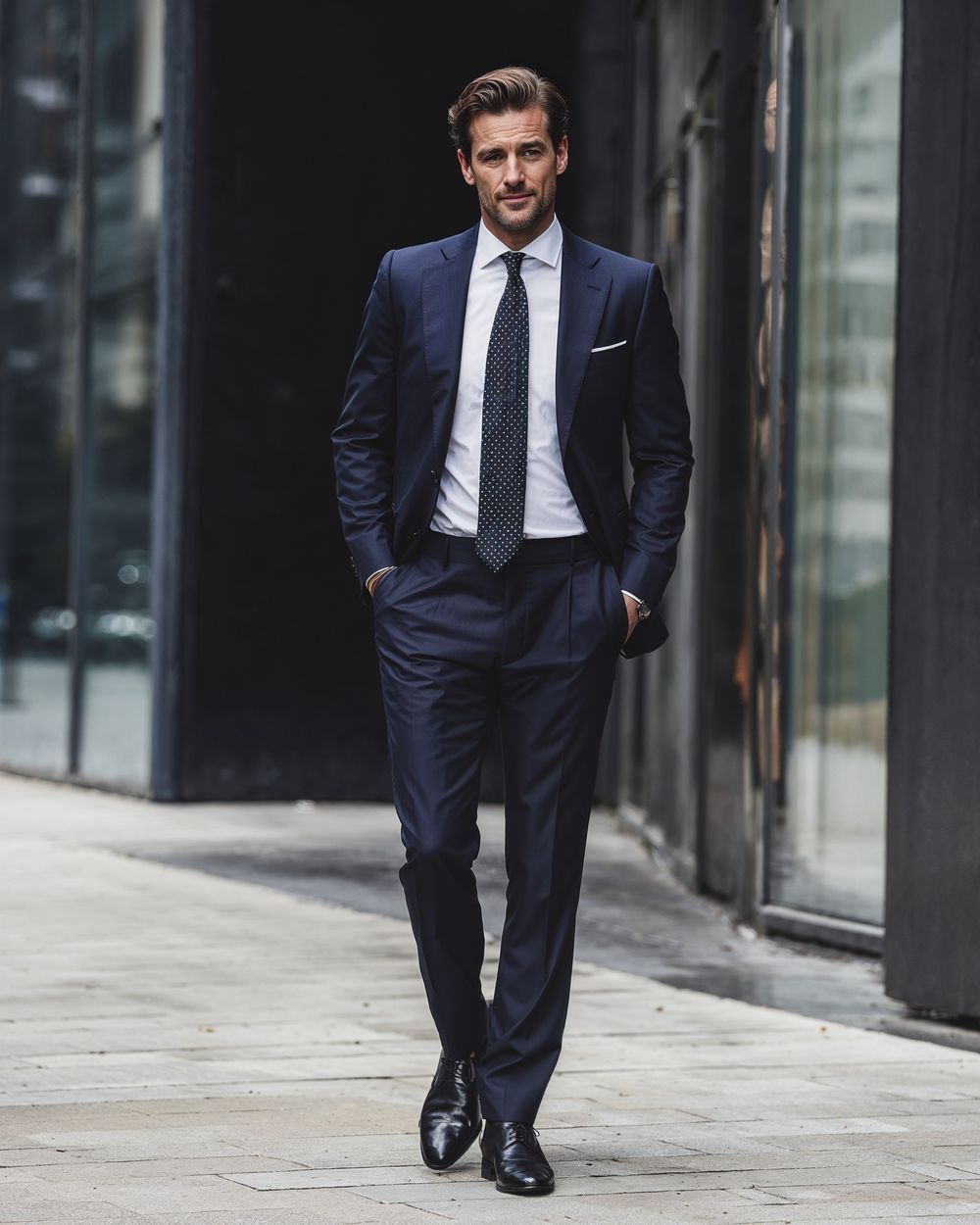
Navy Suit with Polka Dot Black Tie
Products in the outfit


Credit: -
Weddings
Weddings offer the widest range of acceptable suit colors, but the right choice depends on the time of day, the venue, and the season. Daytime outdoor weddings call for lighter tones — light grey, tan, pale blue. Evening indoor weddings lean toward navy, charcoal, or black. As a wedding guest, avoid white or cream. As a groom, the suit color should complement your partner's outfit and the wedding palette — this is where tailored suits truly shine, because you can match the exact shade you need.
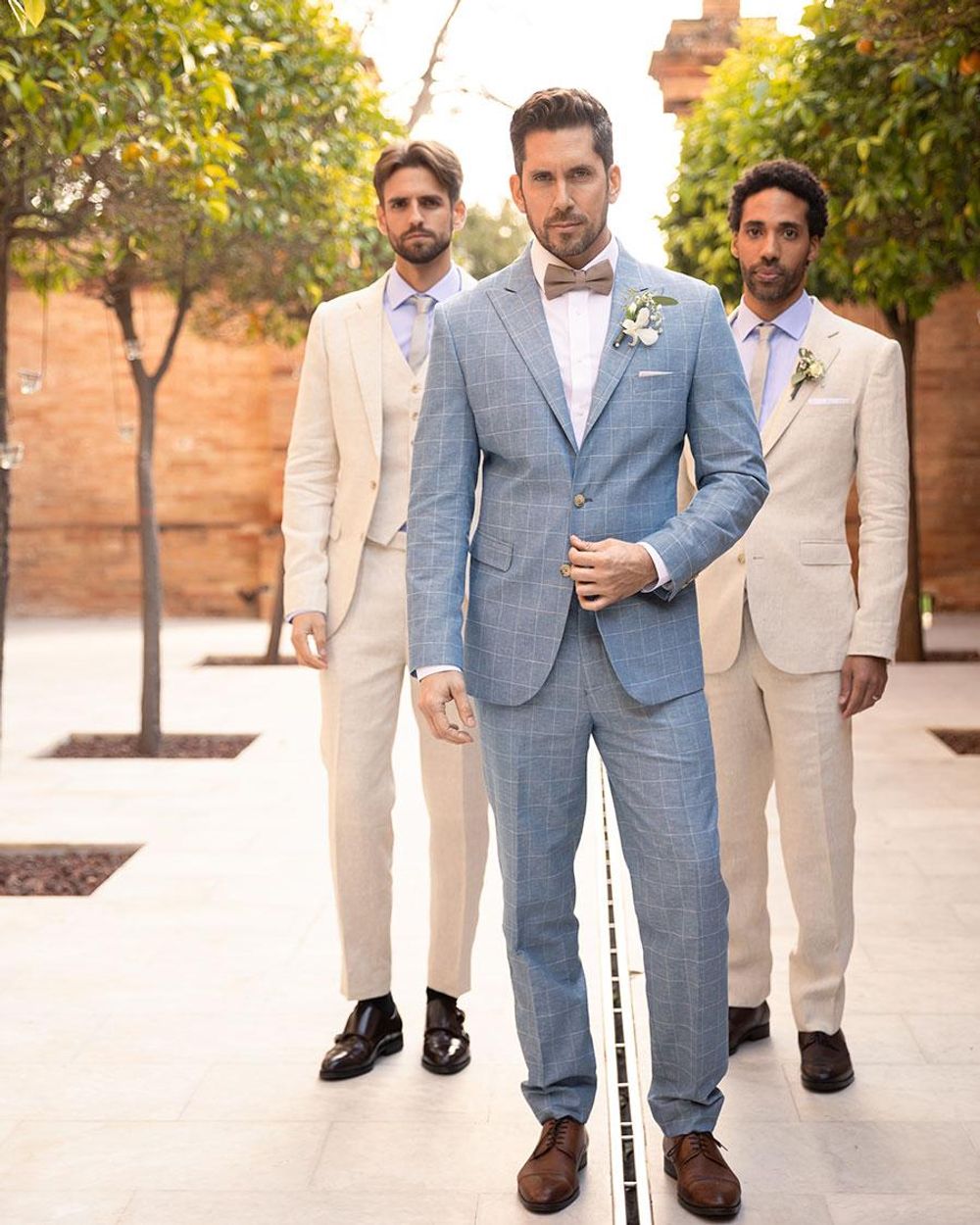
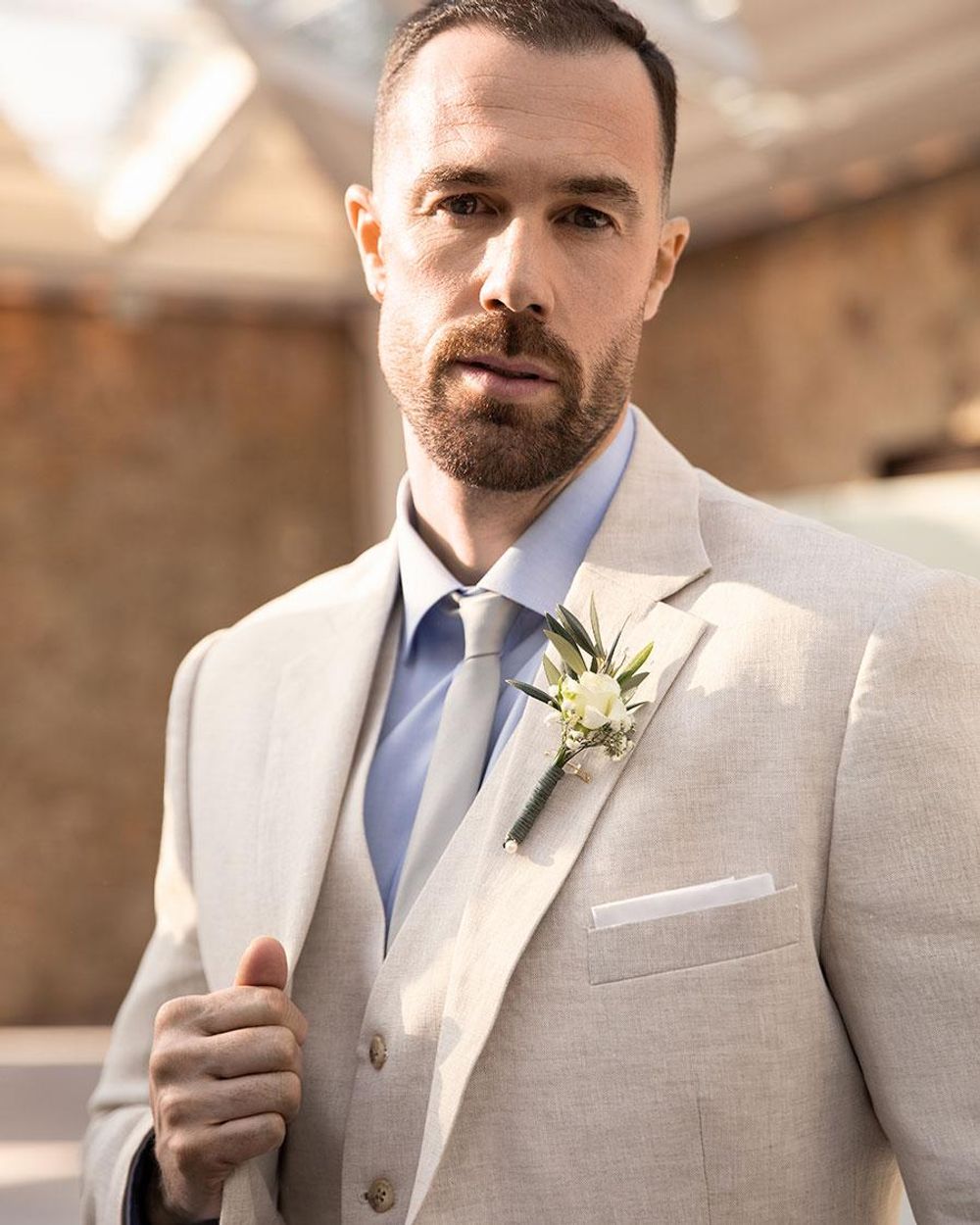
Summer Vibes Wedding
Products in the outfit


Credit: Jonathan Blasco, Thomas Gamble, Christian Navarro, Victor Francis
Job Interviews
For job interviews, the safest choice is navy or charcoal. Both projects are competent without being distracting. Avoid black (too severe), bold colors (too risky when you do not know the interviewer's preferences), and light grey or tan (too casual for a first impression). Pair with a white shirt and a conservative tie.
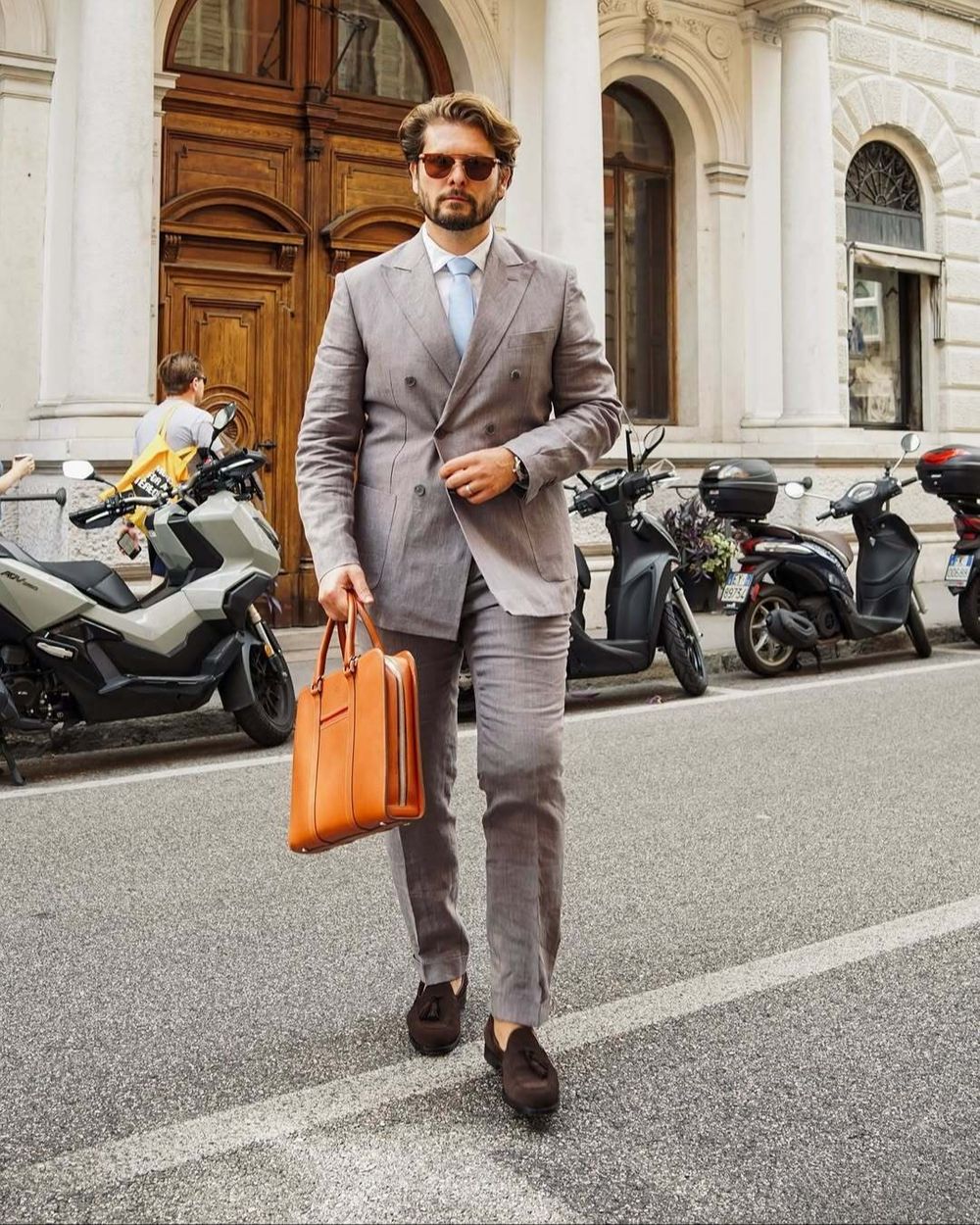

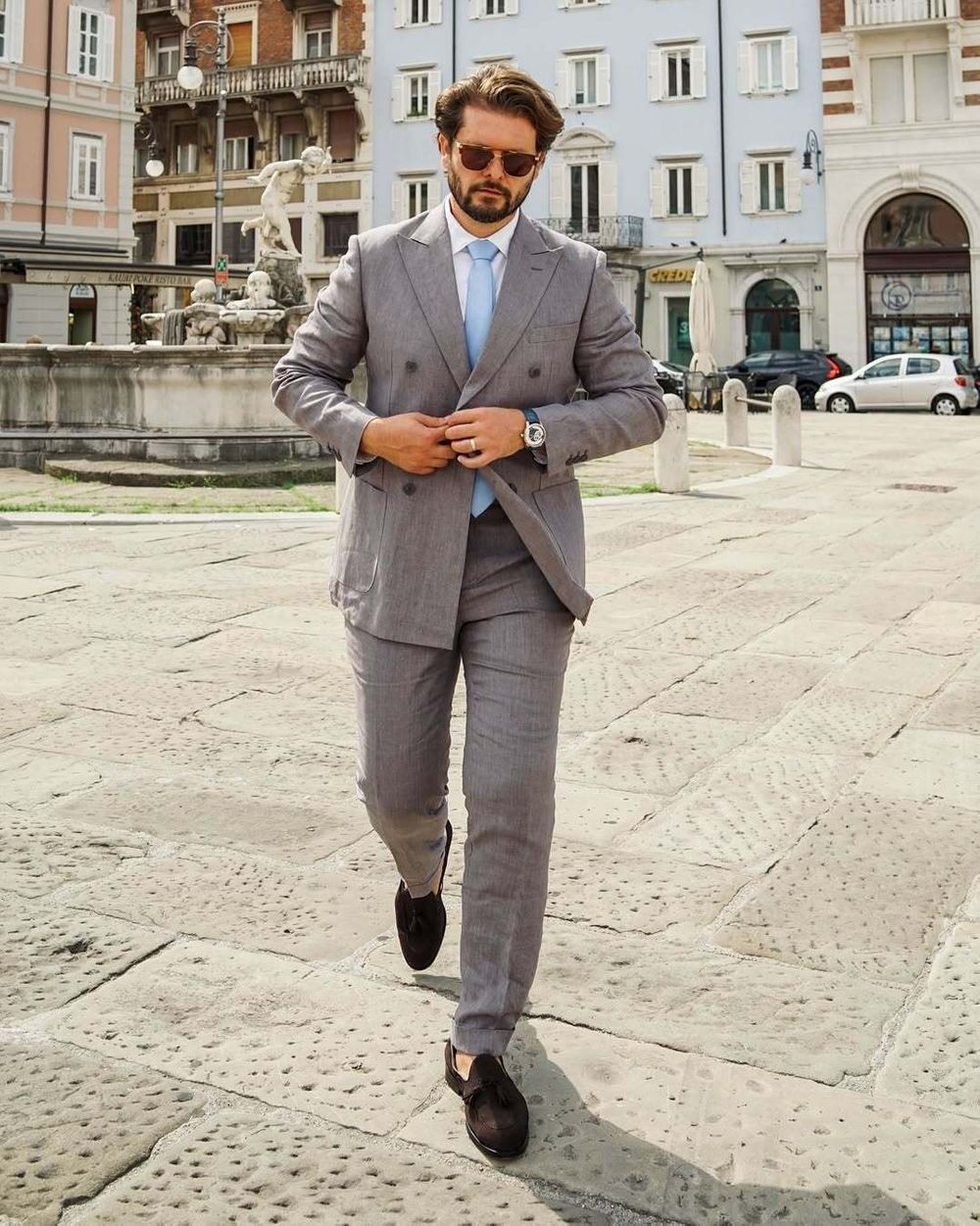
Grey Double-Breasted Suit with White Shirt and Blue Tie
Products in the outfit


Credit: The Gent Style Blogger

Funerals and Memorials
Black is the traditional choice for funerals, but dark charcoal and very dark navy are also appropriate and, in many cultures, more common. The key is to keep the overall look somber and respectful. Avoid any bright colors, bold patterns, or flashy accessories. A dark suit, white or pale grey shirt, and a dark tie is the combination that shows respect in every context.
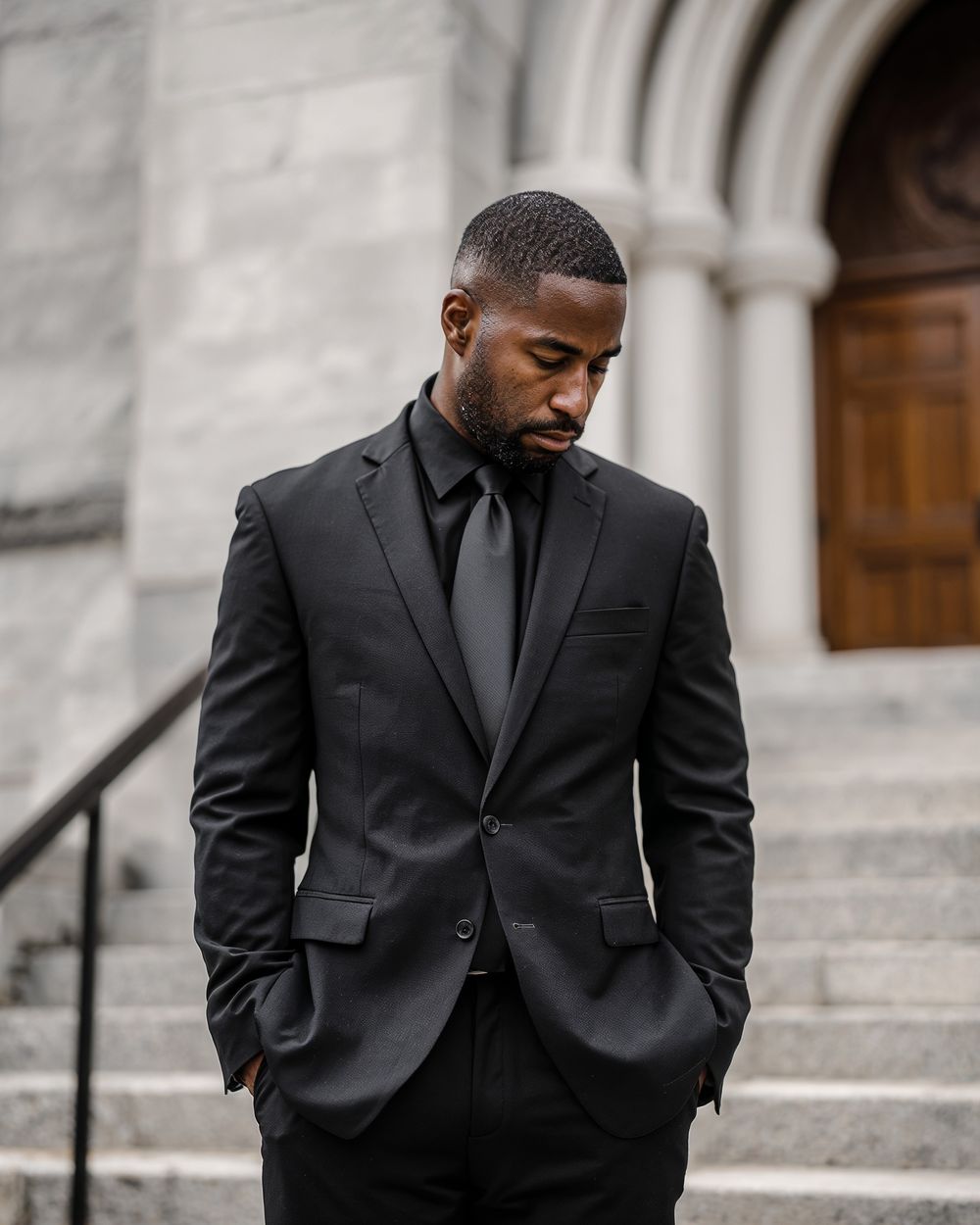
Black Suit with Black Dress Shirt and Black Tie
Products in the outfit


Credit: -
Evening Events and Parties
Evening occasions — cocktail parties, galas, and award ceremonies — are where you can take color risks. This is the time for burgundy, deep green, royal blue, or a monochromatic black-on-black look. The lower lighting of evening venues makes rich colors pop. If the invitation says "black tie," however, stick to a black tuxedo or a very dark midnight navy dinner suit.

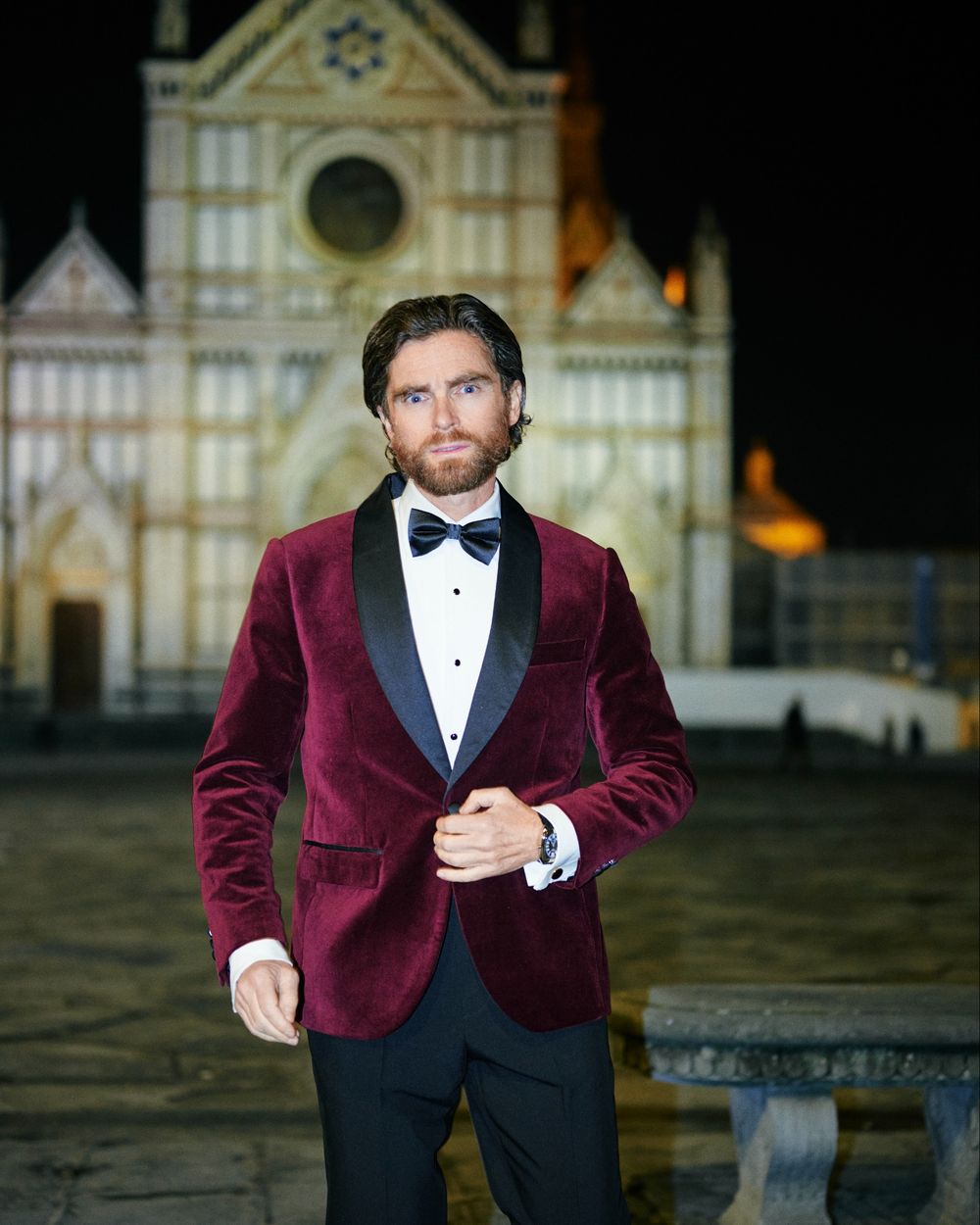

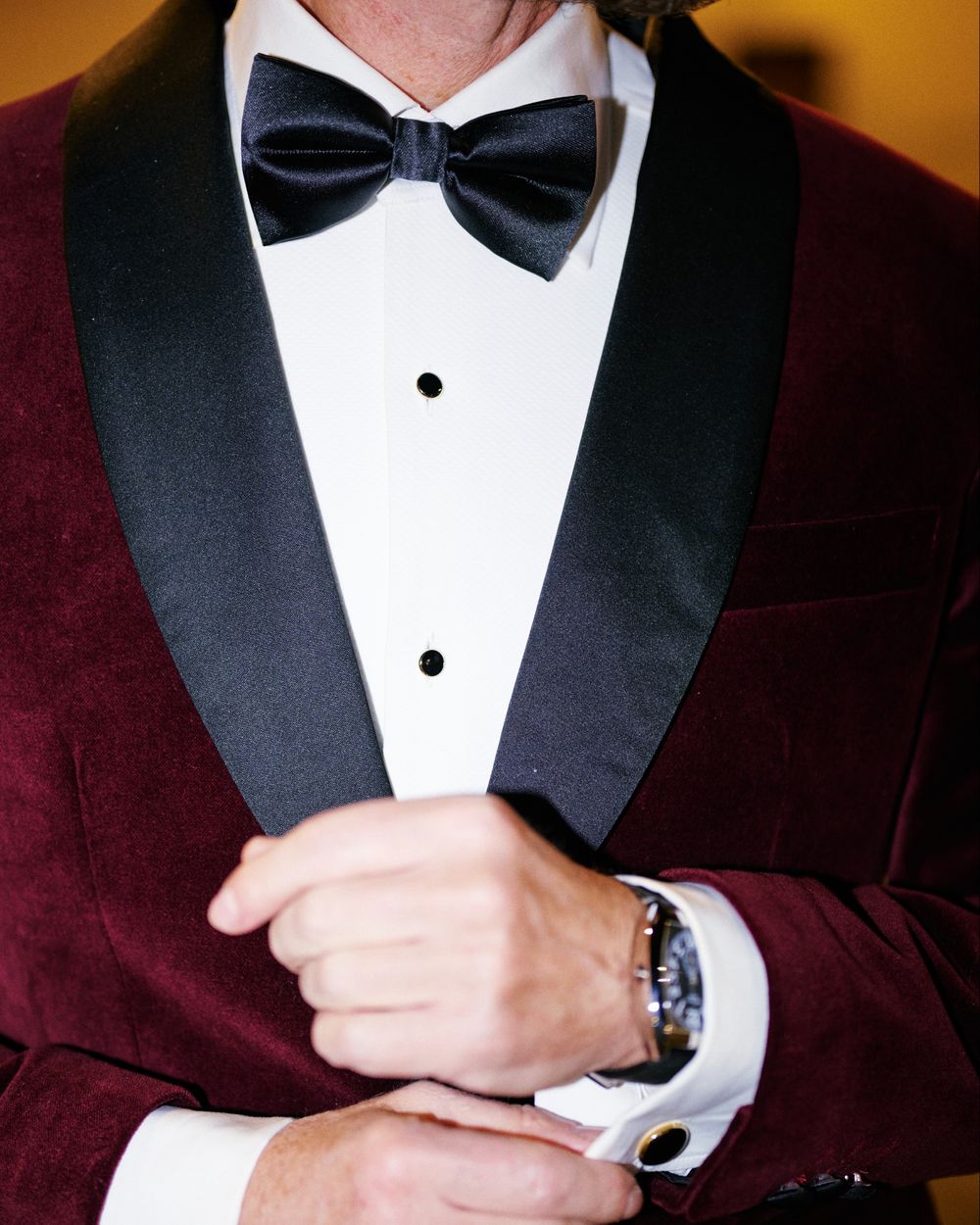

Burgundy Velvet Tuxedo Jacket with Black Tailored Trousers
Products in the outfit


Credit: Niccolò Cesari
6. Suit Color and Skin Tone: Finding Your Best Match
The most flattering suit color depends on your skin tone and undertone. A color that makes one man look sharp can make another look washed out. Understanding your undertone is the first step to consistently choosing colors that work for you.
How to Determine Your Undertone
Look at the veins on the inside of your wrist in natural daylight. If they appear blue or purple, you have a cool undertone. If they appear green, you have a warm undertone. If you cannot clearly tell the difference, you likely have a neutral undertone — which means you have more flexibility across the color spectrum.
Cool Undertones
Men with cool undertones are complemented by suits that have a blue or grey base. Charcoal, medium grey, navy, and true black all work well. These shades echo the cool tones in your skin and create a harmonious, polished look. Avoid suits with strong warm tones — bright tan, rust, or warm brown can clash with your complexion.
Warm Undertones
For warm undertones, suits in earthy and rich tones are your best friends. Think chocolate brown, warm navy (with a hint of teal), olive green, camel, and burgundy. These colors complement the golden or amber tones in your skin and create a rich, grounded appearance. Steer away from stark black, which can look harsh against warm skin, and from icy grey tones that may wash you out.
Neutral Undertones
If you fall into the neutral category, congratulations — nearly every suit color is on the table. The key is to balance saturation: medium-depth colors (mid-grey, true navy, warm brown) tend to be most flattering because they neither overpower nor underwhelm your complexion. You can also experiment freely with statement colors like burgundy, teal, or forest green.
| Skin Tone | Best Suit Colors | Colors to Approach with Caution |
|---|---|---|
| Fair / Light (Cool) | Navy, charcoal, dark grey, forest green | Beige, tan, light khaki (can wash you out) |
| Fair / Light (Warm) | Navy, warm brown, camel, olive green | Stark black, icy silver grey |
| Medium / Olive | Navy, light grey, tan, burgundy, teal | Olive green (too close to skin tone) |
| Dark / Deep | Light grey, tan, royal blue, burgundy, camel, pastels | Very dark colors that reduce contrast (black-on-black) |
7. Suit Color and Season: Dressing for the Calendar
The season should influence not just the fabric of your suit, but also its color. Wearing a heavy dark suit in July looks uncomfortable even if you feel fine, and wearing a light tan suit to a January business meeting can look out of place. Here is how to calibrate your suit color choices throughout the year.
Spring
Spring is the transitional season — time to lighten up from the deep tones of winter without going full summer mode. Medium grey, mid-blue (a shade or two lighter than classic navy), and soft brown are ideal. Fabrics should move from heavy wools to lighter worsted wools or wool-cotton blends. This is also the season to introduce pattern: a light grey suit with a subtle windowpane check is quintessentially spring.
Summer
Summer opens the door to the lightest suit colors: tan, beige, off-white, and pale blue. This is the season for linen and cotton — breathable fabrics in shades that reflect heat rather than absorb it. Even if you stick to navy or grey, choose lighter-weight versions and consider softer, less structured construction. A pale grey cotton suit is a summer wardrobe essential.

Beige Linen Suit with Bare Chest
Products in the outfit


Credit: Anthony rousselet
Autumn
Autumn brings the warmest, richest tones of the year. This is the season for brown suits — from golden camel to deep chocolate — as well as forest green, burgundy, and earthy rust. Heavier fabrics return: flannel, tweed, and textured wools. A brown tweed suit is one of the most distinguished things a man can wear in October or November. The warm colors of autumn echo the changing landscape and feel effortlessly seasonal.
Winter
Winter calls for the darkest, most substantial suits: deep navy, charcoal, black, and very dark brown. These colors match the shorter days and pair naturally with heavier overcoats, scarves, and knitwear. Fabrics should be heavy — flannel, worsted wool, or cashmere blends. A charcoal flannel suit is arguably the most luxurious cold-weather option available.

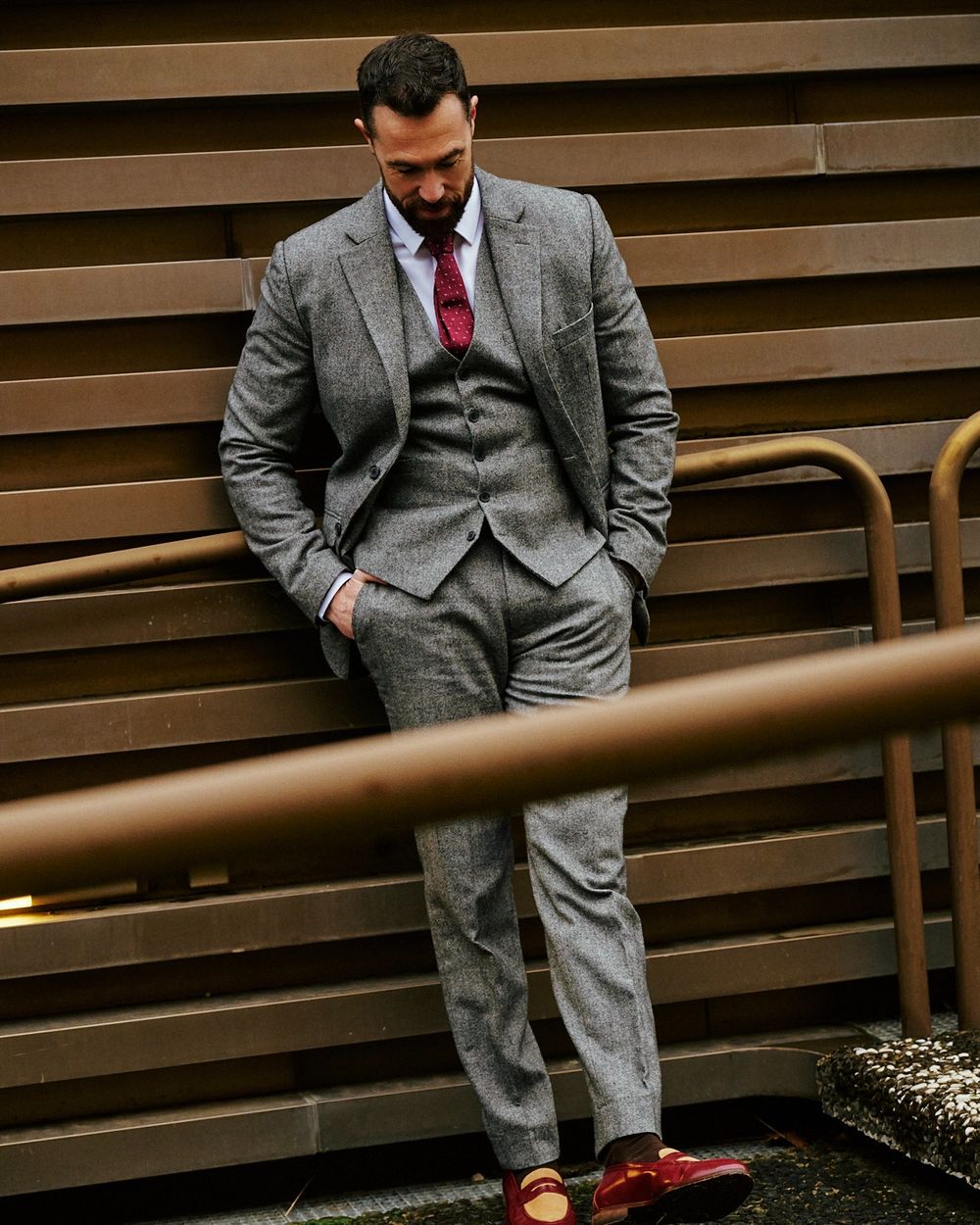
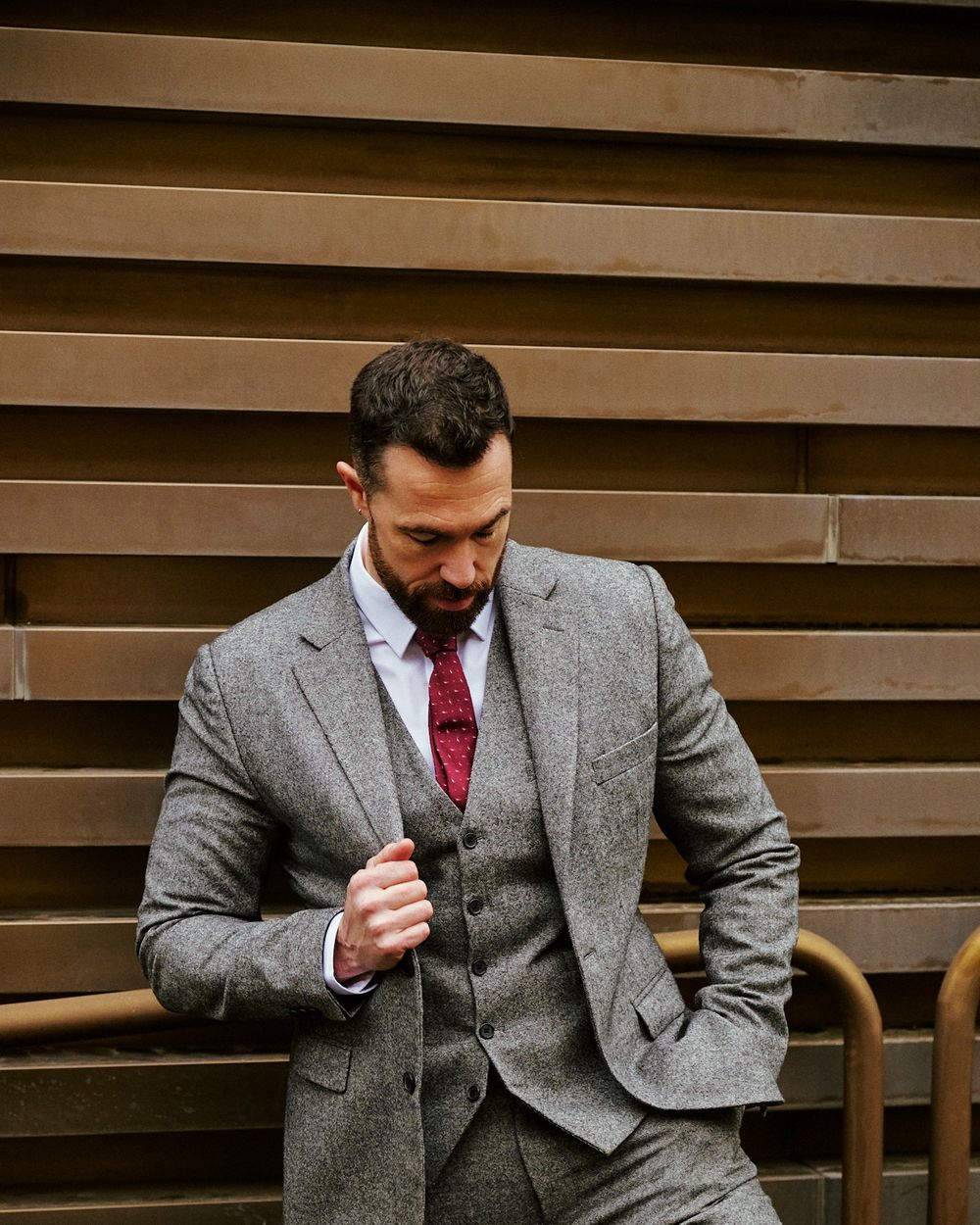
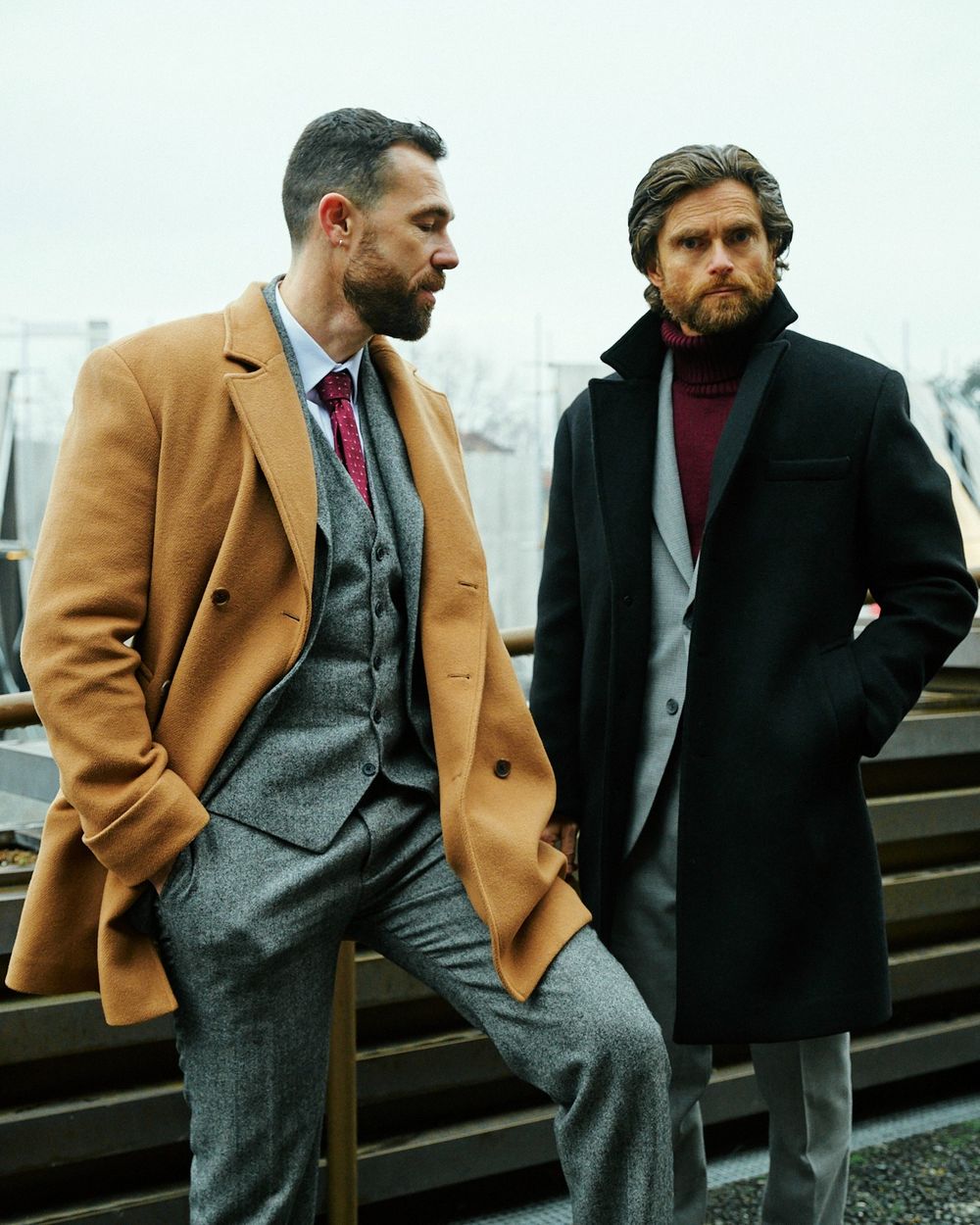
Grey Tweed Three-Piece Suit with Loafers
Products in the outfit


8. Shirt and Tie Combinations by Suit Color
Even the finest suit falls flat with the wrong shirt and tie. Getting these pairings right is what turns a good outfit into a great one. The general principle is straightforward: the tie should be darker than the shirt, and the overall combination should have at least one point of contrast — in color, in pattern, or in texture. For a deep dive into pairing logic, see our comprehensive guide on shirt and tie combinations, and for shirt color options specifically, our guide to dress shirt colors.

| Suit Color | Best Shirt Colors | Best Tie Colors | Pro Tip |
|---|---|---|---|
| Navy | White, light blue, pale pink, lavender | Burgundy, gold, dark green, orange, patterned | Navy + white shirt + burgundy tie is the most reliable combination in menswear |
| Charcoal | White, pale blue, light grey, soft pink | Navy, deep red, silver, plum, dark green | Add a textured tie (knit or grenadine) to prevent the look from feeling too corporate |
| Black | White, very light grey, black (monochrome) | Black, silver, deep red, dark purple | Keep it high-contrast (white shirt) or fully monochrome — avoid mid-tones |
| Light Grey | White, light blue, pale pink, soft lilac | Navy, burgundy, forest green, mid-blue | A navy tie with a light grey suit creates a clean, modern contrast |
| Brown / Tan | White, cream, ecru, light blue | Navy, burnt orange, olive green, burgundy | Brown and navy is one of the most underrated combinations in menswear |
| Burgundy | White, pale pink, light grey | Navy, charcoal, black, dark floral prints | Keep the shirt neutral and let the suit be the focal point |
| Green | White, cream, light pink, ecru | Burgundy, chocolate brown, gold, navy | A cream shirt softens forest green beautifully |
9. Common Suit Color Mistakes to Avoid
Even experienced dressers make color mistakes from time to time. Here are the most common pitfalls — and how to steer clear of them.
Treating black as a default everyday color. Black is a formal color, not a neutral one. Wearing a black suit to a casual Friday or a daytime outdoor wedding looks out of place. Save black for occasions that specifically call for it — evening events, formal ceremonies, and funerals — and reach for navy or charcoal as your daily drivers.
Ignoring lighting conditions. A suit that looks perfect in your bedroom mirror may look different under office fluorescent lights or dim restaurant lighting. Check the fabric under multiple lighting conditions before committing — this is especially important with navy and black, which can appear very different depending on the light source.
Matching everything too perfectly. Wearing a navy suit with a navy tie and a navy pocket square looks flat. The goal is coordination, not matching. Introduce contrast through texture (a knit tie with a smooth-finish suit) or through adjacent colors (a burgundy tie with a navy suit).
Wearing colors that fight your skin tone. A pale man in a pale beige suit can look washed out. A man with warm undertones in an icy silver suit can look sallow. If a color drains your complexion, it is not the right shade for you, regardless of how fashionable it might be.
Going too bold too soon. If you own one suit and it is bright royal blue, you have a problem. Bold colors are supplements, not foundations. Build on versatile neutrals first and add statement colors once you have the basics covered.
Forgetting about your shoes. Brown shoes with a black suit rarely succeed (though we explore the exceptions in https://www.hockerty.com.au/en-au/blog/black-suit-brown-shoes). Conversely, https://www.hockerty.com.au/en-au/blog/blue-suit-with-brown-shoes is one of the most elegant pairings in menswear. Before you buy a suit in an unusual color, make sure you own shoes that work with it.
Neglecting fabric and texture. Color is only part of the equation. The same shade of navy looks very different in a smooth worsted wool, a textured tweed, and a soft linen. Matte fabrics appear darker and more muted, while fabrics with a slight sheen appear lighter and more vibrant. Consider the fabric alongside the color when making your choice.
10. FAQ
What is the best color for a first suit?
Navy, without question. A navy suit is versatile enough for business, weddings, interviews, and social events. It flatters every skin tone, works with both black and brown shoes, and pairs with virtually any shirt and tie combination. If you can only own one suit, make it navy.
Can I wear a black suit to a wedding?
Yes, but with caveats. A black suit is appropriate for evening and formal weddings but can look out of place at daytime, outdoor, or casual celebrations. For most wedding settings, navy or charcoal is a safer and more versatile choice that will not risk appearing overly somber.
What suit color is best for a job interview?
Navy or charcoal. Both colors project professionalism and confidence without being distracting. Avoid black (too severe for most interview contexts), avoid bold colors (too risky when you do not know the company culture), and avoid light or trendy shades (they can appear too casual). Pair with a white shirt and a conservative tie.
Is a brown suit appropriate for business?
In traditional corporate environments (banking, law, consulting), brown suits are generally considered too casual. In creative industries, fashion, advertising, and business-casual workplaces, however, a well-cut brown suit in a rich shade like chocolate or tobacco is perfectly appropriate and can even be a stylish differentiator.
What colors go with a grey suit?
Grey is one of the most accommodating suit colors for accessories. Navy ties, burgundy ties, dark green ties, and patterned ties all work beautifully. For shirts, white is the classic choice, but light blue, pale pink, and soft lavender also pair well. Brown shoes in medium to dark tones are an excellent match — see our guide on https://www.hockerty.com.au/en-au/blog/grey-suit-brown-shoes for more ideas.
How many suit colors do I need in my wardrobe?
For most men, three to five suits cover the full range of occasions. Start with navy and charcoal as your foundation. Add a light grey or tan for warm weather, and then consider a black suit for formal events. Beyond that, additional colors — burgundy, green, brown — are welcome extras but not necessities.
What is the difference between navy and dark blue suits?
Navy is a specific shade of dark blue with slightly muted, sometimes slightly greenish or greyish undertones. "Dark blue" can refer to a broader range of blues, including brighter or more saturated shades like cobalt or royal blue. In practice, classic navy is darker and more subdued, making it more versatile and more formal than brighter blues.
Can I wear brown shoes with any suit color?
Brown shoes work with most suit colors — navy, grey, brown, tan, green, and burgundy all pair beautifully. The notable exception is black. Brown shoes with a black suit is a combination that divides opinion. While it can work in certain fashion-forward contexts, it is generally safer to wear black shoes with a black suit. For more on this, see our guide on https://www.hockerty.com.au/en-au/blog/black-suit-brown-shoes.
What suit color photographs best?
Medium tones photograph best because they hold detail without creating harsh contrast. Navy, medium grey, and charcoal are excellent choices for weddings, corporate headshots, and formal events. Very dark suits can lose detail in photographs, while very light suits can appear overexposed. If you know you will be photographed, a navy suit is your safest bet.
Are patterned suits considered a different color category?
Patterns like pinstripes, windowpane checks, and Glen plaid are overlays on a base color, not colors in their own right. A navy pinstripe suit is still fundamentally a navy suit — the pattern adds visual interest and can affect formality, but the base color still drives your pairing decisions for shirts, ties, and shoes.


