


A wedding is one of the most significant milestones in life, but preparation often feels overwhelming. While many details compete for attention, the wedding suit is one of the most visible and enduring elements of the day. It shapes how you feel, how you move and how you are remembered in photographs and videos for years to come.
This article covers everything a groom needs to consider when preparing his wedding suit, using a clear timeline to reduce pressure and avoid last-minute compromises. By following this checklist, you can ensure your wedding outfit fits the occasion, the season and you without unnecessary stress.
Wedding Suit Checklist
Here is a checklist to help grooms prepare their wedding attire with confidence. It’s organized by timeline, from the weeks leading up to the wedding day through. We’ve also included a downloadable PDF version for your convenience. Save it on your phone so you can easily track your progress throughout the preparation process. Below, we take a closer look at each step to make sure your outfit looks polished and feels just right on your big day.

Download Hockerty Wedding Suit Checklist
Phase 1: 8-12 Weeks Before the Wedding
This phase sets the direction for your entire wedding outfit. Decisions made here affect fit, comfort, coordination and how smoothly the rest of the preparation unfolds.
Choosing the Wedding Suit Style
The first step is deciding what type of suit best fits the formality, venue and overall theme of your wedding.
- Tuxedo or suit: A tuxedo is traditionally reserved for formal evening weddings, while a classic suit works across most daytime and evening settings
- Two-piece or three-piece: A three-piece suit adds formality and structure, while a two-piece offers a cleaner, more relaxed appearance
- Single- or double-breasted: Double-breasted suits feel more traditional and sartorial, while single-breasted styles are versatile and timeless

The dress shirt should be chosen in parallel with the suit. Key style decisions include the collar type (spread, semi-spread or wing collar for tuxedos), cuff style (barrel cuffs for understated looks or French cuffs for formal settings) and front design (plain, placket or bib front). These elements determine how the shirt works with a tie, bow tie and overall level of formality.


Deciding Between Ready-to-Wear and Made-to-Measure
This is the most critical decision in the checklist. While ready-to-wear suits are convenient, most of people go for the second option. Made-to-measure offers a superior balance of fit, personalization and practicality for an important event like a wedding.
Ordering a made-to-measure suit 8-12 weeks in advance allows sufficient time for:
- Precise body measurements
- Design, fabric and details selection
- Multiple fittings and fine adjustments

It is also advisable to consider two different outfits: one for the ceremony and one for the dinner or evening celebration. This allows flexibility in formality and comfort without compromising consistency.
Selecting Fabric Based on Season and Venue
Fabric choice directly affects comfort, structure and appearance. The season and location should guide this decision.
For the suit:
- Warm-weather weddings benefit from lightweight wool, wool-silk blends or linen blends that improve breathability.
- Cooler seasons call for mid- to heavier-weight wool fabrics that retain shape and warmth.
- Outdoor venues may require more texture and resilience, while indoor venues allow for finer finishes.

Regarding the shirt, its fabric should complement the suit while prioritizing breathability and comfort. High-quality cotton fabrics, such as poplin or twill, are commonly chosen for weddings because they offer a clean appearance and remain comfortable over long hours. For warmer conditions, lighter weaves improve airflow, while slightly denser weaves provide a crisper look for formal environments.
Phase 2: 4-6 Weeks Before the Wedding
At this stage, the focus shifts from big decisions to refinement and alignment. Your suit should already be chosen or ordered, making this the ideal window to assess fit, finalize accessories and ensure your outfit works seamlessly.
Suit Fitting
The first fitting is where your wedding suit truly starts to take shape. The goal is not perfection yet, but to confirm that the overall proportions and balance are correct.
- Jacket fit: Clean shoulders, proper sleeve length and a comfortable but structured chest
- Trousers: Correct waist placement, smooth drape and appropriate break
- Mobility: You should be able to sit, walk and raise your arms comfortably

Any necessary adjustments should be identified now, allowing enough time for tailoring without pressure.
Selecting Shoes and Core Accessories
Accessories complete the wedding outfit and should be finalized alongside the fitting to ensure visual harmony. Dress shoes should match the formality of the suit. Classic options include Oxfords for formal weddings and Derbies, monk shoes and loafers for more relaxed settings.

Find out more about How to choose Wedding shoes
For the accessories:
- Tie or bow tie: Choose based on suit style and formality. A bow tie is traditional for tuxedos, while ties suit most classic wedding suits. If you choose tie, optionally having a tie clip
- Cufflinks: Essential for French cuffs and an easy way to introduce subtle personal detail
- Pocket square: Should complement, not exactly match, the tie or wedding color palette
- Belt or suspenders: Choose one, never both. Suspenders are often preferred for tuxedos and cleaner lines
- Dress socks: Opt for knee-high or mid-calf socks in a color that blends with the trousers to maintain a polished look
This is also the right time to order a matching boutonniere and bring it or a sample, to the final fitting to ensure it sits correctly on the lapel.
Coordinating With the Bride and Wedding Party
A cohesive wedding aesthetic depends on alignment between outfits. Your suit should harmonize with the bride’s attire and the wedding theme. Consider these aspects:
- Color relationships between your suit and the bride’s dress or accessories
- How your look compares to the groomsmen, whether you stand out subtly through fabric, accessories or structure
- Consistency with the overall wedding palette and level of formality

These decisions help create visual balance in photographs and ensure the groom looks distinct without appearing disconnected.
Planning for a special beach wedding? Explore Beach Wedding Suits for Every Groom
Booking a Hair Salon Appointment
Booking a hair appointment 4-6 weeks in advance ensures availability and gives time to plan the desired look. If you are unsure about the hairstyle, this period allows for a trial cut, style discussion and later gradual adjustments if needed.
Phase 3: 1-2 Weeks Before the Wedding
This period is for final adjustments, confirming and stabilizing everything you have prepared so far. Major decisions should already be completed.
Second or Final Suit Fitting
The final fitting is where precision matters most. Ideally planned around two weeks before the wedding, this fitting allows time for minor refinements without creating unnecessary urgency before the D-day.
Focus on overall fit and check if final tailoring details like sleeve length, trouser hem, waist suppression and jacket closure feel intentional and effortless. Make sure your suit offers comfort when you walk, sit and raise your arms.

Confirming Accessories and Details
With the suit finalized, attention should turn to accessories.
- Practicing tying the tie or bow tie until it can be done smoothly and consistently
- Confirming accessory compatibility, including cufflinks, pocket square, belt or suspenders and boutonniere placement
- Preparing undergarments, such as an undershirt if needed, ensuring they remain invisible under the dress shirt

Breaking In Shoes and Testing Comfort
Shoes should never be new on the wedding day. This period is critical for breaking in dress shoes gradually to avoid blisters or foot fatigue.
Wear the shoes indoors for short periods, then walk on different surfaces to test grip and comfort. Don’t forget to pair them with your wedding socks to ensure proper fit.


Wearing the full outfit together at least once helps identify small issues, such as slipping socks or uncomfortable collars, while there is still time to fix them.
Hair and Grooming
Personal grooming completes the overall impression of the wedding outfit. Even the best suit can lose impact if grooming is overlooked. Decide on your hairstyle in advance and 3-7 days before the wedding are perfect to have your hair cut.
A manicure is optional, but clean, well-groomed hands are worth considering, especially given the focus on rings and close-up photographs. At a minimum, nails should be trimmed and tidy.
Note: Besides clothing, take a moment to review other wedding essentials that are often forgotten amid outfit preparation. These include the wedding rings, vows or speech notes, flowers, morning gifts and any cultural or ceremonial items. Having these organized early helps keep the final days calm and focused.
Phase 4: The Day Before the Wedding
The day before the wedding should be calm and controlled. At this point, the objective is not to make changes, but to verify readiness and protect what you’ve prepared.
Getting the Suit Ready
Begin with a thorough inspection of the entire outfit:
- Check for stains, loose threads or missing buttons
- Ensure trousers, jacket and shirt are clean and properly pressed
- Use a steamer or iron carefully to remove wrinkles
- Hang the suit on a sturdy hanger in a breathable garment bag

Avoid placing it in high-traffic areas or near food, drinks or pets. Next, pack the full wedding outfit, even if you are getting ready at home. This should include:
- Suit jacket and trousers
- Dress shirt
- Shoes and socks
- All accessories, including tie or bow tie, cufflinks, pocket square and boutonniere
Putting everything at one place together reduces the risk of forgetting important items.
Preparing an Emergency Groom Kit
A small emergency kit can resolve minor issues quickly and discreetly. Useful items include:
- Safety pins and a small sewing kit
- Stain remover pen
- Breath mints
- Blotting paper or tissues
- Pain reliever and blister pads

Most wedding-day outfit problems are minor but time-sensitive and having these essentials on hand prevents unnecessary stress.
Phase 5: Wedding Day Groom Checklist
The wedding day itself should feel structured but relaxed. Following a simple routine ensures you look composed and feel confident from morning to ceremony.
Early Morning
Start the day with basic self-care:
- Shower and shave or trim facial hair as planned
- Apply deodorant lightly to avoid overpowering scents
- Eat a proper breakfast and stay hydrated, even if nerves are present

Skipping these steps can affect both comfort and energy levels throughout the day.
Dressing Up
Allow enough time to dress without rushing. Begin with hair styling, then move into the outfit step by step.
When fully dressed, run through a complete wedding suit and outfit check:
- Shirt tucked cleanly with no fabric bunching
- Tie or bow tie centered and secure
- Jacket sitting smoothly across the shoulders
- Trousers properly aligned with shoes
- Socks pulled up and matching the formality of the suit

Last-Minute Checks
Just before leaving, pause for a final review:
- Confirm the rings are with you or assigned to the correct person
- Revisit any notes for your speech or vows
- Take a breath and reset your mindset

Looking polished matters, but being present and positive matters more. Once everything is in place, trust your preparation and enjoy the moment; you are ready!
Groom Wedding Suit Ideas
If you are struggling at the first steps of choosing an ideal groom suit for yourself, let’s us take care of it. These examples never go out of style, perfectly align with different personal styles, formality and settings. Surely, you will find something for your wedding attire here.
1. Classic Formal Wedding Suit
A classic formal wedding suit prioritizes structure, symmetry and tradition. This look is most commonly associated with evening ceremonies, formal venues or timeless wedding aesthetics.
- A tuxedo or dark wool suit in black, midnight blue or deep charcoal
- Crisp white dress shirt with French cuffs
- Bow tie or refined silk tie
- Polished leather Oxfords and minimal accessories
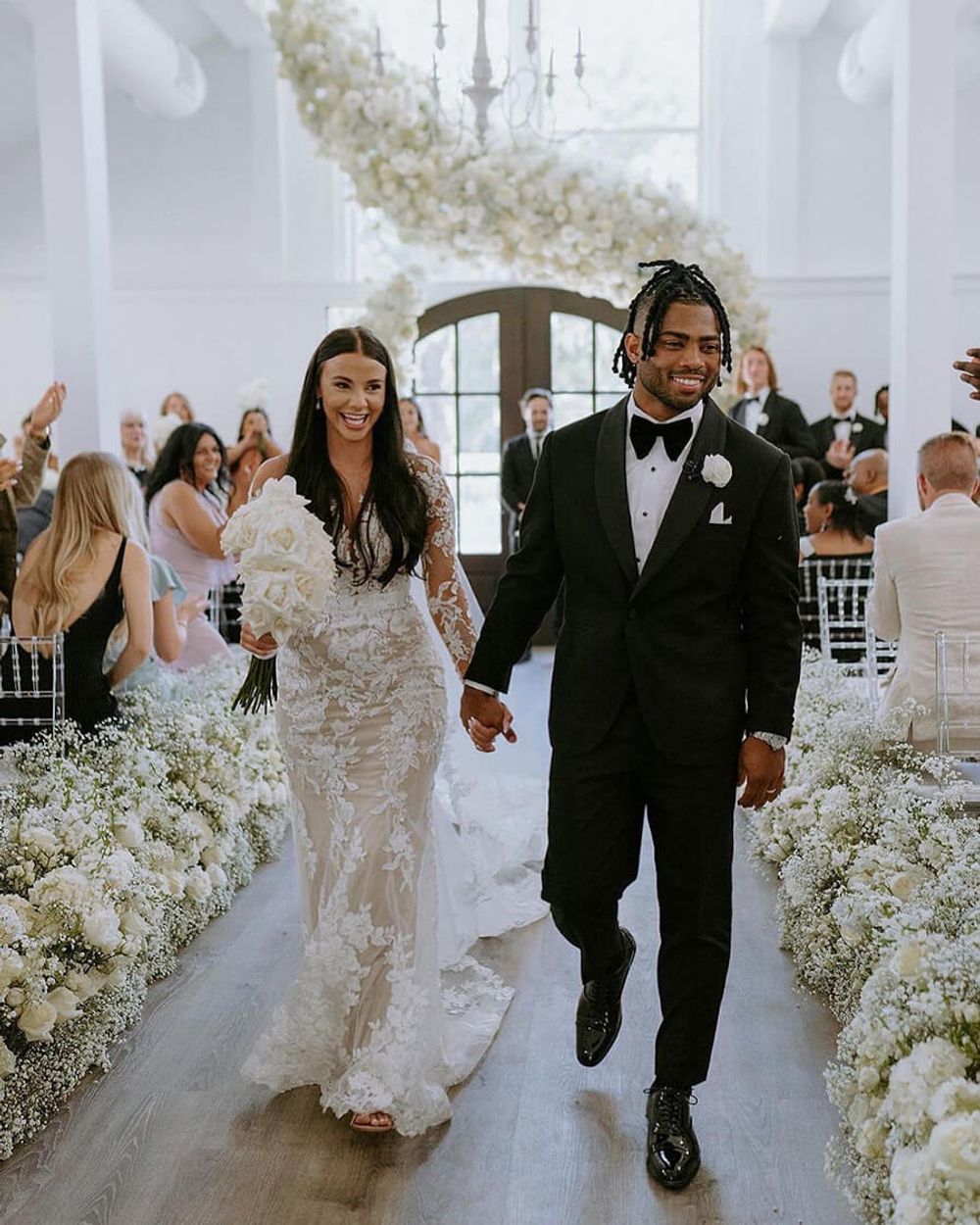
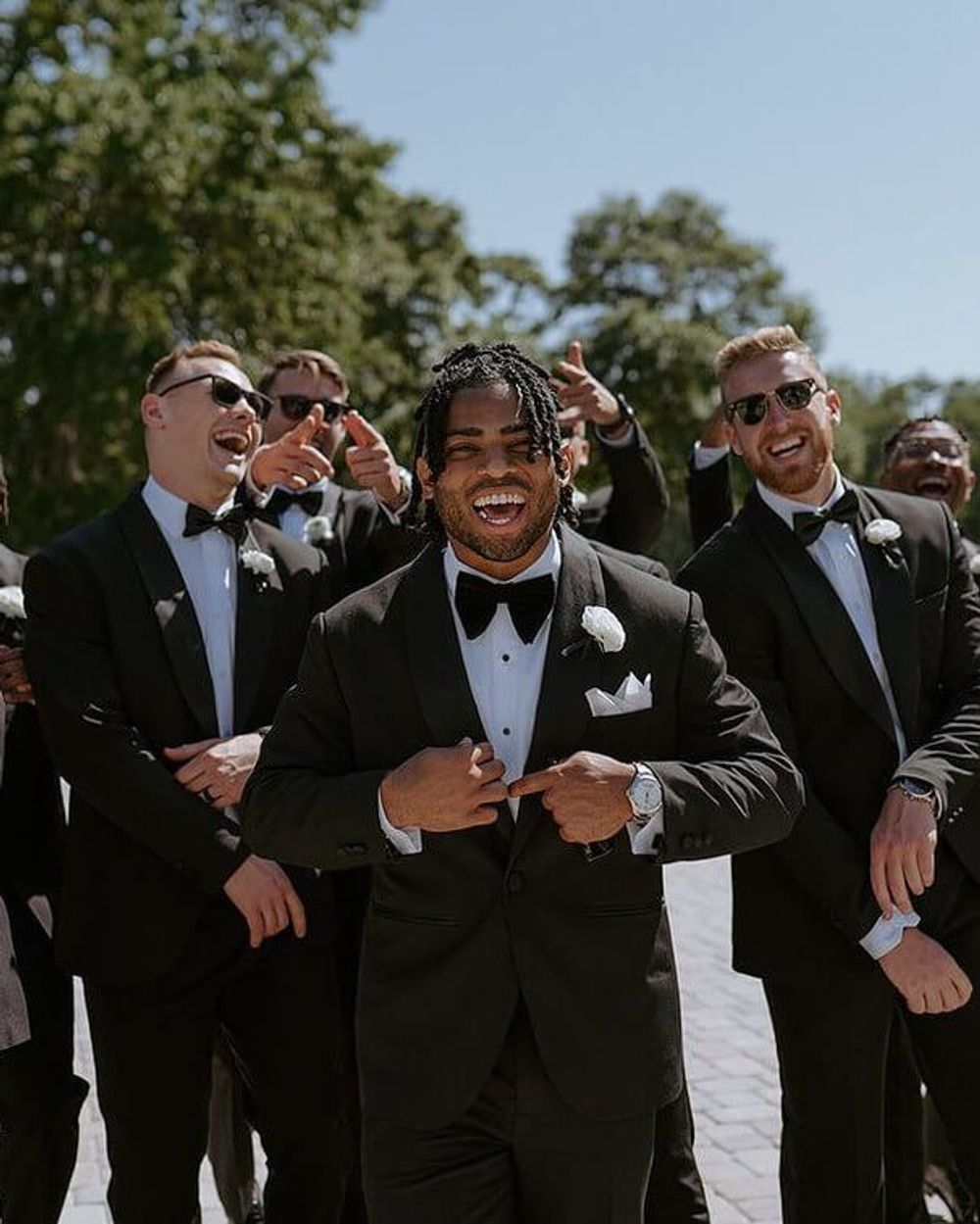
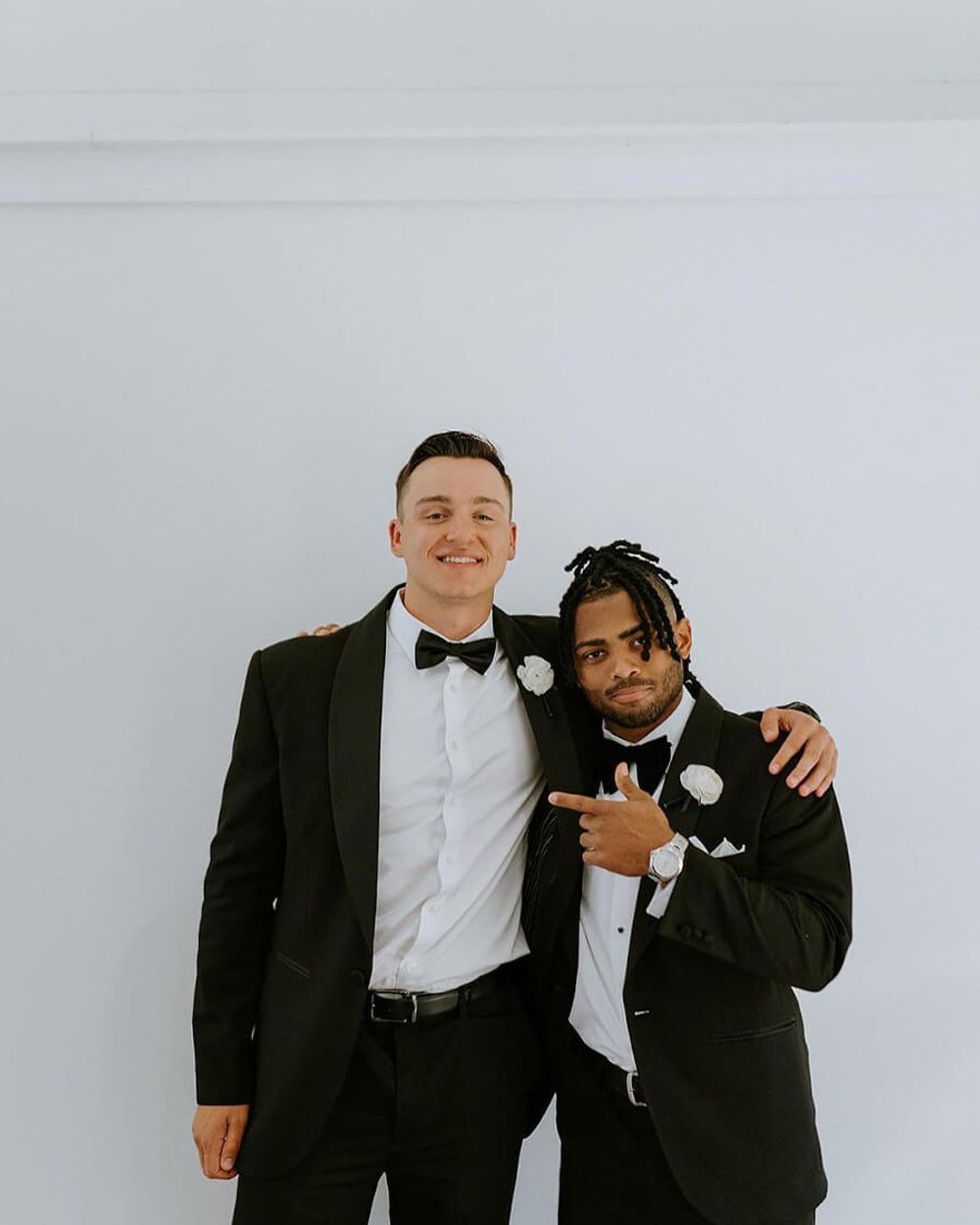
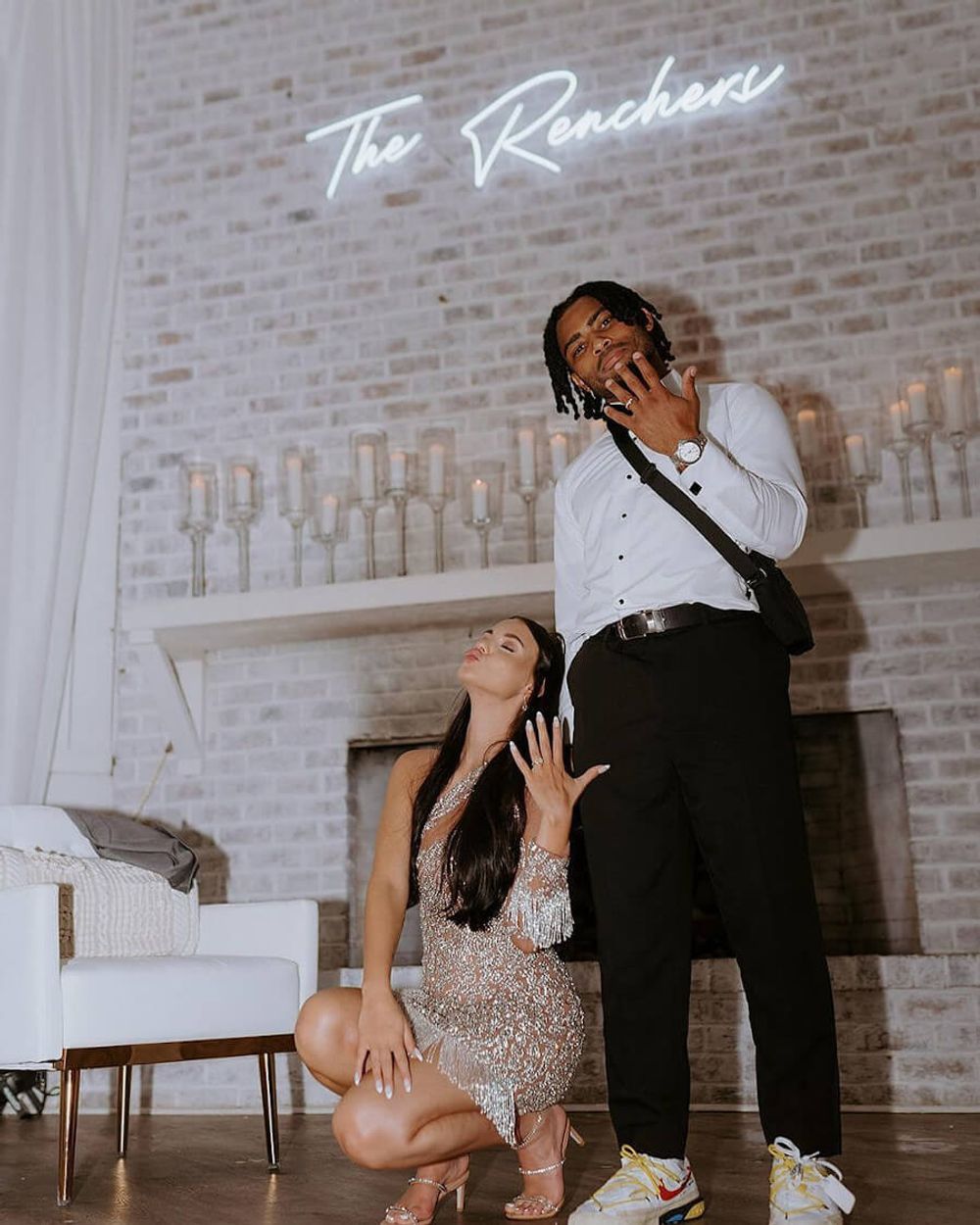
Football star in a tux on his wedding day
Products in the outfit


Credit: Katie Wilson

This style photographs exceptionally well and remains relevant decades later. It is ideal for grooms who value formality, tradition and a clearly defined dress code.
2. Modern Minimal Wedding Look
The modern minimal approach focuses on clean lines, subtle contrasts and restrained detailing. It works particularly well for contemporary venues and couples seeking elegance without excess.
- A well-tailored suit in navy, mid-grey or soft neutral tones
- Plain dress shirt with a modern spread collar
- Simple tie or no tie, depending on formality
- Limited accessories with emphasis on fit and proportion
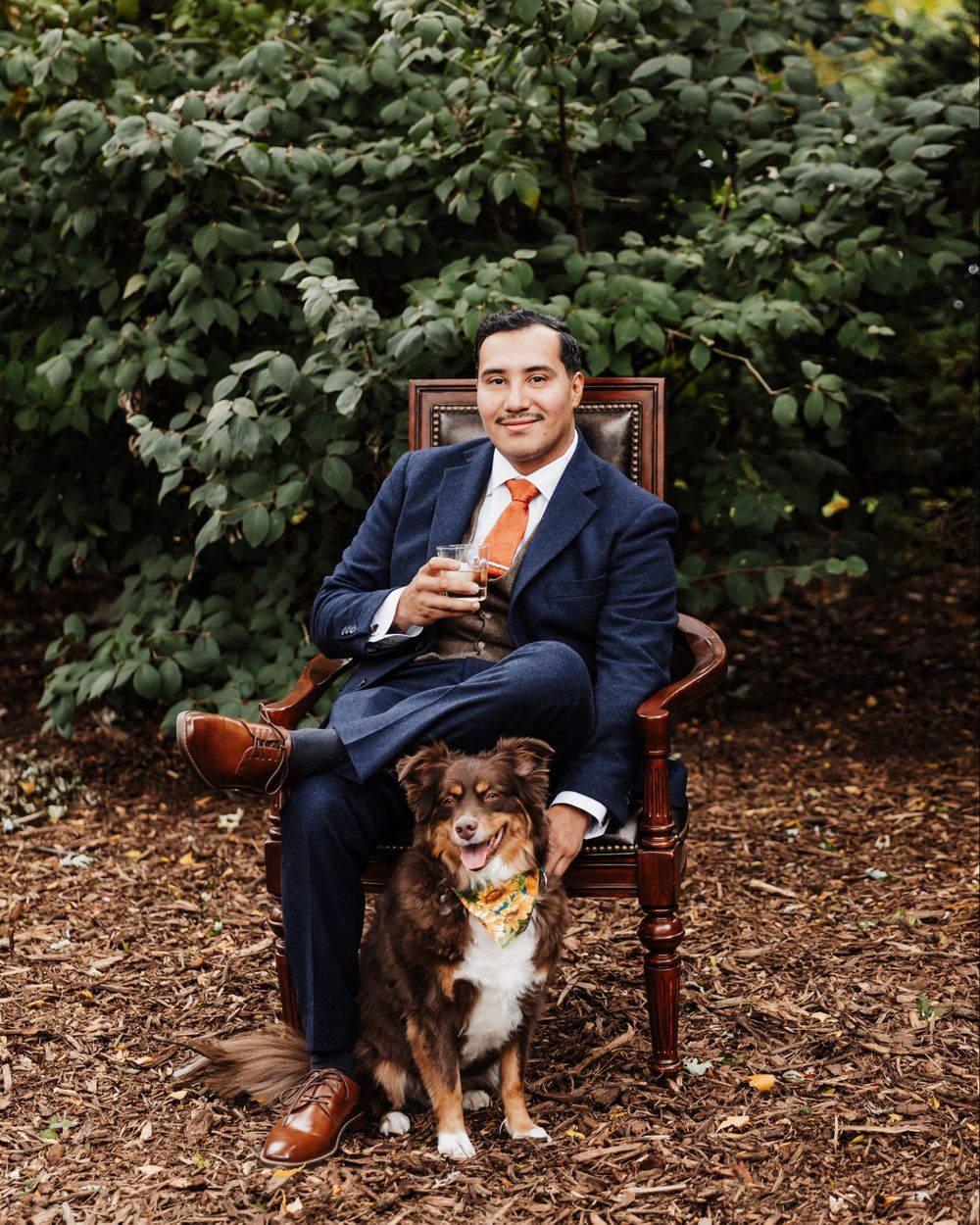
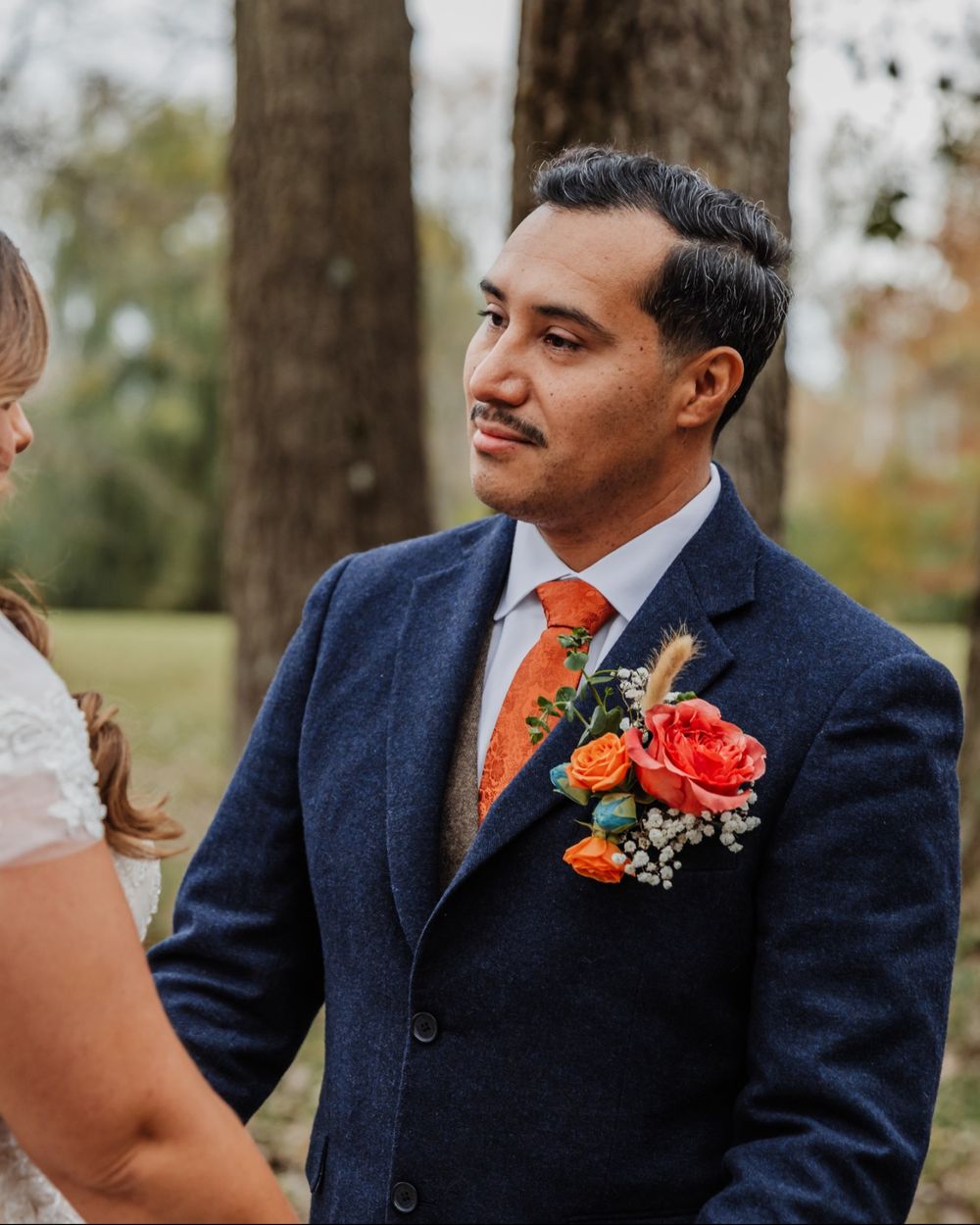
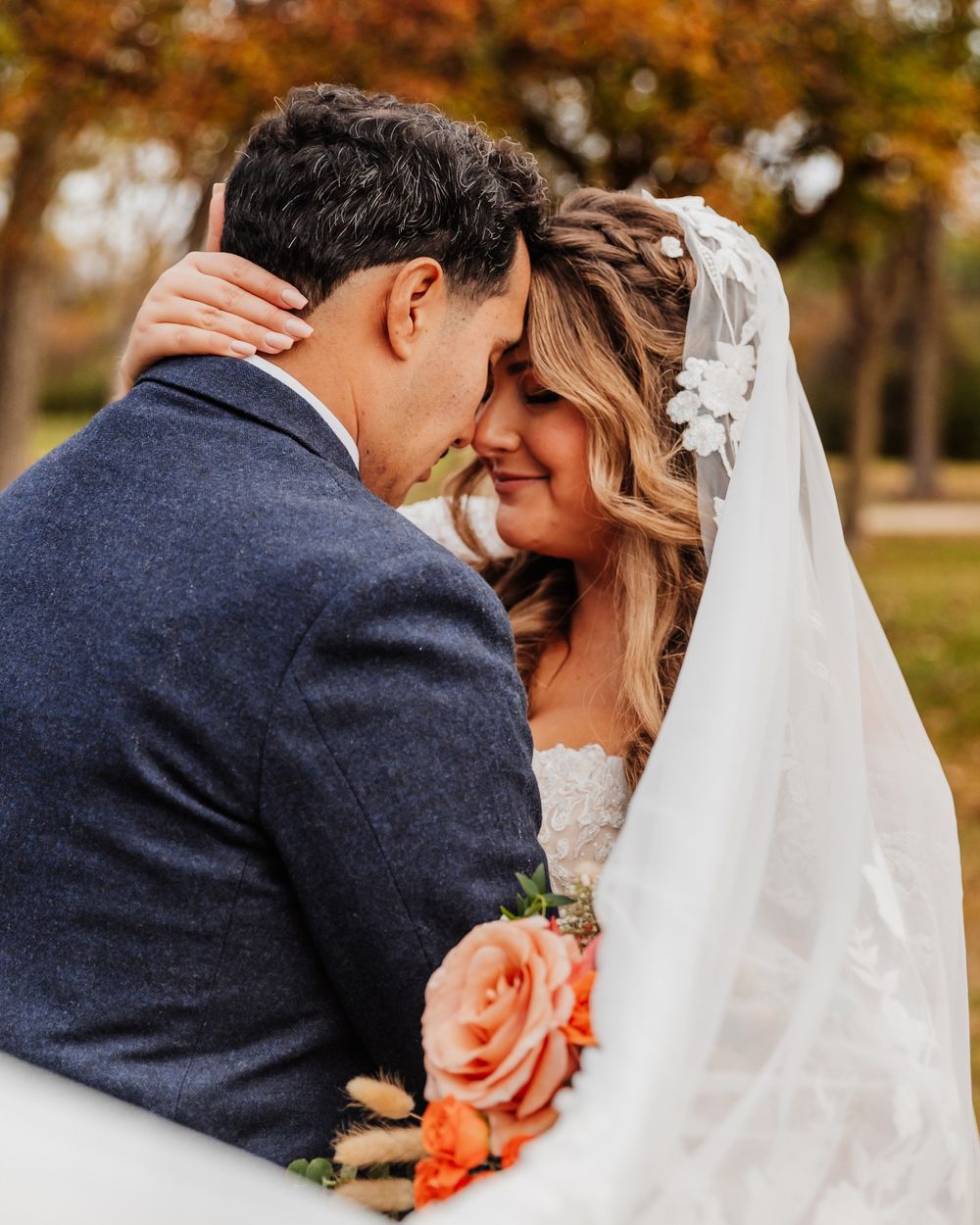
Navy Blue Suit with Brown Waistcoat and Orange Tie
Products in the outfit


Credit: Kate Fortin
3. Relaxed or Destination Wedding Suit
For destination weddings or informal settings, the suit should reflect the environment while still respecting the importance of the occasion.
- Lighter suit colors such as beige, light grey or soft blue
- Breathable fabrics suited to warm climates
- Open-collar shirts or relaxed tailoring details
- Loafers or lightweight dress shoes
The defining principle here is intentional informality. The outfit should look relaxed by design, not unfinished or improvised.
Get more inspo with our Best Wedding Suits for the Groom and Groomsmen 2025
Common Groom Wedding Suit Mistakes to Avoid
Even well-prepared grooms can sometimes fall into traps. Being aware of these helps you enjoy and never forget your grand occasion
- Choosing style over fit: A perfectly fitted classic suit always outperforms a poorly fitted statement piece.
- Leaving decisions too late: Rushed tailoring limits options and increases stress.
- Over-accessorizing: Too many details compete visually and reduce clarity.
- Ignoring comfort: Discomfort affects posture, confidence and presence throughout the day.
The most successful wedding outfits are those that feel considered, coherent and natural.
Frequently Asked Questions (FAQs)
What does a groom need for his wedding suit?
A groom needs a well-fitted suit or tuxedo, a dress shirt and properly chosen shoes and accessories. This includes a tie or bow tie, cufflinks, pocket square, belt or suspenders, dress socks and a boutonniere. Beyond clothing, the groom should also ensure the suit is tailored in advance, shoes are broken in and all items are prepared and checked at least one day before the wedding to avoid last-minute issues.
What are the groom’s responsibilities for a wedding?
From an outfit perspective, the groom is responsible for selecting, fitting and preparing his wedding suit in alignment with the wedding’s formality and theme. This includes coordinating colors with the bride and wedding party, attending fittings on time and ensuring all accessories are complete. On a broader level, responsibilities also include safeguarding the wedding rings, preparing vows or a speech, arranging morning gifts and being present and composed on the wedding day.
What should a groom never forget?
A groom should never forget the wedding rings, his speech or vows and the complete wedding outfit, including accessories. From a practical standpoint, he should also remember to eat, stay hydrated and allow enough time to get dressed calmly. Preparation reduces stress, but presence and mindset matter most—being relaxed, confident and attentive is just as important as looking polished.
How far in advance should a groom prepare his wedding suit?
A groom should begin preparing his wedding suit 8-12 weeks before the wedding. This timeframe allows for choosing the suit style ordering made-to-measure tailoring, selecting fabrics and completing multiple fittings. Starting early ensures proper fit, comfort and flexibility for adjustments.
Should the groom have more than one outfit on the wedding day?
It is often advisable for the groom to have two outfits: one for the ceremony and one for the dinner or evening celebration. This allows a change in formality or comfort while maintaining visual consistency throughout the event, especially for long wedding days.
What are the most common wedding suit mistakes grooms make?
The most common mistakes include prioritizing style over fit, leaving tailoring decisions too late, over-accessorizing and ignoring comfort. A wedding suit should feel natural and supportive, allowing the groom to move comfortably and remain confident throughout the day.


