


Dress socks are often overlooked when styling a suit, but they directly affect how polished and intentional an outfit appears. Not all socks are interchangeable, especially in formal and business settings. So let’s us walk you through how to choose and style appropriate dress socks to tie your look.
What Are Dress Socks?
Dress socks are socks specifically designed to be worn with tailored clothing and dress shoes. Their primary function is to create a smooth visual transition between trousers and footwear while maintaining comfort throughout the day.
In formal and business environments, dress socks serve three core purposes:
- Visual continuity: Extending the line of the trousers when seated.
- Proportion control: Maintaining a slim silhouette that complements tailored garments.
- Material harmony: Matching the refinement level of suits and shoes.

Dress Socks vs Casual and Athletic Socks
The differences between dress socks, casual socks and athletic socks are based on the structure and intended use. Here are the key distinctions:
| Feature | Dress Socks | Casual Socks | Athletic Socks |
|---|---|---|---|
| Primary Purpose | Worn with suits and dress shoes | Worn with casual outfits and boots | Designed for sports and physical activity |
| Material | Fine cotton, merino wool, silk blends | Cotton, wool, synthetic blends | Performance synthetics, moisture-wicking fibers |
| Thickness | Thin to medium | Medium to thick | Thick with cushioning |
| Length | Mid-calf or over-the-calf | Crew or mid-calf | Ankle, crew or calf-length |
| Formality Level | Business formal to smart casual | Casual | Sport only |
Dress socks are defined by refinement and subtlety, while casual socks prioritize comfort and style variation and athletic socks focus on performance and support.
What to Consider When Choosing Dress Socks
Choosing the right dress socks is not only about color. The decision of length, materials and thickness also affects formality, comfort and visual balance.
Length
Length is the most important structural factor in dress socks. The purpose is simple: no skin should be visible between trousers and socks when sitting down. There are three common lengths:
- Over-the-calf socks above the calf muscle and are considered the formal standard for business and formalwear. Because they sit higher on the leg, they stay in place throughout the day and prevent exposure of skin when seated. This length ensures a continuous line from trouser hem to shoe, which is essential when wearing suits in professional or ceremonial settings.
- Mid-calf socks reach the middle of the calf and are widely worn in business and smart casual environments. They are acceptable for most office settings, but depending on elasticity and fit, they may slide down during the day. While common, they offer slightly less security in maintaining full coverage compared to over-the-calf styles.
- No-show socks sit below the edge of the shoe and create a sockless appearance. They are designed for relaxed outfits and warm-weather styling. This length is appropriate with loafers or minimal leather shoes in casual contexts. However, no-show socks should not be worn with formal suits or traditional business attire, as visible dress socks are required to maintain proportion and formality.
Materials
The material of dress socks determines breathability, durability and comfort. High-quality dress socks are made from fine yarns that align with the weight of the suit fabric, the climate and the duration of wear.
- Cotton is breathable, soft and well-suited for daily office wear. It performs best in moderate climates and provides a clean, matte appearance that pairs easily with business suits. High-quality cotton dress socks use long-staple fibers, which improve smoothness and durability.
- Merino wool is naturally temperature-regulating, moisture-wicking and odor-resistant. In fine gauge form, it is lightweight and smooth rather than heavy. This makes it suitable for both cool and warm environments or even transitional seasons. Merino wool dress socks are particularly effective for long workdays and travel.
- Silk blends offer a smooth texture and a subtle sheen, making them appropriate for formal or evening wear. Pure silk lacks durability, so it is typically blended with cotton or wool to increase strength and elasticity. Silk-blend socks are lighter and more delicate.

Thickness and Texture
Thickness directly affects both comfort and visual balance. As a general principle, the more formal the setting, the finer and smoother the sock should be. Thin dress socks maintain a sharp silhouette and fit properly inside structured leather shoes. Excess thickness can create pressure, distort the fit of the shoe and reduce elegance.
Texture also plays a role in formality. Smooth finishes or fine ribbing are standard in business and formal environments because they appear clean and understated. Heavy knits, visible cushioning or bold textures shift the sock toward casual territory and should be avoided with suits.
Colors
Color is a structural element of an outfit, connecting the trousers and the shoes. In traditional menswear coordination, socks typically match or closely relate to the trousers and darker shades always create stronger continuity.
The specific rules and combinations for pairing socks with different suit colors will be explained in detail later in this article.

What Socks to Wear with Dress Shoes
Each type of dress shoes could go well with different dress socks, as they deliver different levels of formality and structure. The sock should complement the silhouette of the shoe and the tailoring of the trousers.
Oxfords, Derbies and Monk Straps
Oxfords, Derbies and monk straps are structured leather dress shoes typically worn with suits or tailored trousers. They require thin, mid-calf or over-the-calf dress socks in refined materials.
Best practices:
- Choose over-the-calf socks for business formal and formal occasions.
- Match the sock color primarily to the trousers.
- Opt for fine merino wool or high-quality cotton for daily business wear.
- Keep patterns subtle if wearing a conservative suit.

These shoes expose the sock when seated, so length and color coordination are essential. A visible gap between trousers and skin breaks the vertical line of the outfit and reduces formality.
Loafers and Minimal Dress Shoes
Loafers and minimal leather shoes are less structured and often worn in business casual or summer settings. The sock choice depends on the occasion and the trousers.
Options include:
- Thin mid-calf dress socks for business environments.
- Over-the-calf socks for more formal tailoring.
- No-show socks only in clearly casual contexts, typically with cropped or summer-weight trousers.

When wearing loafers with a suit, visible dress socks maintain formality. No-show socks create a more relaxed aesthetic and should not be used in formal business or ceremonial settings.
Find the best dress shoes that offer both quality and comfort with A Comprehensive Buyer's Guide on Dress Shoes
Should Socks Match Shoes or Pants?
The traditional and safest rule is clear: dress socks should match the trousers, not the shoes. Matching the socks to the trousers creates a continuous vertical line from waist to ankle. This visual extension makes the legs appear longer and maintains the clean structure of a tailored outfit. When seated, properly matched socks prevent contrast gaps that can interrupt the silhouette.
In business and formal environments, the sock color should either match the trousers exactly or be slightly darker within the same color family. Bright novelty socks rarely align with classic tailoring. In professional settings, darker and more muted tones maintain authority and balance.

When Matching the Shoes Is Acceptable
Matching socks to shoes can work in certain situations, but it is not the primary rule. It becomes acceptable when:
- The trousers and shoes are similar in darkness or same color family.
- The outfit is business casual rather than business formal.
- You are intentionally creating a coordinated, tonal look.

For instance, dark brown shoes with mid-brown socks can work when paired with a tan suit. However, if the socks match the shoes but contrast sharply with the trousers, the leg line will appear visually “cut.”
Creating Contrast Without Breaking Formality
Contrast is possible, but it must be controlled with a complementary palette. To introduce variation without reducing formality:
- Stay within the same color group.
- Choose subtle tones and patterns rather than bold graphics (e.g., burgundy socks with a grey suit or light beige socks with light blue suit).
- Avoid high-contrast combinations in conservative settings.

The key principle is balance. If the socks become the focal point of the outfit in a formal setting, the coordination has likely gone too far.
Dress Socks, Suit and Dress Shoes Color Combinations
That is the “rules” when you wear dress socks. If it seems a bit complicated to you, refer to the tables below for a quick decision on dress sock, suit and shoe color combinations that help you maintain visual balance and appropriate formality.
| Suit Color | Sock Colors | Shoe Colors |
|---|---|---|
| Black | Black, dark charcoal, navy | Black |
| Navy | Navy, charcoal, dark brown | Black, dark brown, medium brown |
| Charcoal | Charcoal, dark grey, black | Black, dark brown |
| Light Grey | Dark grey, navy, burgundy | Black, brown |
| Tan | Brown, navy, burgundy | Brown, dark brown |
| Brown | Dark brown, burgundy, navy | Brown, dark brown |
| White | White, tan, light grey, navy | Brown, tan |
| Burgundy | Dark burgundy, navy, charcoal | Black, dark brown |
| Green (Dark/Forest) | Dark green, navy, charcoal | Brown, dark brown |
| Pink (Muted/Dusty) | Burgundy, navy, dark grey | Brown, dark brown |
What Sock Colors Go with a Navy Suit
As navy is one of the most versatile suit colors in menswear, we’d like to share more about sock choices when styling it with different shoe tones.
With black shoes:
- Navy socks (most balanced)
- Dark charcoal or dark brown socks (subtle variation)


Dark Suit with White Shirt and Tie
Products in the outfit


Credit: Renato Amburgo

With dark brown shoes:
- Navy socks (most traditional)
- Burgundy socks (controlled contrast)
- Dark brown socks (acceptable if close in depth to the suit)
With medium brown shoes:
- Navy socks (safest option)
- Burgundy or deep red socks (adds personality while remaining refined)


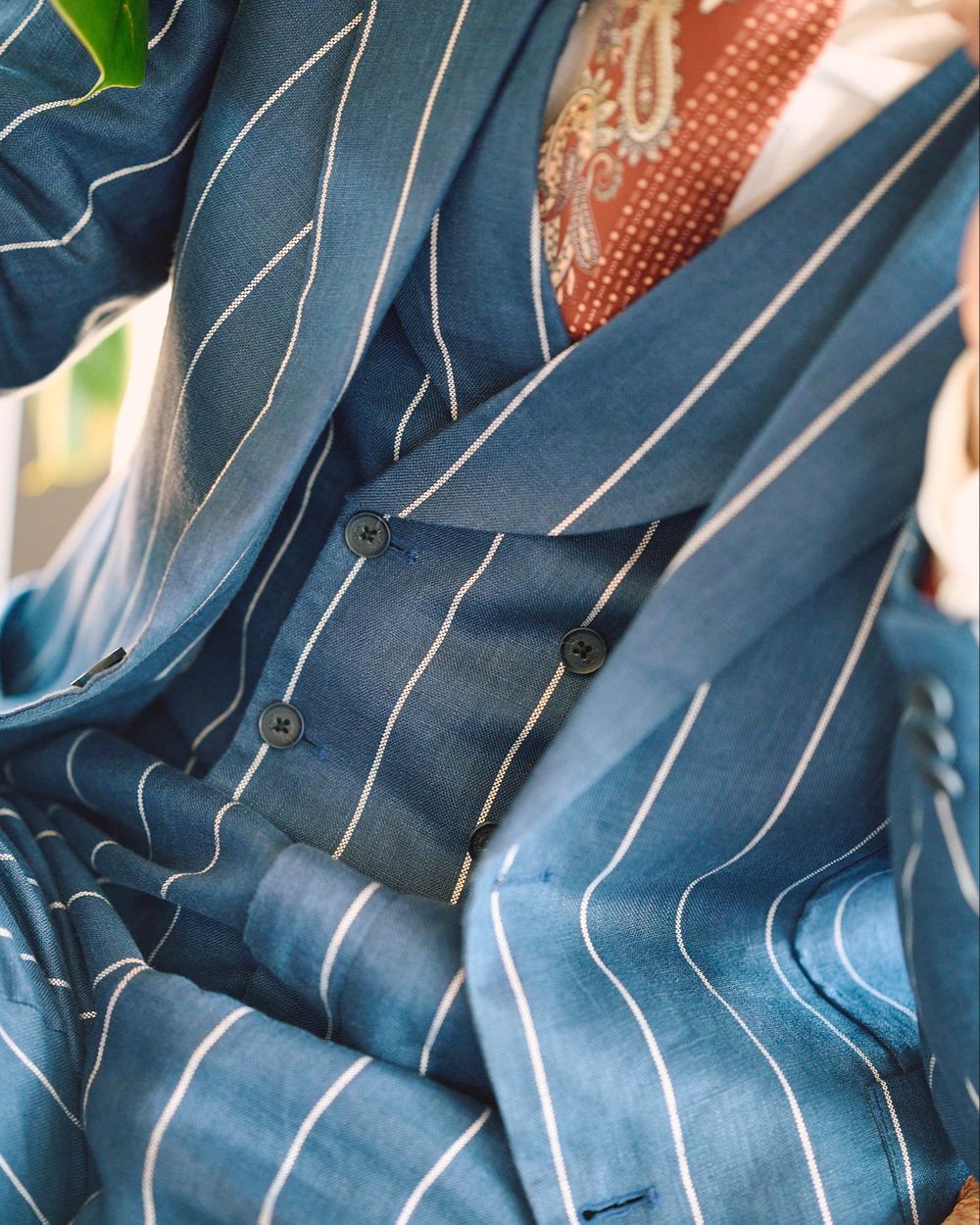
Retro Blue Pinstripe Suit with Two-Tone Brogues
Products in the outfit


Credit: Duke
For conservative business environments, navy socks remain the most reliable choice. Patterned socks can work if the base color is navy and the pattern is subtle.
For styling navy suits with shirts and shoes, discover our article Navy Blue Suit Combinations: Ultimate Shirt & Tie Guide
Frequently Asked Questions (FAQs)
What is considered a dress sock?
A dress sock is a thin to medium-weight sock designed to be worn with suits and dress shoes, typically made from fine cotton, merino wool or silk blends. It is usually mid-calf or over-the-calf in length and is intended to create visual continuity between trousers and shoes while maintaining comfort and formality.
What is the rule for dress socks?
The main rule is that dress socks should match the trousers and cover the calf when seated. They should be fine in texture, appropriate for leather dress shoes and either match the trouser color exactly or be slightly darker within the same color family.
Should dress socks be thick or thin?
Dress socks should generally be thin or fine-gauge, especially in business and formal settings. Thinner socks maintain a sharp silhouette, fit properly inside dress shoes and align with the refined texture of tailored clothing.
Should your socks match your shoes or your pants?
Traditionally, socks should match your pants, not your shoes, to create a continuous vertical line and maintain formality. Matching the shoes can work in business casual outfits, but matching the trousers is the safest and most classic approach.
Should socks be lighter or darker than a suit?
Socks should typically match the suit trousers or be slightly darker, as darker tones create stronger visual continuity and preserve a formal appearance. When unsure, choosing the darker option within the same color family is the safest choice.
Do you wear black or white socks with dress shoes?
Black socks are appropriate with black or very dark suits, but white socks should not be worn with dress shoes, as they are associated with athletic wear. For brown or navy suits, darker tones such as navy, charcoal or burgundy are more suitable.
What color dress socks for a navy suit with brown shoes?
With a navy suit and brown shoes, the most reliable sock color is navy, as it maintains visual continuity. Burgundy or dark brown can also work for controlled contrast, depending on the level of formality.


